


Residents of northern Israel woke again overnight between Tuesday and Wednesday to fire from Lebanon. At Galilee Medical Center in Nahariya, staff were already preparing for the possibility of another escalation, while students across the north were told to stay home as schools remained closed.
For many families in the Upper Galilee, the latest fire was not a disruption to normal life but another reminder that normal life has not truly returned. While officials continue to speak of a ceasefire, residents along the border and in nearby towns describe a daily reality shaped by explosive drones, rockets, closed classrooms, shuttered businesses and a constant lack of certainty.
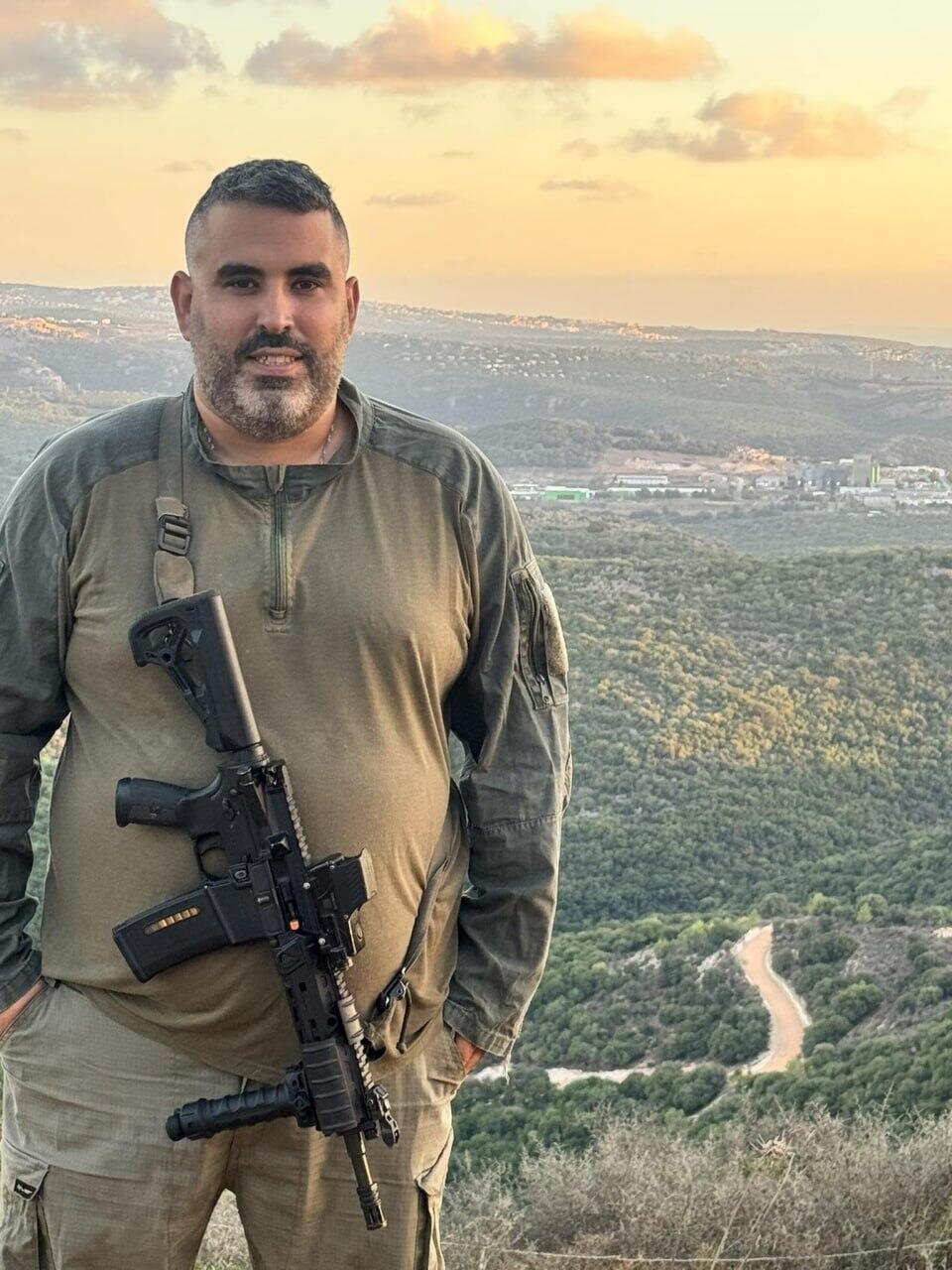
In Shomera, Eldad Yogev Vaknin says he feels he is losing the home he loves. In Ma’alot-Tarshiha, Yael Fomberg says the danger has moved far beyond the evacuated border communities. In Kiryat Shmona, Shay Rabin says residents continue to stay out of love and responsibility, but are tired of feeling invisible.
‘There is nothing left to hold on to’
Eldad Yogev Vaknin, 36, is a farmer and tourism operator from Moshav Shomera. He is married and the father of two children. He grew up through past rounds of fighting in the north, including Operation Grapes of Wrath and the Second Lebanon War, but says the current reality feels different because he is now experiencing it as a parent. “We are going through a very difficult period, a period unlike anything I have ever experienced,” he said. “I went through wars and rounds of fighting like Operation Grapes of Wrath and the Second Lebanon War, but today I look at everything as a parent. As a child, I never experienced anything like what my children are experiencing now.”
During the previous war, Vaknin said, his family was evacuated. This time, they are living through a reality much of the country still describes as a ceasefire, even as explosive drones fly overhead. “We are under a real attack and fear for our children’s lives and for our own lives,” he said. “We live inside a war zone, between the homes and above them, and this reality changes everything we thought about our future in this place.”
Vaknin said he loves Shomera and wants to continue living there, but the sense of home has been badly shaken. Families are asking themselves whether it is still safe to stay, whether they can keep living with open-ended uncertainty and whether the north is being allowed to become what the Gaza border communities were before October 7. “I feel we are losing our home,” he said. “Many people are recalculating: Is it safe to stay, and are we willing to live like the Gaza border communities, without knowing how this will end? Young people are leaving, and it is almost obvious why: There is no security, no livelihood, there is nothing left to hold on to.”
He said the IDF is doing its job, but argued that the government is preventing it from going further. What residents need, he said, is for Hezbollah to be dismantled and for the threat to be pushed away from the border communities. “The army is doing its job, but I think the government is stopping the army,” he said. “I expect it to push to do more, to bring here the security we were promised and to end this event.”
Vaknin said he does not believe agreements with Hezbollah can provide safety. “You do not make peace or agreements with Hezbollah, because they want one thing, to kill us,” he said. “I hope we learned from October 7 that an enemy who wants to kill you, you must rise early and kill him first.”
But security, he said, is only part of the crisis. Residents also need certainty, a real plan for the day after and a sense that the state is invested in the future of the Galilee. “We need to know there is a state here that cares, with plans and steps for the day after, not just promises,” he said. Vaknin said northern residents keep hearing about billions of shekels earmarked for rehabilitation and development, but he feels the money disappears into bureaucratic channels and rarely reaches ordinary citizens. What eventually appears in the communities, he said, often looks cosmetic rather than transformative. “They tell us about billions that will come to the north and to development, but that money goes through council budgets, and I feel it never reaches the citizen,” he said. “What eventually reaches the communities looks like hush money: renovating the entrance to the community, a little landscaping, and that’s it.”
Kiryat Shmona students take cover during an air raid siren


He said real investment should mean schools, tourism, roads, sidewalks and concrete economic support. His own tourism business remains closed, while national leaders continue their work as usual. “We want to see real investment: in education, tourism, sidewalks and roads,” he said. “Where is the money? I have a tourism business that is closed, while the salaries of ministers and Knesset members arrive month after month. I feel none of them really feels the urgency of what we are going through here.”
Despite the despair, Vaknin said he still believes Shomera can recover. He points to the south, where communities devastated by war have begun rebuilding, and says the same can happen in the north if the state treats it as a national mission. “If the south managed to come back as large communities, then Shomera can do it too,” he said. “But we need leaders who will do it.” Leadership, he added, begins at every level, from the local council to the Knesset and down to residents themselves, who continue doing what they can for their communities.
For Vaknin, the Galilee remains “the most beautiful region in Israel,” a place that should again be able to welcome families and travelers from the center of the country to its guest cabins, hotels and hiking trails. But he says that future depends on security and serious economic intervention. “We want to return to living here safely, with great love, and to host all the vacationers from the center who come to escape to an Israeli paradise,” he said. “This is a huge national mission, and it cannot be done without security and without the government reaching into its pocket, with tax benefits, VAT, reduced property taxes and more. There must be a huge push here to stabilize the ship.”
‘A miracle is not a plan’
In Ma’alot-Tarshiha, Yael Fomberg says life in the north has narrowed into a cycle of anxiety, routine and emergency. Fomberg, 27, is married, a mother of three and a photographer. Her town was not evacuated and is not directly adjacent to the border fence, but she says that distinction no longer reflects the reality on the ground. “For several years now, our lives in the north have shrunk into an anxious chase between routine and the protected space,” she said. “I live in Ma’alot-Tarshiha. We are not evacuated, and we are not a border-adjacent community. It is true that the threat in the border communities is real, but it is powerfully present here too.”
Fomberg said officials may describe the situation as a ceasefire, but that language does not match what residents experience. Explosive drones, UAVs and missiles have reached deep into the north, she said, and no one feels protected. “The fact that you up there call the situation a ceasefire does not mean that is the situation on the ground,” she said. “Explosive drones, UAVs and missiles reach the entire north, and no one here is protected anymore.”
She said residents see clearly that Hezbollah remains active. Interceptions and explosions are heard overhead, sometimes without warning sirens, leaving families with a constant sense of vulnerability. “More than once, we experience interceptions and huge explosions directly overhead, even without a siren,” she said. “We are dealing with existential anxiety and an abnormal mental state.”
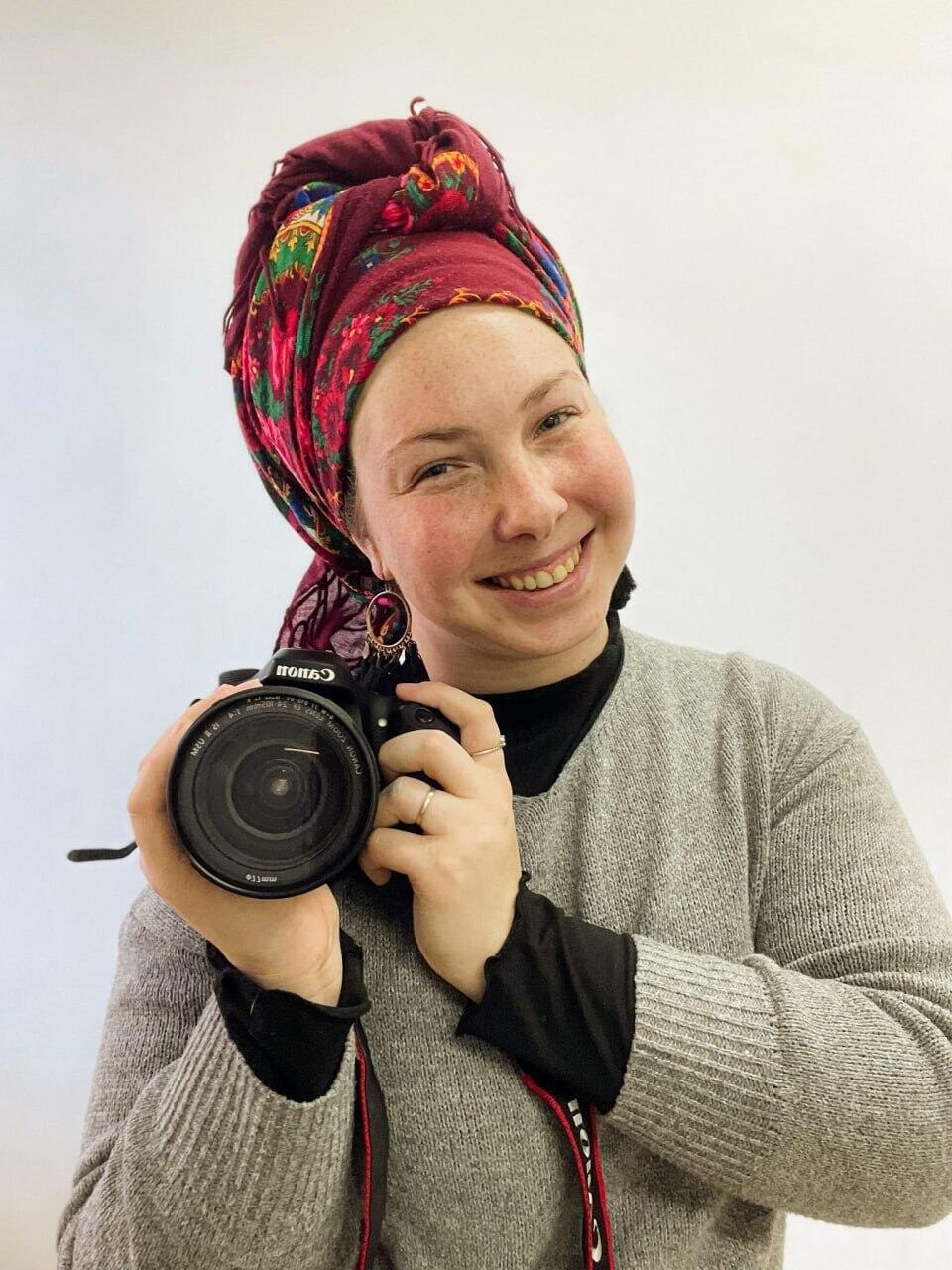
Yael Fomberg
(Photo: Yael Fomberg)
Fomberg said the danger does not stop at the formal border line and has long since moved beyond the communities evacuated at the start of the war. She cited an incident earlier this week in which an explosive drone fell near a children’s bus stop in the north just minutes after the children had left. “The danger does not stop at the dry border line, and it long ago passed beyond the evacuated communities,” she said. “Only the other day, an explosive drone fell at a children’s bus stop in the north, just 15 minutes after they had left. It ended by a miracle with no casualties, but that miracle is not a plan.”
As a mother, she said, the thought of what could have happened does not leave her. The current reality, she said, feels like Russian roulette with children’s lives. “The thought of what could happen will not leave me as a mother,” she said. “This reality is Russian roulette with our children’s lives. We will not wait for the next disaster.”
Fomberg said northern residents have already learned, in the harshest way, where a policy of containment can lead. For years, she said, residents of the south were told to endure rocket fire and other attacks as isolated incidents until the situation erupted on October 7. “We learned in the most painful way where a policy of containment leads,” she said. “We all saw what happened in the south when people endured and contained the ‘drips’ for years, and we saw what hell that led to on October 7.”
She said residents of the north will not accept the same pattern along the Lebanese border. “We will not agree under any circumstances to let that happen here in the north too,” she said. “We will not agree to be the ducks in the next shooting gallery while you manage a ‘surgical’ war.”
Fomberg called on cabinet ministers to recognize the full scope of the threat, define the entire confrontation line as a threatened red zone, end what she described as a defensive posture and remove the threat at its root. “We, the residents of the north, demand that the cabinet members in the government recognize the reality, define the entire confrontation line as a threatened and red area, stop the defensive posture and uproot the threat from the root,” she said.
She urged decision-makers not to leave security discussions without a real solution. “Do not end your discussions without a real solution,” she said. “It is time you understand: We are not third-class citizens. We are entitled to existential security just like every citizen of the State of Israel, and there is no place to continue endangering our lives. Our patience with being abandoned has run out.”
‘Even a sense of mission has its limits’
In Kiryat Shmona, Shay Rabin says life on the confrontation line has stopped being a choice and become a burden residents carry every day. Rabin, 38, is married, a father of three and publisher of the local newspaper Meida 8. He says many residents remain because they feel responsible for the future of the Galilee, but that sense of responsibility is being stretched to its limit. “To live on the confrontation line is no longer a choice, it is a role,” he said. “A role carried by each and every resident of this region. A kind of mission none of us really asked for, but many of us continue to fulfill day after day.”
Rabin said almost every resident has considered leaving. For people living with rockets, UAVs, drones and what they see as state neglect, the thought of moving somewhere else can be deeply tempting. “If we are honest, it is a very tempting thought,” he said. “To leave a life of rockets, UAVs, drones and neglect, and move somewhere else where the despair might be more comfortable. More certainty, more culture, education and health care, and less erosion.”
Since Kiryat Shmona residents returned home, Rabin said, there have been few days when people could make plans and know those plans would actually happen. Even the question of whether children will go to school can remain unclear until late at night or early in the morning. “Last night, we went to sleep not knowing whether the educational frameworks would open in the morning,” he said. “Imagine waking up early, checking messages, WhatsApp groups and news sites, and trying to understand what you are supposed to tell your employer.”
The constant instability, he said, has created an obstacle course that breaks down businesses, communities and families, leaving only “the strongest surviving.” Even when schools close or security instructions change, the ordinary demands of life continue. “The bills keep coming,” he said. “Day care payments, property tax, the mortgage and loans are deducted as usual. Employers demand that workers report to work, and customers expect service.”
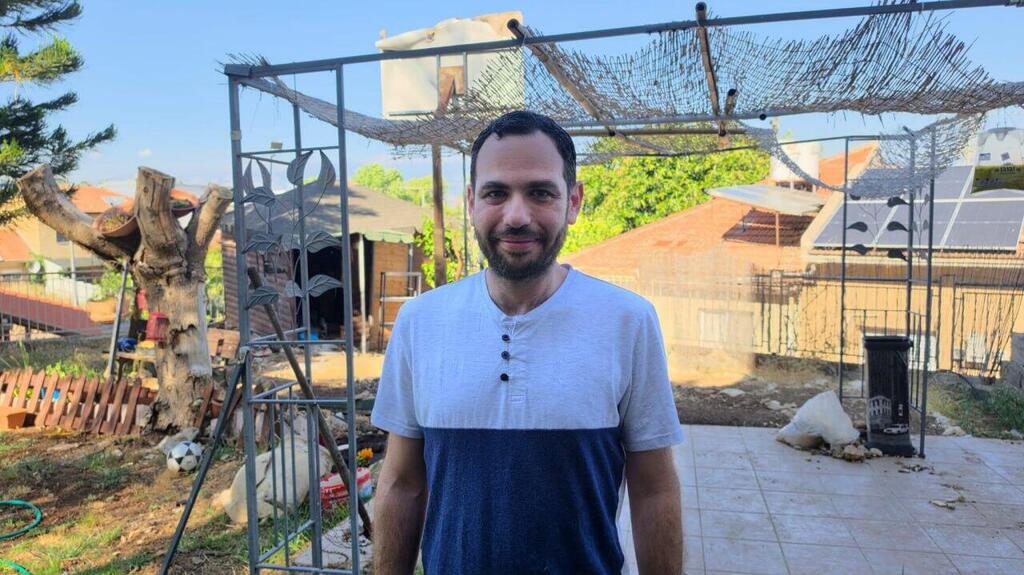
Shay Rabin
A shutdown of the education system, even for a few hours, has a direct economic cost, Rabin said. A parent who stays home with children cannot report to work. A factory loses a worker. Businesses lose customers. And when shops in the city start closing early in the afternoon, it creates a sense of emptiness and abandonment that outsiders struggle to understand. “A shutdown of the education system, even for a few hours, directly harms the economic fabric of the region,” he said. “A worker who stays home with the children does not come to the factory.”
Walking around a city where businesses begin closing their doors by afternoon, he added, creates “a sense of desolation that is hard to explain to anyone who does not live here.” “It feels like a place that is constantly in waiting mode,” Rabin said.
To begin rebuilding the region, he said, the government must act on two fronts: security and the economy. The first step, he argued, is restoring trust between the state and the public by telling residents the truth. “The first and most important thing is to restore trust between the government and the public and tell us the truth,” he said. “No more empty declarations like ‘Hezbollah is weakened,’ ‘Hezbollah is deterred,’ or ‘total victory,’ but an honest explanation of the long-term security plan.”
The second step, he said, is an economic plan that will allow businesses to recover, families to rebuild and communities to grow until real routine returns. Rabin said the old idea that life in Kiryat Shmona was cheaper and easier no longer applies. Many families, including his own, spent thousands of shekels renting homes elsewhere during evacuation periods. Others lost income, savings and the most basic sense of security. “People used to say life in Kiryat Shmona was cheaper and allowed for more,” he said. “Today the reality is different.”
Yet many residents still remain because they believe the north has a future and because they understand that Israel cannot afford to abandon its northern border. “Many of us are still here because we believe the north has a future, that Kiryat Shmona will yet flourish and that the State of Israel cannot afford to give up on its northern border,” he said.
Rabin said residents are staying out of responsibility, love for the place and a belief that they have a role in the struggle over the future of the Galilee. But love of home, he warned, cannot carry the entire burden alone. “We are staying here out of responsibility, out of love for the place and out of an understanding that we have a role in the struggle over the future of the Galilee,” he said. “But even a sense of mission has its limits.”
He said residents are tired of feeling unseen and of carrying alone what should be a national burden. “We are tired of feeling invisible,” he said. “We are tired of feeling that the entire burden rests only on the residents’ shoulders.”
In the end, Rabin said, Israel’s northern border is not held only by tanks, fences and military posts. It is also held by the civilians who continue to live there. “It is also held by ordinary people,” he said. “Kindergarten teachers, teachers, business owners, cleaners, secretaries, workers and parents who choose every morning, again, to stay.”