


As Israeli civilians have become accustomed to alerts warning of “infiltration of hostile aerial vehicle” and try to decode a new aerial threat emerging from the valleys of southern Lebanon, a very different reality is unfolding across the border inside enemy territory.
“At any given moment, there are thousands of our systems above the enemy. That is the reality they live with 24/7,” say instructors from the IDF drone school.
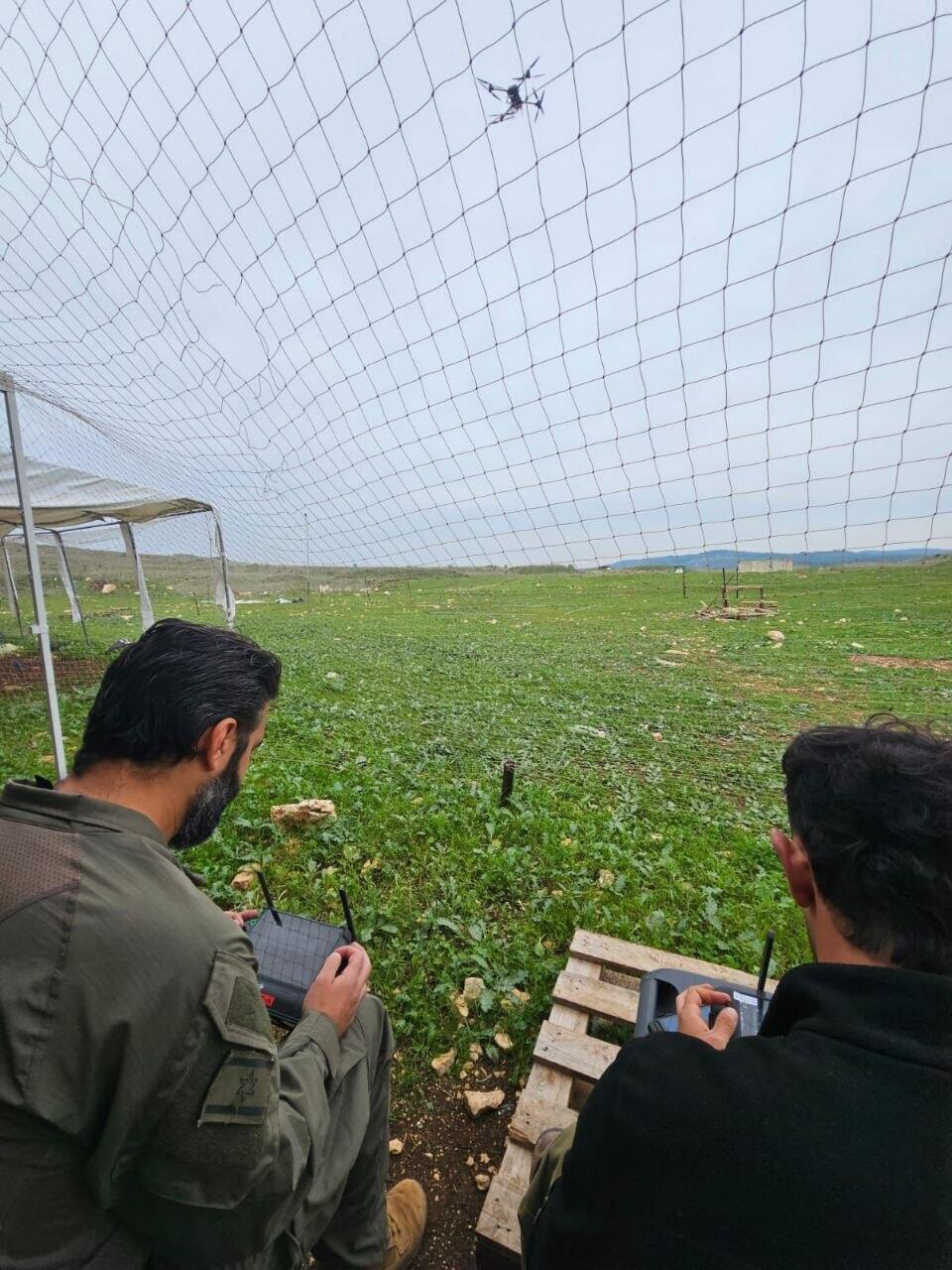
While the Israeli public mostly encounters unmanned aerial vehicles (UAV) only when they penetrate air defense layers, the ground forces have undergone one of the fastest and deepest technological transformations in their history. At the center of this shift is the IDF Northern Command drone school, a new unit established in March 2024 out of operational necessity and lessons learned from October 7. Since then, it has been operated by dozens of reserve teams.
“We sat down with instructors from the school after more than 900 days of fighting,” the report notes. “We talked about the drone battlefield and how soldiers are trained in this field. It was clear the instructors fully understand how dramatically the battlefield has changed and how survival now depends on the speed of learning.”
“We turned drone warfare into a profession,” explains Lt. Col. R., commander of the Northern Command drone school. “If drones used to be a small support tool, today field units have their own ‘micro air force.’ A significant share of missions from identifying the enemy, designating targets, dropping payloads, operating heavier drones and other complex tasks that cannot be detailed are now carried out independently by drones.”
Southern Lebanon’s terrain is described as a tactical nightmare for militaries: steep mountains, deep valleys and dense brush that Hezbollah uses for concealment. This is where drones have become decisive. “These systems allow us to fully control the space,” says Capt. N., deputy commander of the unit. “They remove the fog of war. A good drone operator changes the entire combat pattern of a company. It turns a field commander into almost omnipotent. The capabilities troops demonstrate today are beyond imagination and the public is not exposed to them.”
As part of the shift in doctrine, the IDF built a structured training system described as a strict professional pyramid. A soldier cannot advance to strike drones or loitering munitions without first proving full mastery of basic reconnaissance drones. The change has been clearly felt between earlier operations and the current war.
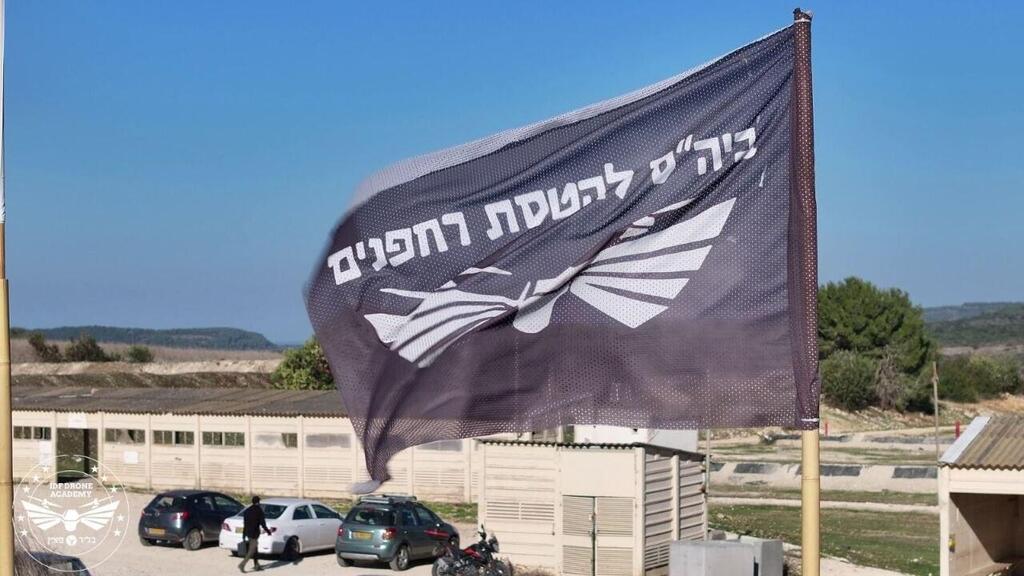
IDF Northern Command drone school
(Photo: Elisha Ben Kimon)
“In Operation Roaring Lion, alongside the campaign against Iran, ground forces maneuvering in Lebanon needed close air support,” Capt. N. explains. “The drone air layer provided that tactical cover, allowing the larger air force to focus on more distant strategic arenas. The entire force structure of the IDF has changed.”
Hezbollah, they say, feels the pressure. “Every force facing us in combat feels our drones. It disrupts their plans fundamentally and burdens them,” says Lt. Col. R. “They try to detect our systems, shoot them down and disrupt them in every way. Yes, there are losses, sometimes due to technical faults, weather or enemy fire, but the number of systems in the ground forces is enormous, tens of thousands. Losing a drone does not affect the mission.”
'Responding with new capabilities'
But the transformation is not one-sided. In recent months, the drone school has increasingly focused on a parallel threat: Hezbollah’s first-person-view (FPV) drones using fiber-optic cables.
“We studied defensive doctrine even before establishing the school, in line with what was happening in the Russia-Ukraine war,” says Lt. Col. R. “By the end of 2023, we began implementing an operational concept across the forces. In recent months, we have integrated detection and interception systems, and some are already reaching the field, but it is not a complete solution yet.”
“The learning curve is insane on both sides,” he adds. “An enemy drone operator spots a weakness in real time, learns and changes tactics and we must respond with new capabilities and new weapons.”
But the commanders stress that technology alone will not defeat FPV drones. There is no perfect solution and the systems are not everywhere.
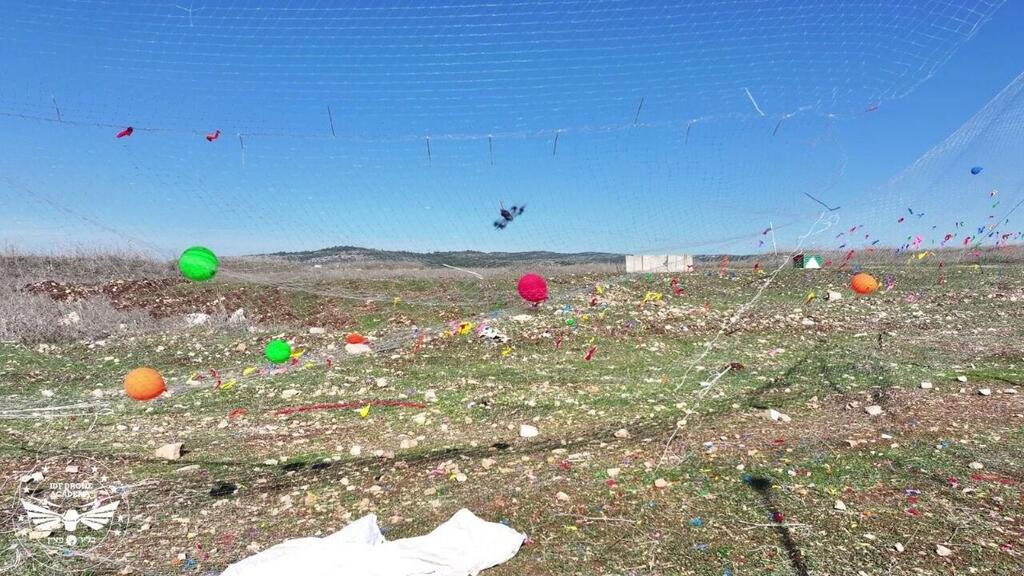
IDF Northern Command drone school
(Photo: Elisha Ben Kimon)
“This is critically important: every soldier and commander must know the doctrine of protection at the highest level,” says Lt. Col. R. “It is similar to missile defense. We all know there are active defense layers but when an alert sounds, civilians go to a protected room. In the same way, a soldier in the field must know how to protect against drones.”
The immediate tactical solution taught at the school is based on awareness and use of the environment. Forces train a dedicated soldier acting as a “sky observer,” responsible for listening, scanning, providing early warning and engaging with small arms if needed. At the same time, troops practice deploying physical protective nets and using camouflage and terrain to disappear from enemy drone surveillance.
“This saves lives, unequivocally,” concludes Capt. N. “We want to pass this message to as many soldiers as possible in the field because, in the end, this doctrine is the final and most critical layer of defense. It is like a soldier’s protective vest. He must know it and shape his environment accordingly.”
The unit continues developing systems, testing technologies at rapid pace and deploying thousands of aerial platforms over Lebanon. “We will never know how many soldiers were saved and how many operational objectives were achieved thanks to the world of drones,” says Capt. N., “but to reduce the enemy’s threat, the commander’s awareness in the field is the immediate key.”