

Officials in Jerusalem are urging the United States to maintain what they describe as “red lines” in nuclear talks with Iran, amid skepticism about the chances of reaching a deal and as President Donald Trump prepares to meet Prime Minister Benjamin Netanyahu at the White House.
Speaking Wednesday at a rally in Tehran marking the 47th anniversary of the 1979 Islamic Revolution, Iranian President Masoud Pezeshkian said a “wall of distrust” created by statements and actions of the United States and European countries was preventing progress in the negotiations.
Mass rally in Tehran marking the 47th anniversary of the Islamic Revolution
(Video: Reuters)


“At the same time, we are participating in the talks with a full desire for dialogue aimed at achieving peace and stability in the region alongside our neighboring countries,” Pezeshkian said.
Officials in Jerusalem have assessed in recent days that the talks are unlikely to produce an agreement that would allow Trump to avoid carrying out previous threats of military action against Iran.
The Washington Post reported Wednesday that many officials in Tehran also believe the negotiations are likely to fail. A European official in contact with Iran’s leadership told the newspaper that many there see confrontation with the United States as ultimately unavoidable and believe talks may only delay potential military action.
The negotiations began after Trump warned of possible strikes following Iran’s violent crackdown on mass protests last month, in which thousands of demonstrators were killed. While Trump has not carried out those threats, he has increased military pressure, deploying the aircraft carrier USS Abraham Lincoln, eight destroyers and additional forces to the region.
Iran has publicly refused to negotiate over its missile program and says it is willing to discuss only partial limits on its nuclear activities, rejecting a complete halt to uranium enrichment as demanded by Washington and Jerusalem.
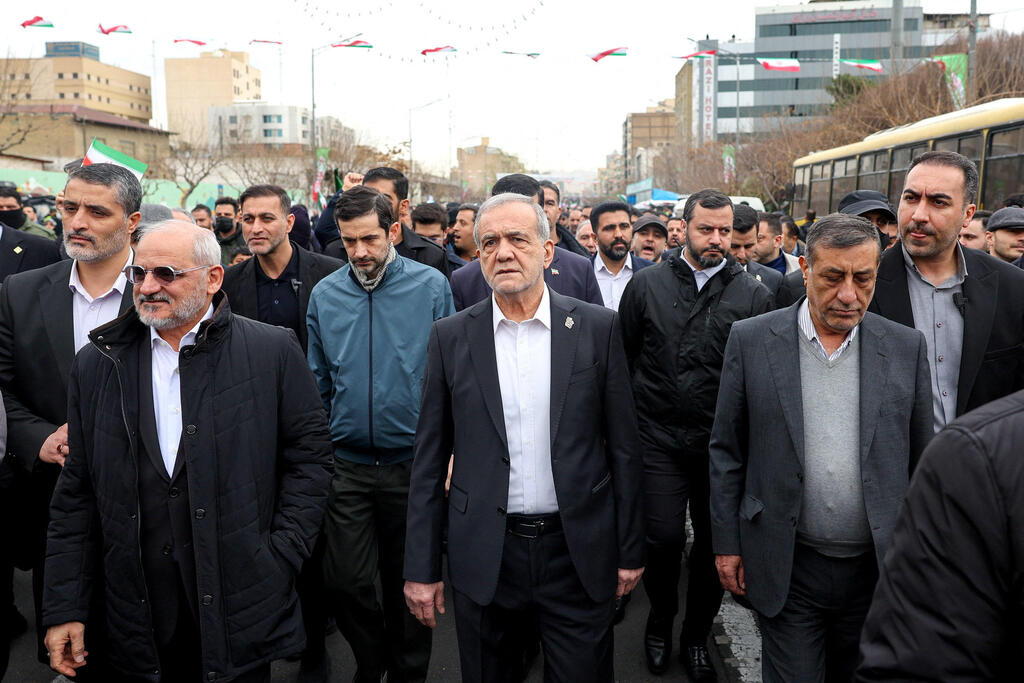
(Photo: Majid Asgaripour/WANA (West Asia News Agency) via REUTERS)
Despite initially rejecting negotiations under threat, Iran held a first round of talks last weekend in Oman between Foreign Minister Abbas Araghchi and U.S. envoys Steve Witkoff and Jared Kushner. The talks ended without significant progress, though both sides agreed to continue discussions.
Ali Larijani, secretary of Iran’s Supreme National Security Council, said Wednesday that a date for the next round would be announced and added: “We must continue negotiations with America.”
At the same time, Iranian officials issued warnings. Ali Shamkhani, secretary of Iran’s Defense Council and a close adviser to Supreme Leader Ayatollah Ali Khamenei, said any attack on Iran, even a limited one, would be considered the start of a war.
“We will not be bound by any limitation,” Shamkhani said, warning that escalation could have consequences beyond the region, particularly if conflict disrupted shipping through the Strait of Hormuz, a vital route for global oil supplies.
In Jerusalem, officials have expressed concern that Trump could settle for a limited agreement focused solely on nuclear restrictions, without addressing Iran’s missile program or its support for armed groups in the region.
Trump said this week that he prefers a deal with Iran that includes limits on both its nuclear program and ballistic missiles.
“I say I’d rather make a deal — without nuclear and without missiles,” Trump said in an interview ahead of his meeting with Netanyahu, while adding that he remains prepared to increase pressure if talks fail.