

The last time airstrikes succeeded in bringing down a tyrannical regime was in 1999. The backdrop was widespread opposition in Western countries to the brutal ethnic cleansing carried out by Yugoslavia against the Albanian minority in Kosovo, then a province of Serbia within Yugoslavia.
After diplomatic efforts to halt the massacres and expulsions in Kosovo failed, NATO (the North Atlantic Treaty Organization) forces, led by the United States, launched a large-scale military campaign called “Allied Force.” The operation did not include a ground maneuver or ground combat; it relied entirely on airstrikes by fighter jets and missile launches aimed at the massive destruction of strategic state and military infrastructure.
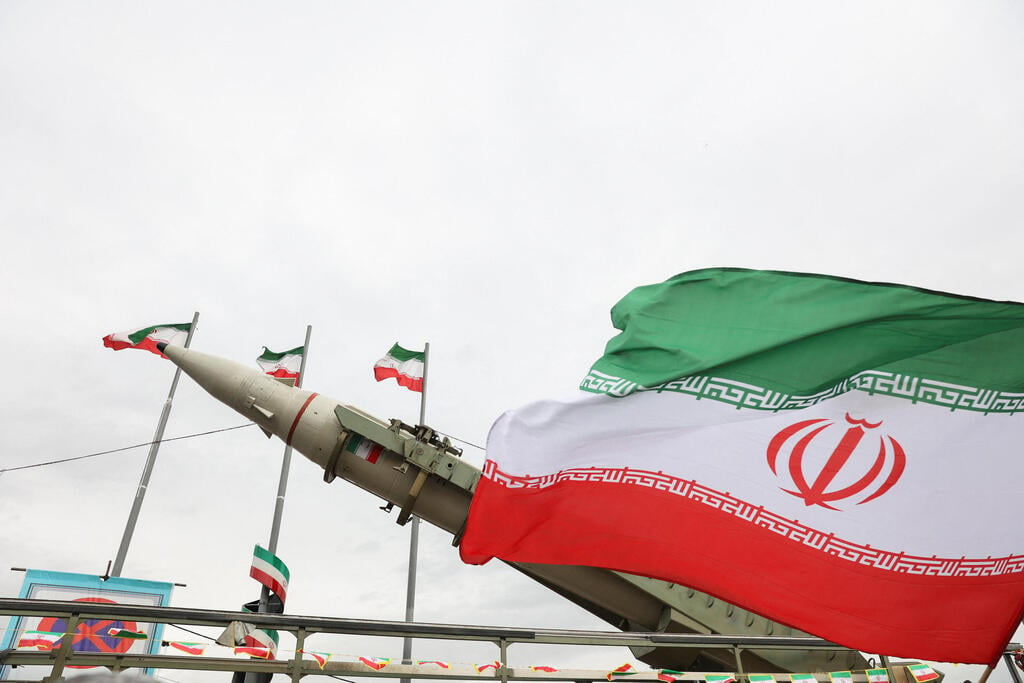
(Photo: Majid Asgaripour/WANA (West Asia News Agency) via REUTERS)
Yugoslav President Slobodan Milošević had no answer to the assault. He capitulated to NATO’s demands and withdrew his forces from Kosovo. About a year and a half later, under pressure from massive popular protests, the dictator was forced to resign. He his life ended in a prison cell in The Hague, the Netherlands, during his trial at the International Criminal Tribunal.
Twenty-seven years later, political leaders and senior military commanders around the world are debating whether a comparison can be drawn between the successful action against Milošević and a similar action against the regime in Iran.
NATO’s operation to save Kosovo was not a one-off strike in the style of the American action in Venezuela this past January. Nor was it a 12-day war like Operation Rising Lion. In Yugoslavia, heavy aerial bombardment and cruise missile launches from submarines by the United States and Britain continued for 77 consecutive days. More than 1,000 aircraft took part in the campaign. Although the U.S. Air Force and Navy carried out the overwhelming majority of the operational activity, many other countries played an active role: Britain, France, Germany, Italy, the Netherlands, Spain and others.
This does not appear to be the case with Iran. President Donald Trump is not seeking to establish a broad international coalition to confront the Iranian military head-on. Nor does he intend to be drawn into a prolonged campaign; according to the American media, his directive to the military establishment is to present him with a proposal for a “swift and decisive” operation.
Under these conditions — which do not match the approach the United States adopted in the Balkan war — could the U.S. military, through a focused and relatively short campaign without the use of ground forces, compel the Iranian regime to meet demands it has rejected for decades, or prepare the ground for renewed popular protests that would ultimately lead to regime change?
I do not know whether CENTCOM, the U.S. Central Command responsible for the Iranian theater, has succeeded in planning a realistic course of action that aligns with President Trump’s wishes. The distinctive flow of forces toward the theater suggests meticulous and thorough operational planning, but that is still only an assumption, not knowledge.
Another critical piece of information that I do not possess — and perhaps no one in the world does except Donald Trump — concerns the president’s willingness to bear the costs associated with such a campaign. There is no fighting without cost; it always hurts, sometimes in unexpected ways. And when dealing with Iran — still a strong regional power with a fanatical leadership, 90 million citizens, and proven resilience — Trump has much to weigh: the expected domestic political consequences; the international diplomatic ramifications; the impact on the global economy if Iran attempts to disrupt freedom of navigation in the Strait of Hormuz; the implications for his special relationships with Gulf allies; and the potential consequences of strikes against American bases and assets in the region.
Assuming that none of these factors paralyze the United States with fear, the key question remains: what would be the outcome of an American strike? My answer: a broad American operation, even if time-limited, would force the regime in Tehran to choose between inevitable collapse and survival under conditions that would be extremely difficult to accept.
To achieve this objective, the required course of action would be powerful, continuous and precise blows from the air and sea, without the use of ground forces, over a period of several weeks. The operational goal: the systematic destruction of the Iranian regime’s seven critical centers of gravity — the leadership; the military command and senior intelligence apparatus; civilian infrastructure also used by the Revolutionary Guards’ military systems (such as bridges, industrial plants and more); the Iranian Air Force; the Iranian Navy’s infrastructure; the bases and headquarters of the Revolutionary Guards; the ballistic missile arrays; and the nuclear program infrastructure, which Iran began rebuilding after Operation Rising Lion. These selected targets are no secret. Everyone knows them, including the regime — except that Iran lacks the ability to defend them over time against devastating strikes.
The US Air Force is skilled
Since last June, Iran has worked to rebuild its air defense capabilities, but the U.S. Air Force is highly proficient and within days would be able to carve out protected flight corridors for its strike and bomber aircraft against surface-to-air missile threats and electronic jamming capabilities. From that moment on, any site designated as a target by intelligence anywhere in Iran would be exposed to precise strikes.
One can flee the bases, but there is no way to save them from destruction. One can abandon the ships, but the Iranian Navy has no means of preventing the complete sinking of its fleet. The “shadow fleet” must also be considered a legitimate target: Iran operates a vast number of ships that appear innocent — ostensibly a civilian fleet. In practice, they are equipped with advanced military systems, radars, intelligence-gathering equipment, weapons systems, and platforms for launching helicopters and drones. The Iranian Navy uses them to transport supplies, fuel, weapons and personnel among the many bases located along Iran’s extensive coastline. This entire system — through which Iran imposes regional and global terror and threatens international trade routes — must be struck and sent to the depths.
 Tzachi HanegbiPhoto: Shilo Shalom
The Iranian Air Force can order its pilots to flee their aircraft, but there is no underground shaft in Iran deep enough to prevent their destruction. Iran possesses hundreds of fighter jets, transport and reconnaissance aircraft, and helicopters. The operational readiness of the aircraft and pilots has not been tested in real combat since the Iran-Iraq War, yet Iran has already demonstrated groundbreaking technological development capabilities in many fields, and there is no reason to assume that precisely in the area of upgrading and maintaining its air force it would show weakness. Therefore, the assessment that downplays the importance of this branch should not be accepted, and campaign planners must pursue the aircraft fleet to the very last plane.
If Trump conducts the campaign against Iran with the same determination demonstrated by President Bill Clinton in 1999, the citizens of Iran will have good reason for hope. Kosovo today is a democratic state in every respect, and the Iranian people’s aspiration for freedom could also be realized.
Tzachi Hanegbi served as head of Israel’s National Security Council and as national security adviser until October 2025.