

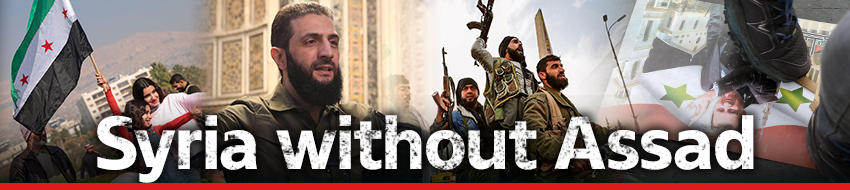

Syrian President Ahmad al-Sharaa said Damascus is holding “advanced discussions” on a possible security arrangement with Israel, but emphasized that any deal would be based solely on the 1974 ceasefire lines. His comments came during a meeting with Arab media figures and former information ministers, according to Syrian reports.
Former Jordanian Information Minister Samih al-Maaytah, who attended the gathering, later wrote in Jordan’s Al-Rai newspaper that al-Sharaa displayed “a great deal of realism” in addressing Syria’s central challenges. He added that the Syrian president’s tone was not that of “a commander of an Islamist faction adhering to a strict interpretation of religious texts,” but rather of a leader placing “Syria first.”
Gallery
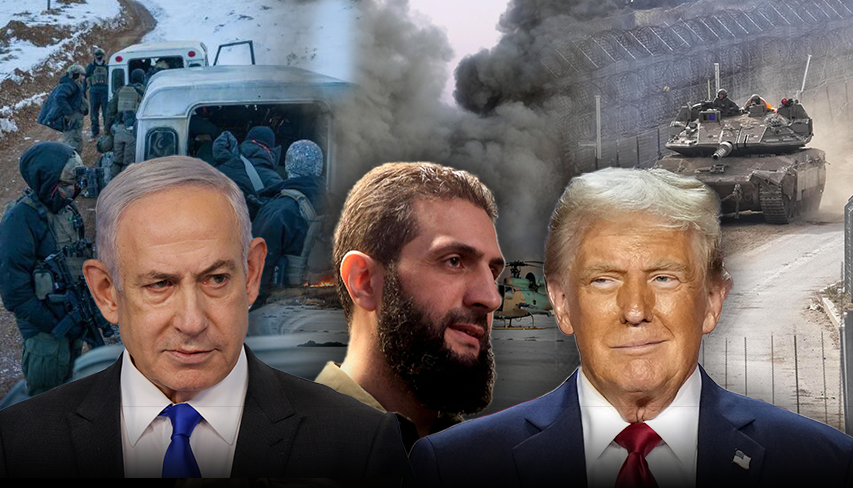
(Photo: Haj Suleiman/Getty Images, IDF Spokesperson’s Unit, AP Photo/Matias Delacroix, Abdulaziz Ketaz/AFP, Marc Israel Sellem, AP Photo/Alex Brandon)
The remarks surfaced as Prime Minister Benjamin Netanyahu met Sunday in Jerusalem with U.S. Special Envoy for Syria and Lebanon Thomas Barrack, part of Washington’s push to broker a security framework involving Israel, Syria and Lebanon. The meeting also included former U.S. envoy Morgan Ortagus, Israeli National Security Adviser Tzachi Hanegbi and U.S. Ambassador to Israel Mike Huckabee.
Barrack has been mediating between Jerusalem and Damascus while pressing Lebanon’s government to disarm Hezbollah and other armed groups. At the meeting, he raised U.S. requests for Israel to scale back strikes on Hezbollah infrastructure and to withdraw from five points along the border where Israeli forces are deployed inside Lebanese territory.
Barrack recently told the Associated Press that Israel would rather see a “fragmented and divided” Syria than a strong centralized state, but added that “all the minority communities are smart enough to say, ‘We’re better off together, centralized.’”
In recent days Barrack has also met in Paris with Sheikh Mowafaq Tarif, the spiritual leader of Israel’s Druze community, and participated in a trilateral meeting with Israeli Strategic Affairs Minister Ron Dermer and Syrian Foreign Minister Assad al-Shaibani. One focus of those talks was establishing a humanitarian corridor to the Druze population in Sweida, southern Syria. Barrack also held talks in Israel with Foreign Minister Gideon Saar and Defense Minister Israel Katz.
Meanwhile, Lebanon’s Al-Jadid channel reported that Israel has formally responded to a U.S.-drafted document aimed at resolving Lebanon’s internal disputes and creating security understandings with Jerusalem. Arab media described Israel’s response as a “rejection of the Barrack proposal,” noting that Israel accepted only some clauses.
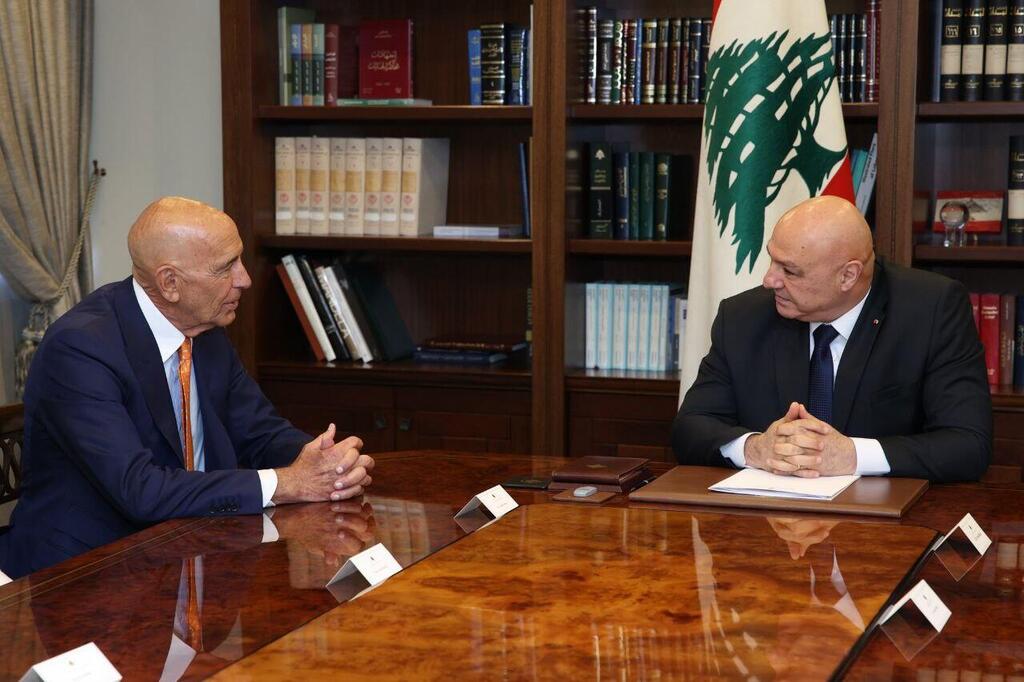
Lebanese President Jospeh Aoun meeting with U.S. special envoy Thomas Barrack
According to the reports, Israel gave tentative approval to gradually halt airstrikes and targeted killings, withdraw from certain areas and settle outstanding Lebanese prisoner cases, but it insisted that destroyed villages along the border not be resettled and instead be turned into an uninhabited industrial buffer zone.
Lebanon’s government now faces critical decisions: whether to extend the UNIFIL peacekeeping mandate expiring at the end of the month, whether to endorse the U.S. proposal and whether to confront Hezbollah on disarmament. Hezbollah has rejected the plan, demanding Israel first comply with existing agreements, halt strikes, withdraw from all Lebanese territory and release prisoners.
Reports say Barrack is expected to return soon to Beirut with Ortagus and a delegation led by Senator Lindsey Graham. Hezbollah-linked Al-Akhbar called Graham a “radical Zionist” and warned of the mission’s goals.
Tensions within Lebanon remain high, particularly between President Joseph Aoun and Hezbollah, which has resisted government moves toward disarmament. Hezbollah parliamentary leader Mohammed Raad met with a presidential envoy last week, reiterating the group’s firm stance that the government must reverse its decision.
Meanwhile, the Lebanese daily Nidaa al-Watan, which is critical of Hezbollah, published an article titled “Iran Guides, Hezbollah Executes. Lebanon Is a Hostage to Regional Influence.” Citing political sources, the paper said increased attacks on Prime Minister Nawaf Salam and harsher rhetoric toward Saudi Arabia reflect Tehran’s bid to reshape Lebanon’s political landscape.
A U.S. diplomatic source warned that Lebanon risks a severe crisis if disarmament fails, not ruling out the possibility of renewed military confrontation with Israel.