

The internal police oversight body lifted a gag order Wednesday in a criminal investigation into the head of the Israel Police’s elite anti-corruption and organized crime unit, revealing allegations that the top officer maintained inappropriate ties with a former mayor under investigation alongside a major crime syndicate.
Deputy Commissioner Meni Binyamin, chief of Lahav 433 — often described as Israel’s equivalent to the FBI — is being investigated by the Police Internal Investigations Department (PIID), on suspicion of breach of trust and abuse of office.
Gallery
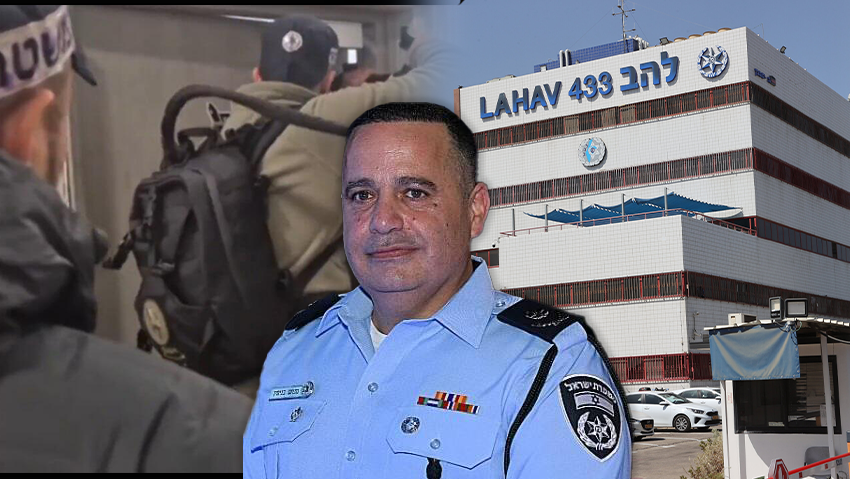
Lahav 433 chief Deputy Commissioner Meni Binyamin
(Photo: Yariv Katz, Israel Police, Hassan Shaalan)
The case centers on allegations that Binyamin remained in undisclosed personal contact with the former mayor of Nazareth during an ongoing criminal probe, and that he shared sensitive police information with him. Investigators also suspect that after realizing evidence had been collected against him, Binyamin sought to influence the internal handling of the case, attempting to have it transferred to a different police unit that also fell under his authority.
The probe is part of a wider investigation dubbed “Money Maze,” which targets the Bakri crime organization operating in and around Nazareth in northern Israel. On Wednesday morning, police forces raided Nazareth’s city hall as part of the crackdown, responding to allegations of facilitating large transfers of municipal funds to members of the crime ring, severely damaging the city’s finances.
On Tuesday night, hundreds of officers from the Northern District and Border Police units, assisted by the district’s Central Unit, launched coordinated raids on properties belonging to senior members of the Bakri organization.
Police forces raid the Nazareth city hall
(Video: Hassan Shaalan)


The raid followed a covert investigation that, according to police, revealed mounting evidence that the crime syndicate had effectively taken over the municipal finances. Investigators allege that high‑ranking municipal employees participated in a scheme to transfer money to the crime network and launder illicit proceeds.
As a result of the operation, 13 suspects — including leading crime ring figures, business associates and current and former Nazareth municipal officials, among them a former mayor — were arrested. Authorities also confiscated multiple luxury cars, along with bank accounts and real estate holdings valued at tens of millions of shekels.
According to police, the Bakri crime network is linked to extensive criminal activity throughout northern Israel: racketeering, extortion, manipulation of public tenders and, in recent years, a number of violent murders attributable to violent power struggles with rival criminal groups.
Luxury cars belonging to the Bakri crime syndicate seized by police
(Video: Israel Police)

Luxury cars belonging to the Bakri crime syndicate seized by police
(Photo: Israel Police)
PIID has placed Binyamin under a set of restrictive conditions while the investigation continues, including a ban on contacting individuals connected to the affair. PIID officials said Wednesday that “Commander Binyamin was expected to maintain a clear separation between his role as head of Lahav 433, with access to the covert investigation into the Bakri crime organization, and the former mayor, who was one of the targets.” According to PIID, Binyamin’s personal friendship with the former mayor constitutes a fundamental conflict of interest.
Associates of Binyamin say his relationship with the former mayor began in 2017, when Binyamin was stationed in Nazareth as commander of the city’s police station — a standard professional relationship, they say, given the expected cooperation between police and municipal leaders. At that time, no criminal investigation had been opened into the mayor.
Attorney Uri Korb, representing Binyamin, said in response: “The allegations of conflict of interest against the head of Lahav 433 are false and embarrassing. Deputy Commissioner Binyamin’s relationship with the former Nazareth mayor was professional and open to all, and even that carried forward for operational reasons, to avoid compromising a covert investigation.
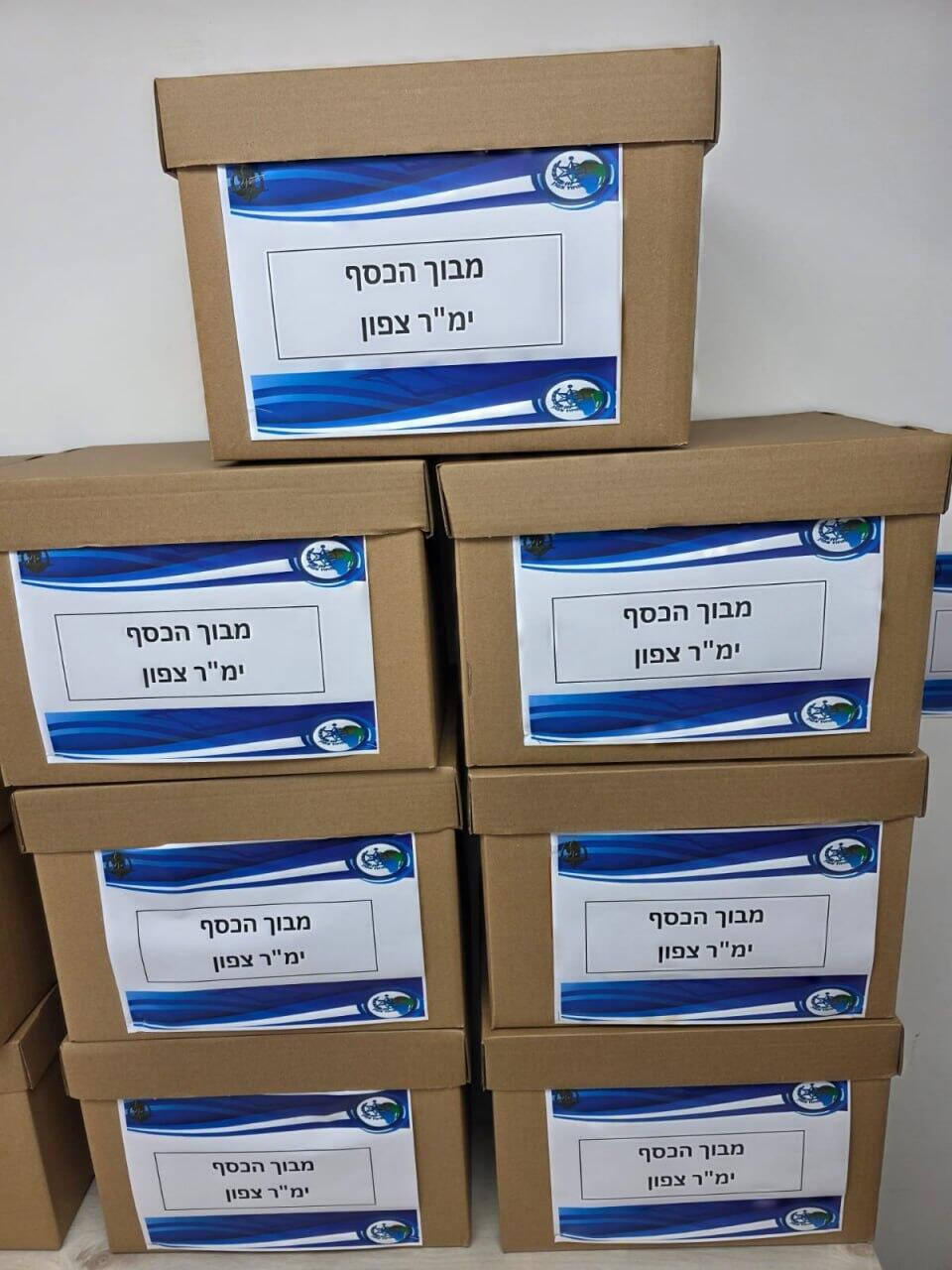
Documents seized as part of the so-called Money Maze police investigation
(Photo: Israel Police)
“The meetings he held with the mayor were open and known and attended by senior police officers. Phone calls with him were not concealed from anyone, and my client knew the mayor was under investigation — with all that implies. The head of Lahav did not provide investigation details, and the information gathered by Lahav led to the mayor’s removal from office.
“The claim that such a known, professional relationship constitutes a conflict of interest raises troubling questions about the direction of the investigation. Contrary to claims that Binyamin tried to move the case to a unit under his command, he initially determined who would lead the investigation, and the case was transferred between two units subordinate to him, on professional grounds. The fact that the PIID continues to assert these allegations — especially the assertion of a link to organized crime — is an action that should not be taken; it damages Binyamin’s reputation and public trust in law enforcement.”
Last month, Binyamin was again detained for interrogation over a new alleged conflict of interest — unrelated to the original case — just one day before the expiry of his prior restrictions. He is suspected of having tried to promote his wife’s cousin, Cmdr. Tomer Strauss, to head of the national economic crime division. Binyamin was interrogated again after Police Commissioner Danny Levy allowed him to return to duty despite the allegations and over objections from the police legal adviser.
Deputy Commissioner Meni Binyamin leaves the Police Internal Investigations Department offices in Jerusalem, last month
(Video: Liran Tamari)
He was questioned for hours at the PIID offices in Jerusalem. His release was delayed after he refused to agree to one of the bail conditions, which would have required him to distance himself from a senior officer in his former unit — Yaron Ben David, head of the national economic crime division. Eventually, Benjamin signed the agreement “under protest” and was released under the imposed conditions, according to his attorney.
That evening, the head of the police watchdog reportedly called the commissioner to inform him of the developments in real time. Despite previously backing him throughout the investigation, the commissioner ultimately requested that Binyamin accept the release conditions.