


Long before Sufian Abu Zaida identified himself as the Palestinian intermediary who says he carried Yahya Sinwar’s warning to Israel weeks before Oct. 7, he had built the kind of political résumé that made such a role possible.
A former Palestinian Authority minister and senior Fatah figure who speaks fluent Hebrew, Abu Zaida spent about 12 years in Israeli prison before later working closely with Israeli officials. He also remained tied to Mohammed Dahlan’s camp and maintained contacts with figures inside Hamas.
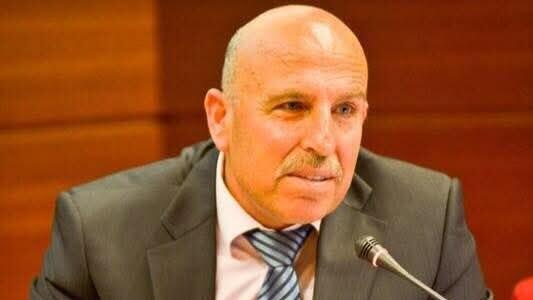
That unusual network has now placed the 66-year-old at the center of renewed scrutiny over what Israel knew before Hamas’ Oct. 7, 2023, attack. Abu Zaida said Wednesday that he was the previously unidentified intermediary who received a message from Sinwar and passed it onward to the United Arab Emirates and Israel. According to an investigation by journalists Shlomi Eldar and Ruth Yuval, Sinwar warned in September 2023 that he was preparing a major “surprise” if negotiations with Israel did not advance, repeatedly using the Arabic word “zilzal,” meaning “earthquake.”
Abu Zaida said in a video that he would reveal more “in the coming days” about the message and his role in indirect contacts between Israel and Hamas. His disclosure answered one of the central questions surrounding the story: Who was the Palestinian intermediary Sinwar allegedly trusted to carry such a warning?
From Israeli prison to the Palestinian Authority
Born in the Jabalia refugee camp in Gaza, Abu Zaida has been a familiar figure in Palestinian politics for decades. He spent about 12 years in Israeli prison for involvement in terrorist activity, then entered the institutions of the Palestinian Authority after his release and became closely involved in dealings with Israel.
He served in senior roles connected to Israeli-Palestinian relations, including as minister for prisoner affairs and later as minister for civil affairs, a portfolio dealing with coordination between Israel and the Palestinians. His fluent Hebrew and years of contact with Israeli officials gave him extensive familiarity with both the Israeli system and the politically sensitive issue of Palestinian prisoners.
Those connections later became relevant in negotiations involving Israelis held in Gaza and Palestinian prisoners held by Israel. During talks over the release of abducted Israeli soldier Gilad Shalit, Abu Zaida helped map out prisoners who could potentially be included in an exchange.
The Dahlan connection
Another central part of Abu Zaida’s political story is his close relationship with Mohammed Dahlan, the former Fatah security chief in Gaza and longtime political rival of Palestinian Authority President Mahmoud Abbas. Abu Zaida was for years considered one of the senior figures associated with Dahlan’s camp and was expelled from Fatah in 2014 along with other officials identified with him.
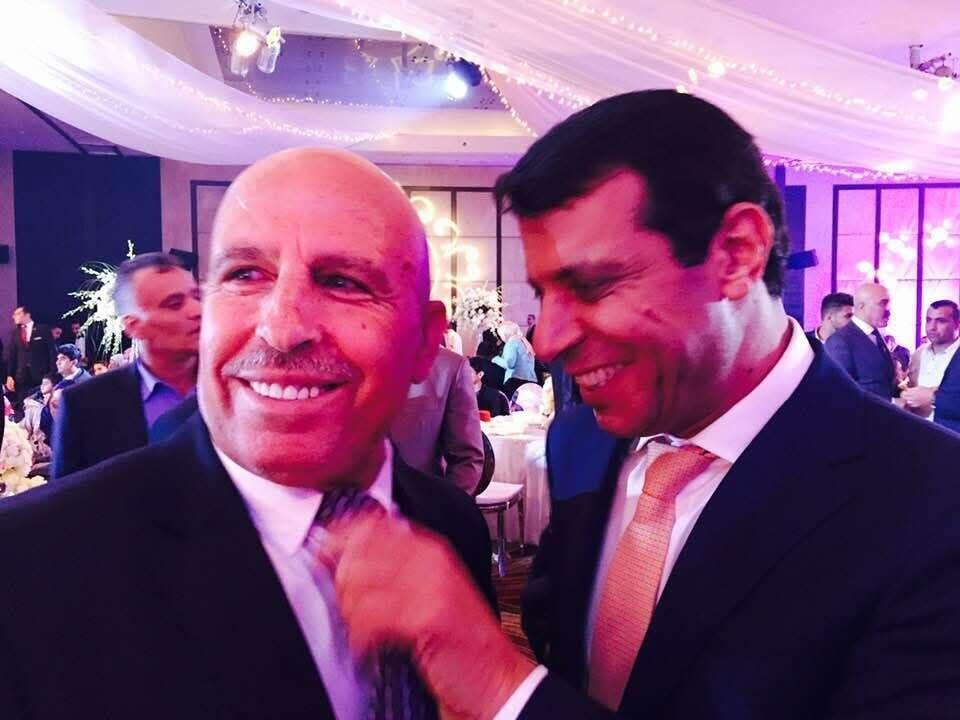
Abu Zaida and Mohammed Dahlan
That relationship is particularly important because Dahlan has close ties to the United Arab Emirates. Abu Zaida remained associated with his camp even after losing his formal position in Fatah, creating another bridge between Gaza, Palestinian politics and Abu Dhabi.
In 2019, the Palestinian Authority seized Abu Zaida’s home in Ramallah, prompting him to return to Gaza. During the war, he moved to Egypt and continued appearing in Arab media as a political commentator.
Ties inside Hamas
Abu Zaida’s contacts were not limited to Fatah, the Palestinian Authority and Israel. Despite the bitter rivalry between Fatah and Hamas, he also maintained relationships with figures inside Hamas. In 2010, he met in Gaza with senior Hamas official Fathi Hamad, with the two described at the time as childhood friends.
Those ties did not shield him from the conflict between the factions. In 2006, Abu Zaida was briefly abducted by armed men identified with Hamas. The result was an unusual political position: a former Fatah official aligned with Dahlan, deeply familiar with Israel and the prisoner issue, yet also capable of communicating with Hamas figures.
According to Eldar and Yuval, it was that network that eventually brought Abu Zaida into indirect contacts with Sinwar.
The secret channel with Sinwar
For roughly a year and a half before the war, Abu Zaida was involved in a channel between Israel and Hamas aimed at advancing a prisoner and hostage deal, according to the investigation. The talks focused on the return of the bodies of IDF soldiers Hadar Goldin and Oron Shaul and the release of Israeli civilians Hisham al-Sayed and Avera Mengistu, who were being held in Gaza at the time, in exchange for Palestinian prisoners and measures easing conditions for residents of the Strip.
Eldar said the negotiations stalled in early September 2023. Sinwar then disappeared from the talks and later summoned Abu Zaida, telling him to warn the Israelis that if there was no progress he was preparing a “big surprise.” Sinwar used the word “zilzal,” or “earthquake.”
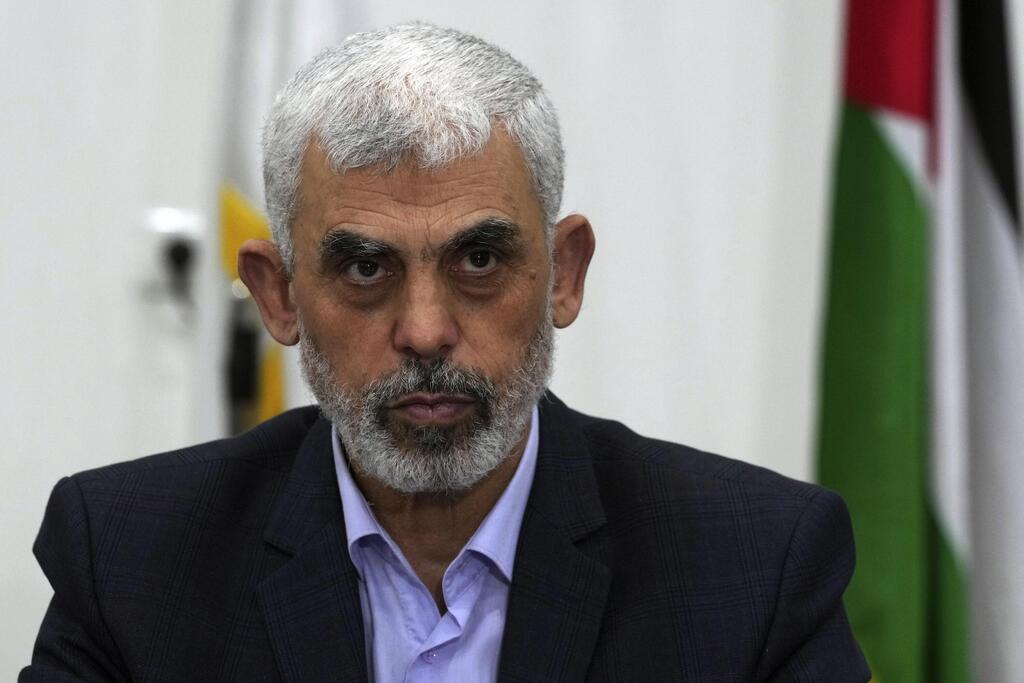
Yahya Sinwar
(Photo: Adel Hana, AP)
According to the investigation, Abu Zaida left the meeting alarmed and passed the message to a Palestinian associate who now serves as an adviser to UAE President Sheikh Mohammed bin Zayed Al Nahyan. He initially did not pass it directly to the Shin Bet because he feared being accused of collaborating with Sinwar.
After the adviser informed bin Zayed, the Emirati president wanted clarification over whether Sinwar was threatening war. Abu Zaida was sent back to him. Eldar said Sinwar then told Abu Zaida: “Pass them a message that I am preparing a surprise from the land of surprises. A formidable operation. Something unusual.” He again used “zilzal” and asked that his words be conveyed to Israel verbatim.
Abu Zaida contacted the Emirati adviser again and, according to the investigation, passed the warning to the Shin Bet on Sept. 15. Then-Shin Bet chief Ronen Bar subsequently spoke with Prime Minister Benjamin Netanyahu, and security discussions were held in which Bar recommended either acting to neutralize the threat or significantly strengthening defenses around Gaza.
The warning, however, was interpreted differently. According to the investigation, officials believed Sinwar might have been referring to an attempt involving Elizabeth Tsurkov, the Israeli researcher who had been abducted and was being held in Iraq.
The disputed Netanyahu warning
Eldar and Yuval’s investigation also alleges that bin Zayed later contacted Netanyahu personally after seeing no apparent Israeli response and wanting to make sure the warning had reached him. According to their account, the two spoke for about 45 minutes, with Netanyahu reassuring the Emirati leader that Israel was prepared in Gaza and suggesting that serious trouble was more likely to emerge in the West Bank.
The journalists further alleged that Netanyahu did not inform then-IDF chief of staff Lt. Gen. Herzi Halevi, Bar or Mossad director David Barnea about the purported conversation.
Netanyahu strongly denies that account. His office said no conversation between Netanyahu and bin Zayed took place from the beginning of September through Oct. 7, 2023, and said records held by the Prime Minister’s Office, National Security Council and military secretariat showed no such call. Netanyahu later threatened legal action over publication of the allegation.
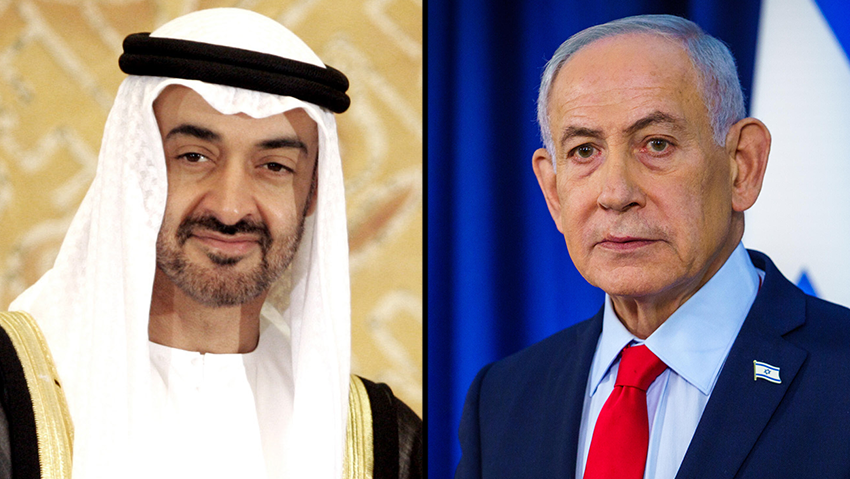
Benjamin Netanyahu and Mohammed bin Zayed
(Photo: AP, Shalev Shalom)
Eldar has stood by the investigation, saying the journalists possess recordings, documentation and corroborating evidence. “People in the security establishment said, in the Shin Bet and the IDF, that if we had known about this conversation, it would have given us another assessment of the information that had already arrived on Sept. 15,” he said.
The investigation also examined an Oct. 1 security discussion, six days before the attack, concerning unrest along the Gaza border and intelligence indicating Hamas intended to carry out an attack in the West Bank. According to the journalists, Bar again recommended considering targeted killings of senior Hamas figures, including Sinwar. Netanyahu told security officials to prepare plans for his consideration.
A senior Shin Bet official quoted in the investigation said knowledge of the additional warning could have changed how the agency interpreted the information already in its possession. “If we had known about the warnings, there is a chance it would have given much greater weight to the first message we received from Sinwar,” the official said.
Abu Zaida has not yet publicly detailed the entire chain himself. But by identifying himself as the man who says he carried Sinwar’s pre-Oct. 7 warning toward Israel, he has put a name and political history to the mysterious intermediary at the center of the account. His decades moving between Fatah politics, Israeli officials, Dahlan’s camp and contacts inside Hamas help explain why Sinwar may have chosen him for that role, and why his testimony now matters to the continuing debate over what warnings reached Israel before Oct. 7.