

Democrat Abdul El-Sayed celebrated his historic victory in Michigan early Wednesday, becoming the first Muslim elected to the U.S. Senate after one of the most contentious races of the midterm elections. In his victory speech, the 41-year-old progressive, who has called for an end to all American military assistance to Israel, attacked the pro-Israel lobbying group AIPAC, criticized the use of American tax dollars to fund military operations overseas and responded to months of personal attacks from President Donald Trump.
El-Sayed declared victory before cheering supporters in Detroit, telling them they had made history. He also celebrated the occasion by invoking the Arabic expressions inshallah, meaning God willing, and alhamdulillah, meaning praise be to God, according to ynet's account of the speech.
‘We can go from inshallah to alhamdulillah’: Abdul El-Sayed becomes first Muslim US senator


He devoted part of his address to AIPAC, which had supported his opponents during the Democratic primary and general election. According to ynet's report, El-Sayed mocked the organization for spending heavily against him, saying its opposition had given him the opportunity to defeat it twice. He claimed AIPAC had spent $42 million against his campaign.
El-Sayed also said that more than $350 million had been directed toward efforts to defeat him, including approximately $70 million during the Democratic primary alone. Those figures represent his characterization of campaign spending and have not been independently established as amounts spent specifically against him. He presented the victories as evidence that a grassroots political movement could overcome the financial influence of wealthy donors and special interests.
The Michigan Democrat also returned to one of the central themes of his campaign: his opposition to American military assistance to Israel. "We don't want our money sent to do apartheid, or genocide, or war," he declared in remarks reported by The Times of Israel. He argued that American tax revenue should instead finance schools, health care and infrastructure at home.
Rogers, a former FBI agent and congressman, entered the race as the favorite to capture the seat being vacated by retiring Democratic Sen. Gary Peters. Republicans viewed Michigan as one of their strongest opportunities to flip a Democratic-held Senate seat, even as they struggled to defend their own seats elsewhere in the country.
But El-Sayed's popularity grew steadily after his surprise victory in the Democratic primary over the summer. With more than 60% of ballots counted Tuesday night, he held a lead of approximately three percentage points. Decision Desk HQ subsequently projected him as the winner, issuing a correction to its earlier race call.
The progressive who wants to end all US military aid to Israel
El-Sayed, the son of Egyptian immigrants, is a physician and epidemiologist who previously served as head of the public health department in Michigan's Wayne County. He belongs to the progressive wing of the Democratic Party and has repeatedly accused Israel of committing genocide in Gaza.
Unlike Democrats who support restricting offensive weapons while maintaining assistance for Israeli defensive systems, El-Sayed advocates ending all American military aid to Israel, including funding for missile defense. He argues that money spent on military assistance abroad should instead be invested in improving the lives of Americans.
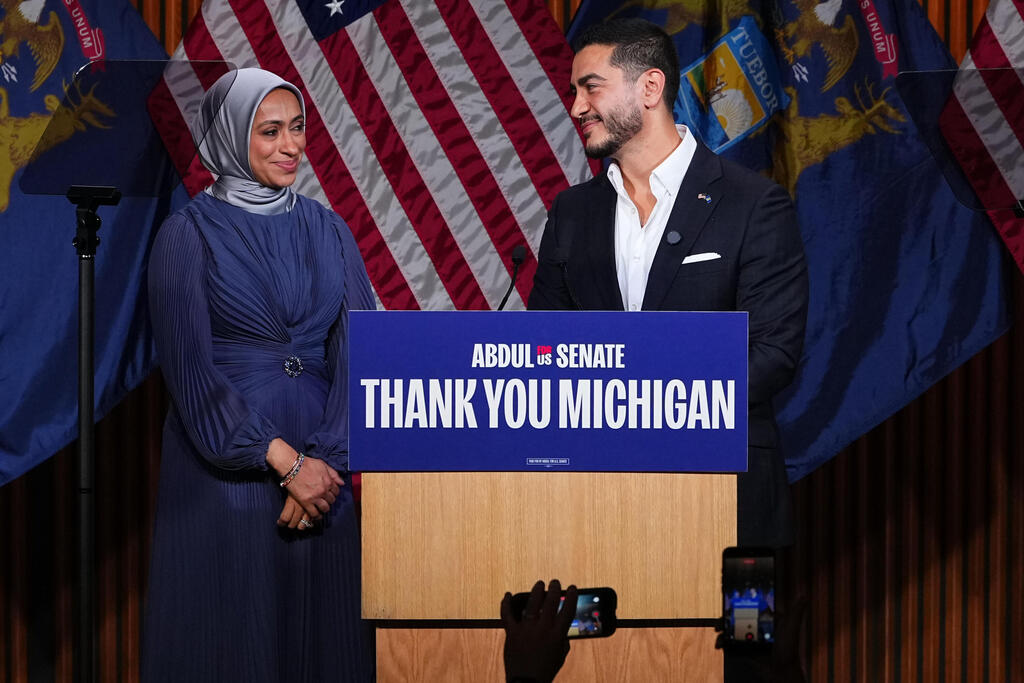
During his victory speech, El-Sayed defended his support for Palestinian rights, arguing that Americans who want Palestinian children to grow up safely in their homeland should not be branded hateful. He maintained that advocating equal rights, peace, dignity and self-determination was compatible with loving the United States, and repeated his opposition to using American tax dollars to support what he describes as genocide and apartheid.
His political rise has reflected the growing influence of progressives within the Democratic Party. In the summer primary, he narrowly defeated Rep. Haley Stevens, a moderate, pro-Israel Democrat supported by the party's centrist establishment. His victory was regarded as a significant setback for moderate Democrats in the increasingly bitter struggle over the party's direction, particularly its relationship with Israel.
That divide became even more pronounced during the general election campaign, when Stevens ultimately broke with El-Sayed and endorsed his Republican opponent.
Muslim Brotherhood allegations and a bitter family dispute
The campaign intensified in mid-October after El-Sayed declared that neither he nor his family had connections to the Muslim Brotherhood, the Islamist movement founded in Egypt and designated a terrorist organization by Egyptian authorities and several other governments.
His opponents subsequently circulated old social media posts by his half-sister, who had expressed support for the October 7 massacre and said that their shared mother had been a member of the movement.
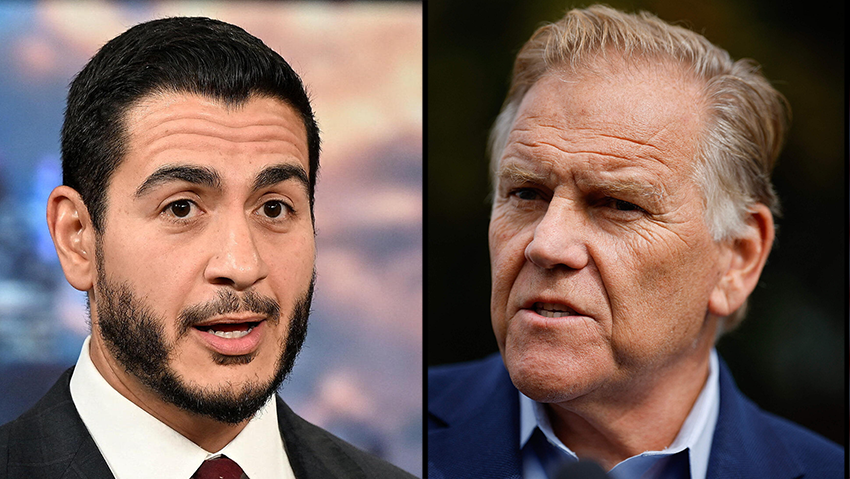
Mike Rogers and Abdul El-Sayed
(Photo: Robin Buckson/Pool via REUTERS, CHIP SOMODEVILLA / GETTY IMAGES NORTH AMERICA / AFP)
Rogers' campaign also highlighted an article El-Sayed published in 2011 supporting the Egyptian revolution that overthrew President Hosni Mubarak, even if the uprising ultimately brought the Muslim Brotherhood to power.
A year later, after Muslim Brotherhood figure Mohammed Morsi became Egypt's president, El-Sayed's name appeared among Egyptian Americans who signed a letter published in Egyptian media expressing support for Morsi's "revolutionary decisions" and calling for Mubarak loyalists to be removed from the media and police.
El-Sayed did not answer questions concerning that letter. Although he denied supporting or belonging to the Muslim Brotherhood, he did not issue the explicit condemnation of the organization demanded by his critics. Instead, he accused his opponents of using racist and Islamophobic attacks to frighten Michigan voters because of his religion.
He argued that the controversy was intended to divert attention from the cost of living, which he had placed at the center of his campaign. Rogers maintained that his objections were directed at El-Sayed's political positions, not his Muslim faith.
The Republican also pointed to El-Sayed's assertion that Israel and Iran both posed dangers to the United States and his campaign appearances alongside streamer Hasan Piker, who had previously said the United States deserved the September 11 terrorist attacks. El-Sayed called that statement "stupid" but refused to distance himself from Piker.
‘We need to save $7 to kill Palestinians’
Another major controversy erupted over an advertisement supporting El-Sayed that blamed U.S. military assistance to Israel for rising food prices. In the advertisement, a woman shopping for groceries says she cannot afford eggs because she needs to save $7 "to kill Palestinians."
The advertisement was widely condemned as antisemitic, but El-Sayed refused to explicitly denounce it, triggering a confrontation within his own party.
‘We need to save $7 to kill Palestinians’
Stevens, his defeated primary opponent, had been scheduled to appear alongside him at a rally intended to demonstrate Democratic unity. After demanding that El-Sayed condemn the advertisement, however, she was removed from the event. Rather than endorse the Democratic nominee, she appeared at a campaign event for Rogers and formally announced her support for the Republican.
The dispute offered a striking illustration of the ideological divide within the Democratic Party over Israel, with a prominent moderate Democrat choosing to support a Republican rather than her own party's nominee.
The campaign grew even more personal during a debate in which Rogers raised allegations involving El-Sayed's mother. He noted that she had been mentioned in a 2004 indictment concerning an American Muslim organization accused of transferring funds to Hamas and al-Qaeda. El-Sayed's mother was not charged with any crime.
"Are you going after my mother?" El-Sayed demanded.
Rogers replied that he was not targeting her personally but had taken action against the organization where she had worked. He then contrasted the two families, noting that his own mother had worked at the local chamber of commerce.
Trump calls him a ‘dangerous jihadist,’ Obama joins his campaign
President Donald Trump repeatedly intervened in the Michigan contest, describing El-Sayed as a "dangerous jihadist" and deliberately referring to him by the incorrect name "Mohammed El-Sayed," emphasizing the Democratic candidate's Muslim identity.
Rogers, who had narrowly lost Michigan's other Senate race to Democrat Elissa Slotkin in 2024 by approximately 20,000 votes, hoped to become the first Republican elected to the Senate from Michigan since 1994.
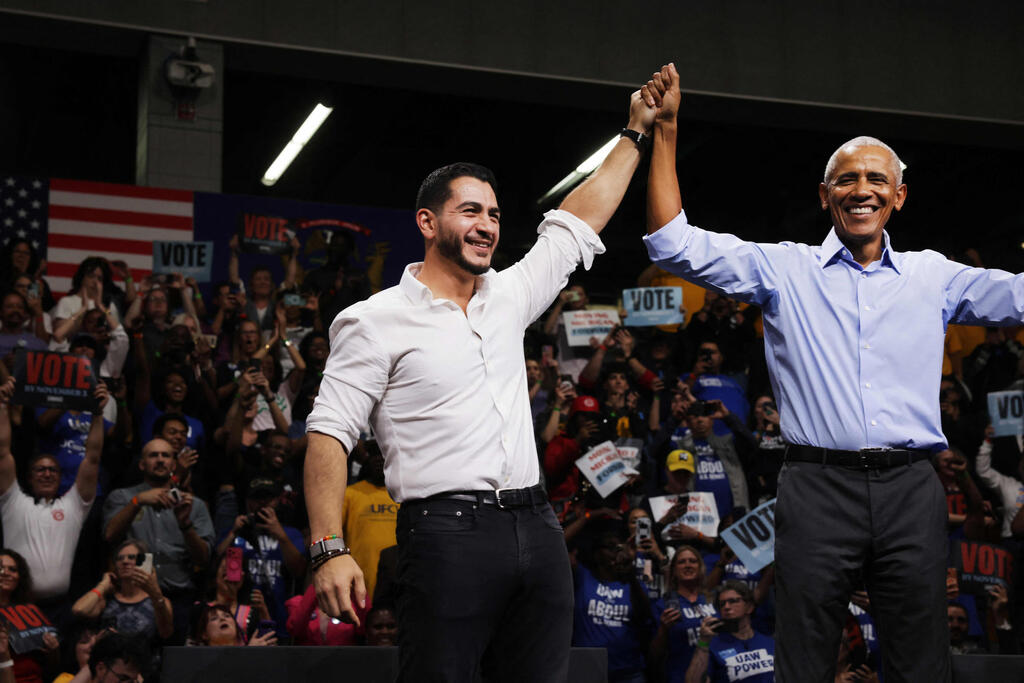
El-Sayed and Barack Obama
(Photo: SPENCER PLATT / GETTY IMAGES NORTH AMERICA / AFP)
El-Sayed, meanwhile, secured support from former President Barack Obama, who appeared alongside him in a video published on Election Day. Sharing the footage, El-Sayed wrote: "The world is watching us."
At his final campaign rally, he addressed those who questioned whether a candidate with his name could win a statewide election. When people told him he could not succeed because of his name, he said, his response was that he was not betting on himself but on the goodness of Michigan's voters.
The dispute over Israel continued even on Election Day. After Trump announced his intention to end U.S. assistance to Israel, El-Sayed told reporters that "even a broken clock is right twice a day."
Trump himself linked the aid decision to the Michigan candidate, asking why the United States should endure attacks from people he described as "lunatics like El-Sayed" because of its support for Israel. Later that night, the president posted that El-Sayed hated Jews, Black people and white people.
El-Sayed returned to Trump's attacks in his victory speech, arguing that his name and Muslim faith had nothing to do with the problems facing American families, including high fuel prices, expensive groceries and difficulty accessing health care. According to ynet's account, he contrasted the president's increasingly personal insults with his own efforts to meet voters and listen to their concerns throughout Michigan.
He also mocked Trump's repeated difficulty pronouncing his name, suggesting that once Vice President JD Vance administered his Senate oath of office in January, the president could simply address him by his new title: senator.
El-Sayed also took aim at Rogers, referring to his retirement, his Florida property and his two yachts. According to ynet, he portrayed the Republican's defeat as a rejection of divisive politics and a victory for hope.
The newly elected senator then turned to the parents who, he said, had been forced to explain to their children why the president mocked people for their names and religious beliefs. He urged them to tell their children that the politicians responsible for those attacks had lost.
In remarks independently reported by The Guardian, El-Sayed told supporters: "You welcomed me in your homes, your churches, your synagogues." He thanked voters for supporting him through an 18-month campaign that had taken him across the state, despite repeated efforts by his opponents to portray his identity and faith as reasons to reject him.
"They want an America that is too small for some of us," he said. "We know that America is big enough for all of us."
A historic victory with implications for Israel
El-Sayed's election comes amid growing tensions between American Jewish voters and the Democratic Party, an alliance that has traditionally been one of the most enduring relationships in U.S. politics.
According to a recent Siena College poll, 61% of Jewish voters in New York wanted Democrats to control Congress, compared with 76% in 2018. Support for Republican control rose from 23% to 30% over the same period.
The Michigan race highlighted those divisions particularly sharply. For many progressive Democrats, El-Sayed's victory represents an important breakthrough for Muslim representation and a political movement demanding a fundamental reassessment of U.S. relations with Israel. For his critics, his positions on military aid, his response to the controversial advertisement and the questions raised during the campaign remain serious concerns.
His victory also comes as other progressive candidates who oppose American military assistance to Israel have won congressional seats, including several allies of New York City Mayor Zohran Mamdani. At the same time, prominent pro-Israel figures in both parties have retained their seats, underscoring that the election produced no single verdict on the future of U.S.-Israel relations.
For El-Sayed, the victory was more than a historic first for Muslim Americans. It was also a political rebuke to the powerful organizations that had spent heavily to defeat him and to a president who repeatedly targeted his name, religion and views on Israel. As he prepares to take his seat in Washington, his opposition to U.S. military assistance for Israel is set to become part of a broader debate over how American tax dollars should be spent and what role the United States should play in conflicts abroad.