


Mossad director David Barnea traveled to the United States on Friday for talks focused on Iran, as diplomatic activity around Tehran intensified amid regional tensions.
Officials said Barnea is scheduled to meet in Miami with Steve Witkoff, U.S. President Donald Trump’s special envoy, who has been leading Washington’s direct contacts with Iran. The discussions are expected to address Iran’s nuclear program, missile capabilities and regional proxy forces, as well as the war in Gaza.
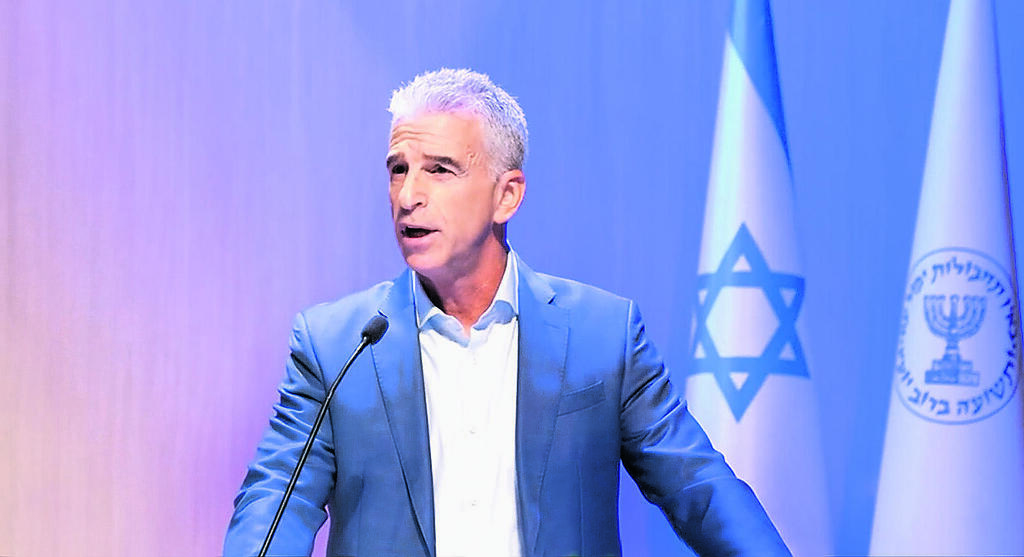
(Photo: Mossad)
Witkoff said overnight that the talks with Iran center on four issues coordinated with Jerusalem: nuclear enrichment, Iran’s missile stockpile, its enriched uranium reserves and Iran-backed groups across the Middle East. He said he believes the disputes can be resolved through diplomacy.
“If Iran, whose economy is struggling, with shortages of water and electricity and inflation above 50%, wants to rejoin the international community, these issues can be solved diplomatically,” Witkoff said.
Barnea’s visit came hours after Russian President Vladimir Putin held separate phone calls with Prime Minister Benjamin Netanyahu and Iranian President Masoud Pezeshkian. According to the Kremlin, Putin offered Russia’s assistance in continuing mediation efforts between Iran and Israel and promoting what it called “constructive dialogue” involving all interested parties. Putin said he supports stepped-up political and diplomatic efforts to ensure regional stability.
Kremlin spokesman Dmitry Peskov said Putin would continue working to reduce tensions in the region.
In recent months, Jerusalem has maintained close coordination with Moscow amid concerns that Iran could launch a preemptive strike. According to a recent Washington Post report, before large-scale protests erupted in Iran, a message was conveyed to Tehran through Moscow saying there would be no attack unless Israel was attacked first. Iran reportedly sent a similar response, in what officials described as an effort to prevent miscalculation.
Netanyahu and Putin have spoken several times in recent months, and Netanyahu’s military secretary, Maj. Gen. Roman Gofman, has visited Moscow for talks with senior Kremlin officials. Discussions have also included developments in Syria.
Analyst Ron Ben-Yishai wrote this week that diplomacy is currently guiding Washington’s approach, indicating that a potential U.S. strike on Iran has not been canceled but delayed. Whether military action proceeds, he wrote, will depend on the outcome of negotiations expected to begin between Washington and Tehran in the coming days.