


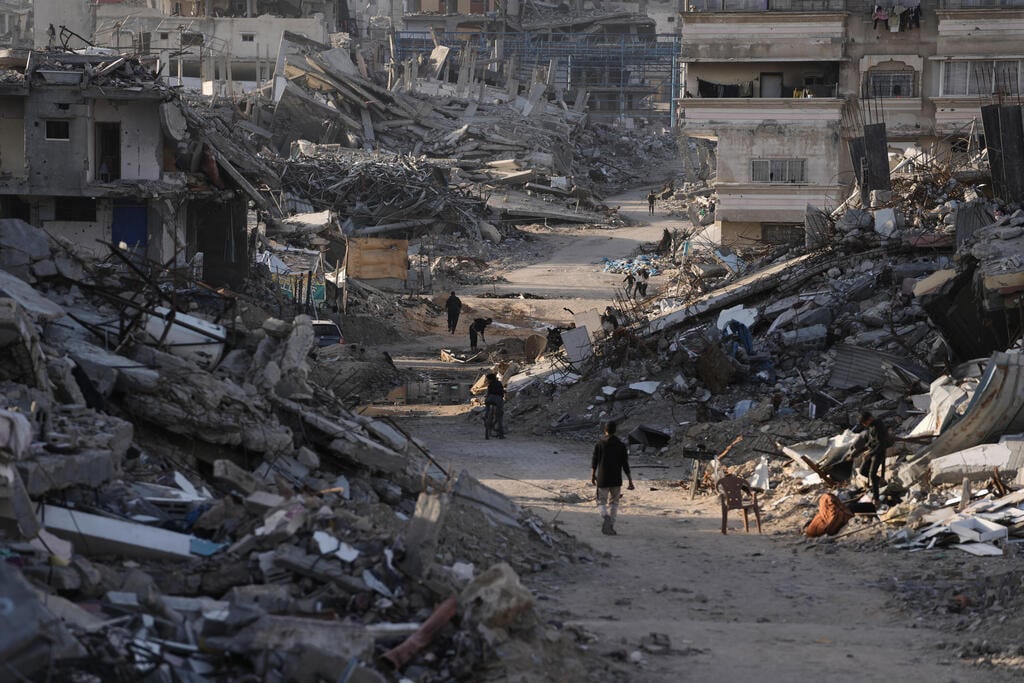
The United States is pressing Israel to assume responsibility for clearing the vast destruction across the Gaza Strip after two years of war, including debris left by Israeli airstrikes and the use of D9 bulldozers, according to a senior Israeli official. Israel has agreed in principle to the request, which is expected to cost hundreds of millions of shekels.
The Wall Street Journal reported this week that Gaza is blanketed by an estimated 68 million tons of rubble, with most structures in the enclave destroyed or damaged. The UN Development Program, which oversees debris-removal planning, estimates the total weight is roughly equivalent to 186 Empire State Buildings. Clearing the ruins is considered a basic prerequisite for beginning reconstruction under Phase Two of the ceasefire agreement.
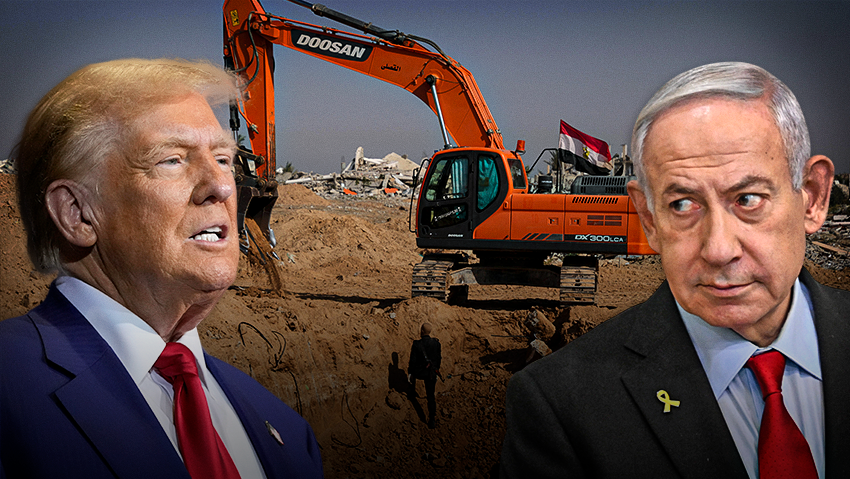
U.S. officials aim to start rebuilding in the Rafah area to showcase what they describe as President Donald Trump’s vision for Gaza’s recovery, hoping it will attract displaced residents back to the south before additional areas are restored.
Senior Israeli officials say Washington has demanded that Israel take physical and financial responsibility for removing the debris. Jerusalem has signaled it will comply, even as Qatar’s prime minister has said publicly that Doha will not finance rebuilding what Israel destroyed. Israel is expected to hire specialized companies to carry out the work.
The Prime Minister’s Office did not comment.
Meanwhile, U.S. pressure on Israel to begin Phase Two of the ceasefire is intensifying. Israel insists it will not advance to the next stage without the return of the body of hostage Ran Gvili, and has provided negotiators with aerial photographs and other material in an effort to locate him. An Israeli official said, “We will not relent until Ran is brought home for burial in Israel.”
The U.S. hopes to deploy an international stabilization force, the ISF, in Gaza in early 2026, beginning in Rafah. American officials say Indonesia and Azerbaijan have signaled willingness to contribute troops, while other nations prefer to offer training, funding or equipment. A U.S. general—still unnamed—will command the force.
(Photo: AP Photo/Jehad Alshrafi)
Prime Minister Benjamin Netanyahu has expressed skepticism in private conversations that the ISF will dismantle Hamas’ military capability on its own, telling associates he believes the IDF will ultimately be required to play a role. Israeli officials say Washington appears increasingly focused on reconstruction while giving less attention to demilitarization—an approach that concerns Jerusalem.
President Trump said Wednesday he will unveil the makeup of the Board of Peace—a body tasked with overseeing Gaza’s governance and reconstruction—at the start of 2026. He described it as “one of the most legendary boards ever,” made up of “kings, presidents and prime ministers” who, he said, are eager to serve.
Netanyahu is expected to discuss the ceasefire plan and broader regional issues—including contacts over a potential security arrangement with Syria, the fragile quiet on the Lebanon border, and Turkey’s role in the ISF—when he meets Trump at Mar-a-Lago later this month.
U.S. envoy Tom Barrack is due in Israel next week and is expected to apologize for remarks he made in Qatar suggesting monarchies function better than democracies in the region. Israeli officials view Barrack as pushing hard for Turkish participation in the ISF—an idea Jerusalem strongly opposes and has described as unacceptable.