


Iran has responded to the United States’ 15-point proposal and is now awaiting Washington’s reply, the Iranian news agency Tasnim reported Thursday afternoon.
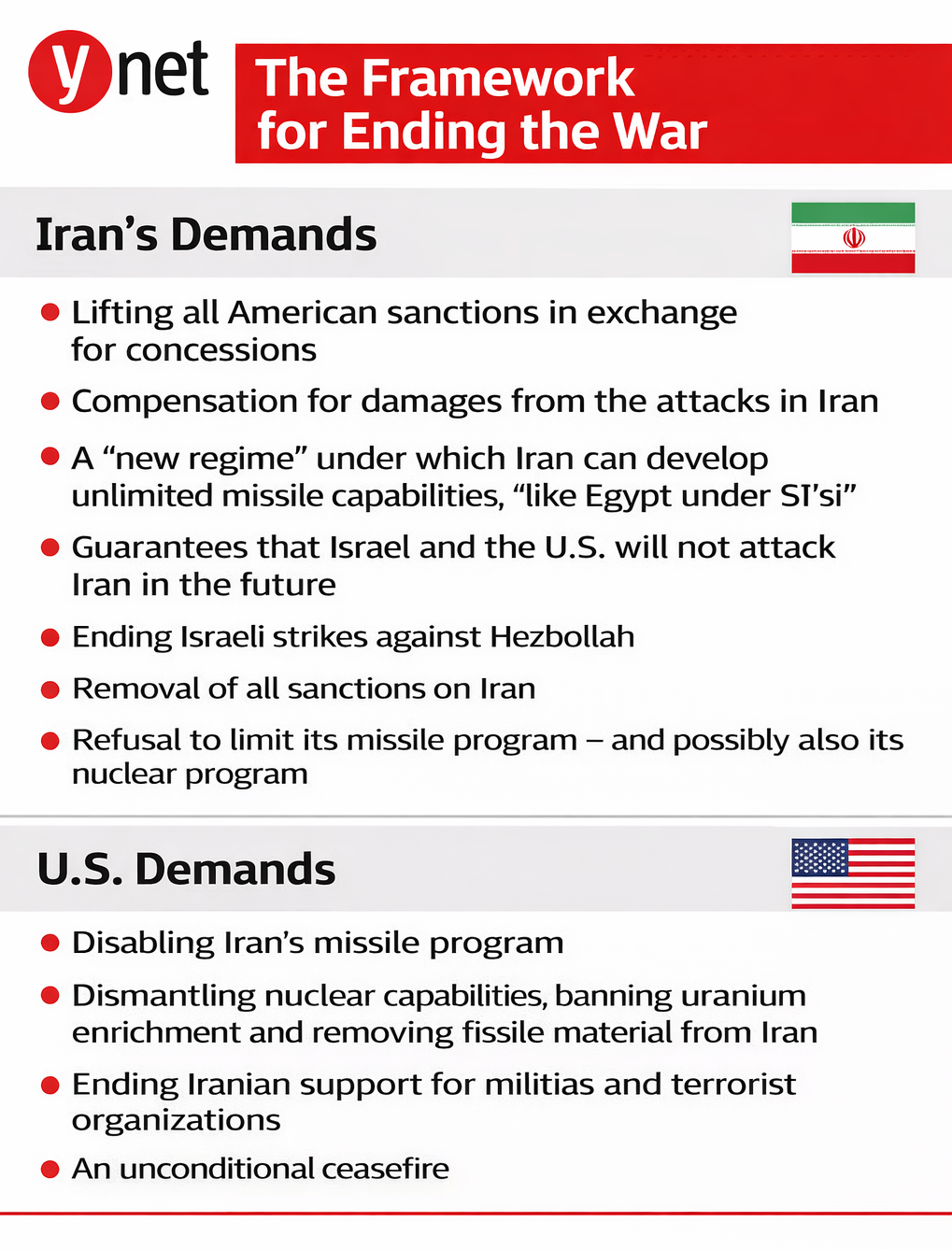
According to the report, Iran demanded an immediate halt to attacks against it, guarantees that the war will not resume, compensation payments, and an end to fighting across all fronts and the wider region, including Lebanon. Iran also expects recognition of its right to control the Strait of Hormuz, with Tasnim stating that “the realization of Iranian sovereignty over Hormuz has been and will remain Tehran’s natural and legal right.”
Trump: Iran is begging to make a deal. They are excellent negotiators
(Video: Reuters)


The report did not address Iran’s response regarding its missile program or nuclear activities, which have been central to U.S. demands.
A source cited by Tasnim claimed that “the negotiations are merely a deception, serving as a cover for American goals to show the world they seek to end the war, keep oil prices low, and prepare for a new attack in southern Iran through a ground invasion.” The source added that “the Americans launched a war during negotiations both in the ‘12-Day War’ and this time as well.”
Trump: ‘If we make the right deal, Hormuz will open’
Iran’s conditions, as expected, do not meet Israeli demands, and it remains to be seen whether U.S. President Donald Trump will show flexibility—and if so, on which issues. Washington had originally demanded that Iran suspend its missile program, dismantle its nuclear capabilities, end support for militias and reopen the Strait of Hormuz unconditionally.
As the Iranian source told Tasnim, there are concerns in Tehran that the talks announced by Trump may be a trap, with the U.S. allegedly planning a ground invasion. A military source told the agency regarding Hormuz: “America wants to open the strait through suicide. No problem. We are ready for them to implement their suicide strategy and for the strait to remain closed.”
Trump said later Thursday: “The Iranians are talking to the United States. They are begging to make a deal. I don’t know if we’ll be able to do it and I don’t know if we want to do it. Right now they have a chance to make a deal, but it’s up to them.” He suggested it may already be too late. “They should have done it four weeks ago,” he said. “If we make the right deal, Hormuz will open,” he added, describing the Iranians as “excellent negotiators” but “poor fighters.
Trump’s Middle East envoy, Steve Witkoff, said the United States has “strong indications” that Iran is interested in reaching an agreement. According to Witkoff, Iran is seeking an “exit path” from the war.
(Photos: Shutterstock, Kevin Lamarque/Reuters)
A senior Iranian official told Reuters on Thursday that Tehran had reviewed the U.S. proposal, which was delivered through Pakistani mediation. He described it as a “one-sided and unfair” offer that serves only U.S. and Israeli interests. Iran’s initial response, also conveyed via Pakistan, was that the proposal does not meet the minimum requirements for success.
“There is still no framework for negotiations, and at this stage, peace talks do not appear realistic,” the official said.
Despite the gaps, the official added that “diplomacy has not stopped,” and suggested that progress could be made if the United States adopts a more realistic approach. In addition to Pakistan, he said, Turkey is also attempting to bridge the gaps between Washington and Tehran and find common ground.
First published: 17:45, 03.26.26