

Senior officials from Saudi Arabia, Turkey and Pakistan met Iranian leaders in Tehran on Monday in an unusual diplomatic effort to ease tensions across the Middle East, even as Yemen's Iran-backed Houthi rebels claimed fresh attacks on Saudi Arabia and Egypt approved military assistance to help defend the kingdom. Reuters reported that the meeting marked the first high-level talks between Iran and the three countries since the regional war expanded to Saudi Arabia and Yemen.
The Saudi Foreign Ministry said the visit, initiated by Pakistan, was intended to prevent further escalation. Saudi Arabia was represented by Defense Minister Prince Khalid bin Salman, the younger brother of Crown Prince Mohammed bin Salman; Pakistan by army chief Field Marshal Asim Munir; and Turkey by intelligence chief Ibrahim Kalin. Iranian President Masoud Pezeshkian, Foreign Minister Abbas Araghchi and Mohsen Rezaei, secretary of Iran's Supreme National Security Council, also attended. Reuters reported Sunday that Qatari mediators had arrived in Tehran as part of the broader diplomatic effort.
Gallery
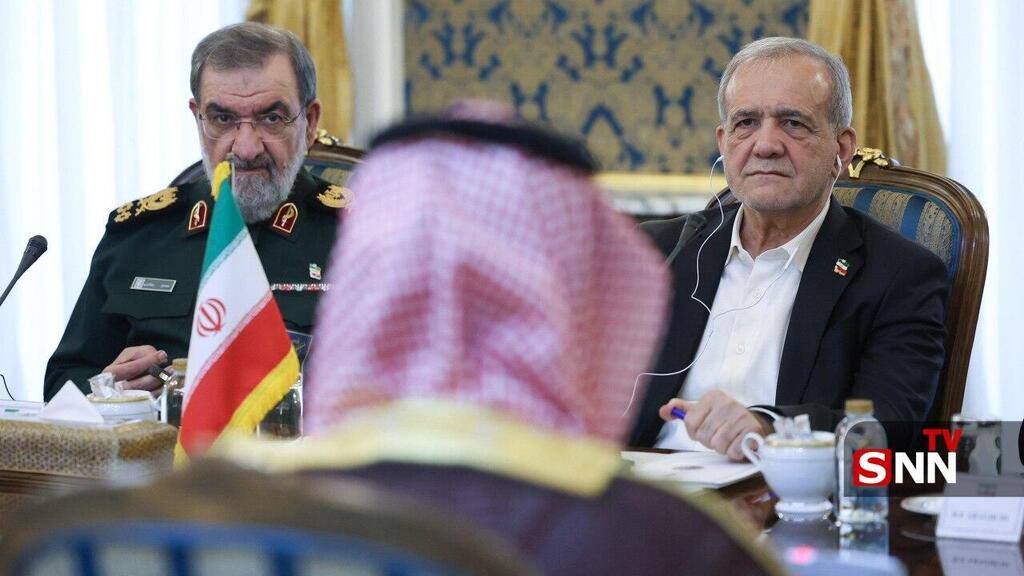
Iranian President Masoud Pezeshkian and Supreme National Security Council Secretary Mohsen Rezaei during the Tehran talks, where Iran's nuclear program was reportedly not discussed
The meeting brought together Iran and the three members of the Mecca Joint Defense Agreement, signed in August, under which an armed attack on one member is considered an attack on all three. Iran has previously been mentioned as a possible future participant in the pact, but the arrangement is facing a significant test as Houthi attacks on Saudi Arabia continue despite the mutual defense commitments.
Iran rules out nuclear talks as threat of US strikes grows
An Iranian official told Reuters that Tehran's nuclear program was not discussed at the meeting and would remain off the agenda until Iran's conditions for ending the war were met. Those demands include lifting the U.S. blockade of Iranian ports and removing sanctions on Iranian oil exports. Iranian reports said the discussions instead focused on regional security and assistance to people in the Palestinian territories and Lebanon.
Pezeshkian expressed support for greater cooperation among Muslim-majority countries, saying Iran was prepared to deepen regional ties, resolve disagreements and strengthen collective security. He urged countries in the region to stand together against common threats and accused Israel, with U.S. support, of committing atrocities while accusing others of terrorism. According to Iranian reports, participants agreed to continue discussions aimed at strengthening cooperation among the four countries, particularly on regional peace and security.
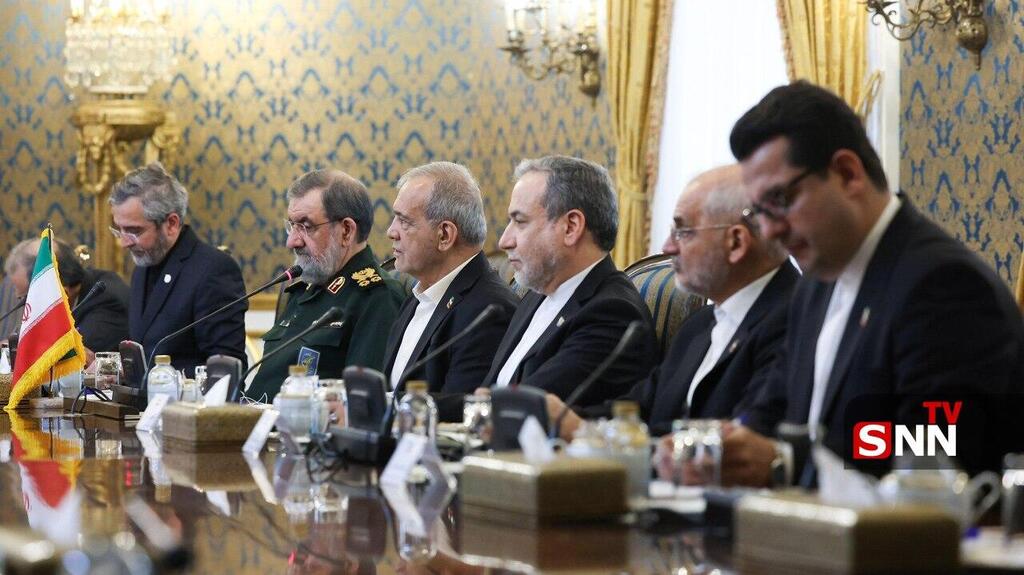
Iranian President Masoud Pezeshkian meets senior officials from Saudi Arabia, Turkey and Pakistan in Tehran
The diplomatic initiative comes amid renewed threats of military confrontation between Washington and Tehran. Reuters reported that Iran had prepared detailed plans to attack undersea cables in the Gulf if the United States and Israel launched another offensive. CNN, meanwhile, reported that U.S. forces already deployed in the Middle East could begin major military operations against Iran within 96 hours of receiving an order from President Donald Trump.
Iranian President Masoud Pezeshkian and Supreme National Security Council Secretary Mohsen Rezaei during the Tehran talks, where Iran's nuclear program was reportedly not discussed
According to two U.S. officials cited by CNN, sufficient forces are positioned in the region to carry out an operation potentially broader than previous limited strikes against Iranian radar systems, missile launchers and other military assets that could be quickly rebuilt. Trump has not issued an order to launch such an operation.
Egypt approves military assistance as Houthis target Saudi oil lifeline
Meanwhile, Egypt's parliament approved defensive military assistance for Saudi Arabia in a closed-door session Monday, following an earlier postponement of the vote. The authorization allows President Abdel Fattah el-Sisi to take the necessary measures to help Riyadh defend its territory and sovereignty against external aggression. The parliament did not disclose a detailed breakdown of the vote or specify the scope of the assistance.
A regional official familiar with the plans said Egypt would deploy air defense systems to help intercept missiles and drones launched toward Saudi Arabia. The official emphasized that Cairo's involvement would be strictly defensive and would not include ground forces. "Egypt will not send ground troops," the official said.
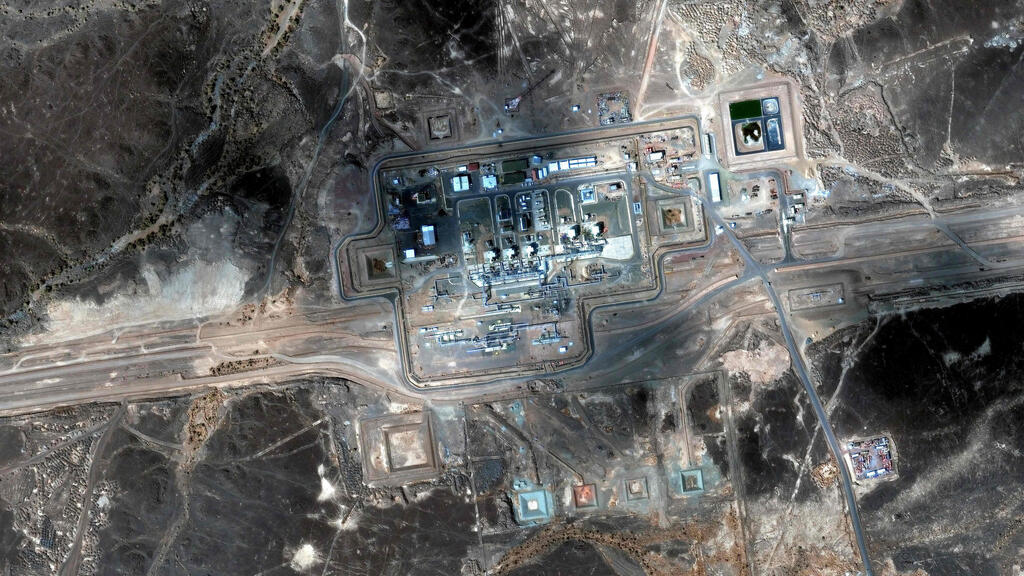
Saudi Arabia's East-West oil pipeline provides a vital alternative to shipping through the Strait of Hormuz
(Photo: AFP PHOTO / Satellite image ©2026 Vantor)
At the same time, the Houthis claimed to have launched new attacks on pumping stations along Saudi Arabia's East-West oil pipeline and on Riyadh's airport, where two terminals had resumed operations only a day earlier after previous attacks forced their closure. Saudi authorities had not immediately confirmed the latest Houthi claims.
The East-West pipeline has become a crucial alternative to the Strait of Hormuz, allowing Saudi Arabia to transport oil across the kingdom to the Red Sea port of Yanbu without relying on the strategic waterway. A pumping station strike disrupted the route about a month ago, highlighting its vulnerability to further attacks.
According to an earlier report by The Guardian, the pipeline played a critical role in protecting Saudi oil exports during the war with Iran, when shipping through the Strait of Hormuz was severely disrupted. Saudi Arabia used the route to divert approximately 4 million barrels of oil per day, equivalent to roughly 4% of global supply, to Yanbu. The renewed attacks threaten an energy lifeline that has helped the kingdom withstand one of the most serious disruptions to Gulf oil exports in recent years.