

The war against Hamas is not over yet, even as Israel prepares to withdraw to roughly 53% of Gaza’s territory and cease major fighting, according to Brig. Gen. (Res.) Amir Avivi.
“Israel will retain freedom of operation everywhere in Gaza to foil any terror attack,” Avivi told The Media Line. “The war is not over. The mission of Israel to demilitarize Gaza is just beginning now.”
The government early Friday approved the withdrawal of the Israel Defense Forces (IDF) to a line agreed upon by Israel and Hamas. Soldiers will depart from about 27% of the land currently under Israeli control. The final map has not yet been released, but sources say it closely resembles the “yellow line” that U.S. President Donald Trump presented last weekend.
Gallery
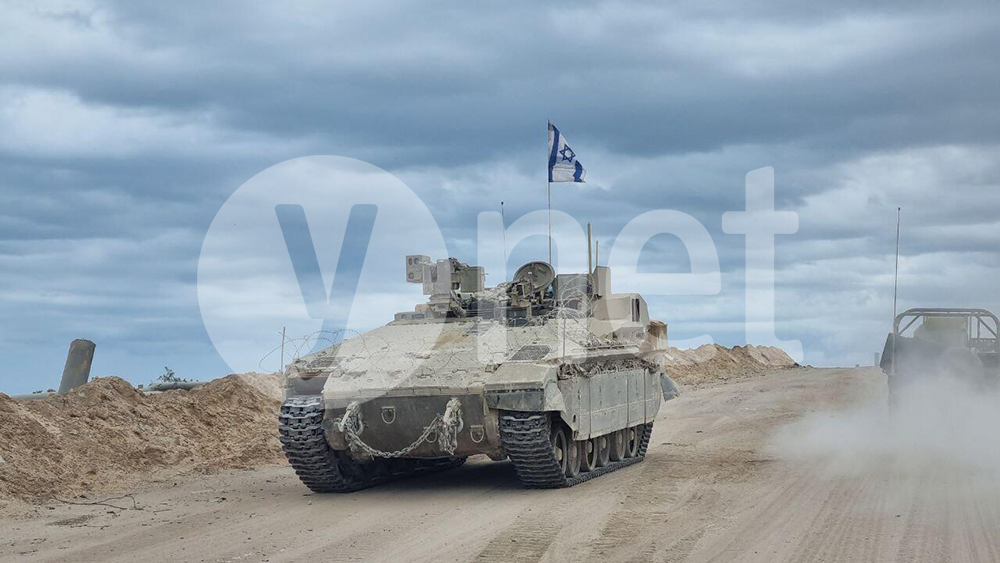
A convoy of excavators on their way to the border, leaving the northern Gaza Strip
(Photo: Gilad Cohen)
“We are going to leave the populated areas, including Gaza City, to allow Hamas to reach the hostages and hostage bodies,” explained Brig. Gen. (Res.) Yossi Kuperwasser, head of the Jerusalem Institute for Strategy and Security. “Those who left Gaza City will also be able to come back.”
At the same time, Kuperwasser emphasized: “We still keep the most important routes, with some exceptions.”
Avivi said the map, as he understands it, ensures the IDF will remain a strong and visible presence inside Gaza.
“This agreement was basically only about releasing the hostages and releasing terrorists — it doesn’t constrain the IDF in any way in its mission to demilitarize Hamas and the Gaza Strip,” Avivi stressed.
In fact, he argued, once Hamas gives up the hostages, “This is pretty much unconditional surrender. They remain defenseless. The only thing that was standing between our ability to completely eradicate Hamas was the hostages. And giving up the hostages is pretty much surrendering and understanding that it’s game over.”
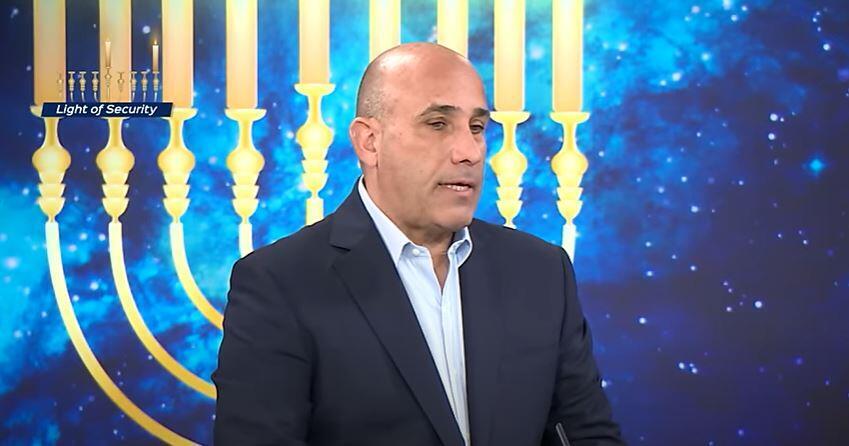
Brig.-Gen. (Res.) Amir Avivi
(Screenshot)
Avivi compared this moment to the Yalta Conference of 1945, held just three months before Nazi Germany’s defeat. Then, he said, world leaders — U.S. President Franklin D. Roosevelt, British Prime Minister Winston Churchill and Soviet Premier Joseph Stalin — already knew the war’s outcome and used the conference to plan for the postwar order.
“This is exactly what happened in Washington,” Avivi said. “There was a realization by all the parties, including Qatar, Egypt and Turkey, that Hamas lost. They were facing two possibilities: either Israel and the US would shape Gaza’s future entirely, leading to Hamas’s complete eradication, or they could try to preserve some remnants of Hamas and get them out of Gaza. This is why at this stage Qatar, Turkey and Egypt all agreed.”
Even as Israel withdraws, Avivi said, it will permanently maintain positions in parts of Gaza, while new peace frameworks and regional alliances begin to take shape.
“They built the deal in a way that even before starting to discuss how Gaza is going to be demilitarized, first the hostages come back, rendering Hamas defenseless,” he said.
Avivi added that Israel has been working with several local Gazan clans to replace Hamas’ authority. Egypt and Qatar, he claimed, feared these clans could eventually topple Hamas from within, which would not only destroy the terrorist regime but also destabilize the broader Muslim Brotherhood network.
“This would be a strategic loss,” Avivi said, noting that Qatar, Egypt and Turkey have long controlled Hamas, and once their interests shifted, the deal was able to move forward.
He also said the military line to which Israel is withdrawing includes areas where these local militias are located, allowing Israel to continue cooperating with and protecting them.
Meanwhile, Kuperwasser emphasized that residents of southern Israel who have returned home should remain safe.
“It’s in the Palestinians’ best interest to maintain the cease-fire,” he said.
While occasional rocket launches may still occur, as has happened over the past year, he does not expect a major escalation.
“The next few weeks should be quiet because everybody needs that. They want a ceasefire,” Kuperwasser said.
Still, he cautioned: “Now is the time to celebrate, but we have to remain vigilant and ready to face any further developments.”
Reflecting on the deal’s broader meaning, Kuperwasser said that while Trump may sometimes appear “a little bit too optimistic, he has proven that his optimism is not totally unfounded. Let’s hope that this is going to materialize and that we are moving forward to establishing a much better Middle East.”
This article is written by Maayan Hoffman and reprinted with permission from The Media Line