

Shin Bet chief David Zini has warned in closed-door discussions that Eilat could be the site of “the next Oct. 7,” according to a report citing security sources, and has instructed senior officials in the agency to put possible attack scenarios in the southern resort city at the top of their priorities.
According to the daily Haaretz, Zini views Eilat as a security weak point because of its isolated location at Israel’s southern tip, where it sits near the borders with Jordan and Egypt and along the Red Sea. In discussions inside and outside the Shin Bet, he reportedly warned of a possible ground infiltration into the city from its land borders, particularly from Jordan, and possibly also from the sea.
The report said Zini described Eilat in security meetings as an “exposed city.” A security source quoted in the report questioned the intelligence behind the warning, saying officials in the defense establishment did not know what information Zini was relying on and that some within the Shin Bet viewed the scenario as speculative.
The Shin Bet later said there was no concrete intelligence or specific warning of an attack on Eilat. “Several months ago, as part of the process of taking office and studying the various threats, the Shin Bet chief conducted a tour of Eilat,” the agency said. “Part of it was held together with the military and examined different assessments. This was thorough operational planning and a study of threats across all areas of the service’s work.”
The IDF also announced that it would hold a drill Tuesday morning in the Gulf of Eilat area. The military said residents could expect increased movement of security forces and vessels, but stressed that there was “no concern of a security incident” and that residents would be updated by security forces in a real emergency.
Eilat Mayor Eli Lankri said that, as the Shin Bet clarified, there was no concrete information about a new or immediate threat to the city. Still, he said Eilat and the security forces protecting it were prepared for any scenario.
Lankri said Israel had learned “painful and important lessons” from Oct. 7 and must ensure the disaster does not repeat itself anywhere in the country. Since the start of the war, he said, he has held regular discussions with security officials and could say Eilat is “well protected, prepared and alert,” with security measures reinforced along the eastern border.
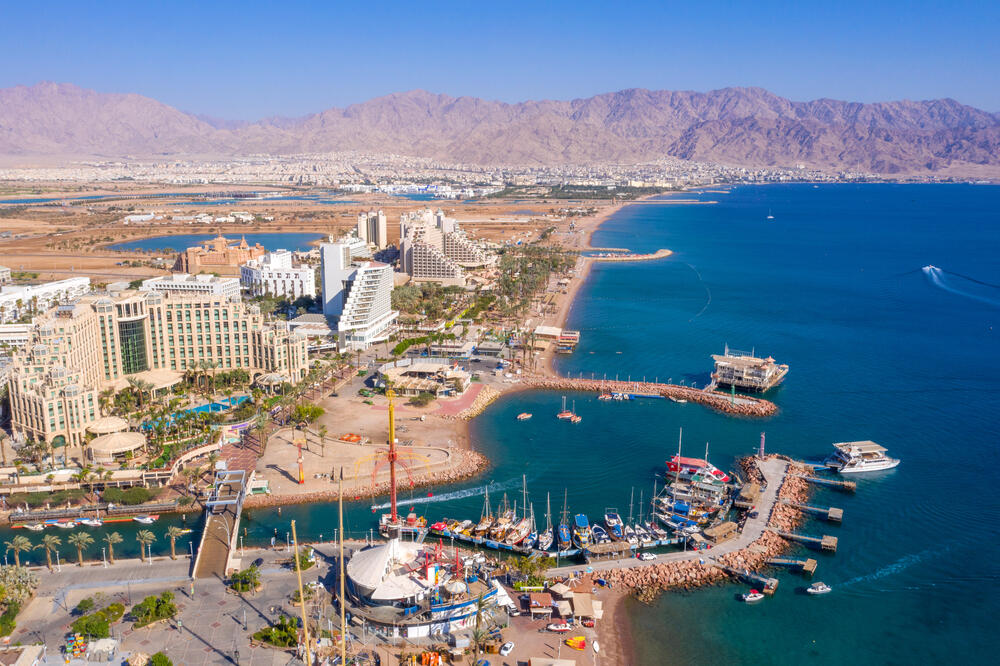
Eilat
(Photo: Shutterstock)
But he said security measures alone were not enough. “One of the central lessons of Oct. 7 is that national resilience is built in advance, not after the fact,” Lankri said. “Eilat is the southern gateway of the State of Israel, a city of clear strategic importance located in a triangle of borders and far from the center of the country.”
He called for continued investment in the city’s security, medical services, emergency infrastructure and public services, saying a strong and safe Eilat was a national interest. He added that the city was operating normally and preparing to receive tens of thousands of visitors during the summer vacation season.
Hanan Ginat, head of the Hevel Eilot Regional Council, said the remarks attributed to Zini did not surprise local officials. “They are similar to the things we have been warning about since Oct. 7,” Ginat said. “It is clear to us that the eastern border area is currently the most sensitive in the country.”
Ginat said the border with Jordan in the southern Arava is already used for constant smuggling of weapons, drugs and undocumented migrants. He warned that criminal smuggling routes could become routes for terrorist cells seeking to infiltrate Israel and attack local communities.
He called on the government to shift resources to the eastern border in the southern Arava, strengthen local defense teams and recognize the scale of the security challenge facing the area.