



Pulitzer Prize-winning journalist Evan Hill of The Washington Post published detailed coordinates on social media, revealing where Iranian ballistic missiles struck inside Israel—despite the IDF’s military censorship guidelines prohibiting such disclosures.
The post appeared on Thursday on X (formerly Twitter), where Hill, currently based in New York, shared precise GPS data for a missile impact near the Israel Diamond Exchange in Ramat Gan. Because Israeli censorship rules apply only to journalists physically present in Israel, Hill, posting from abroad, was not subject to the restrictions.
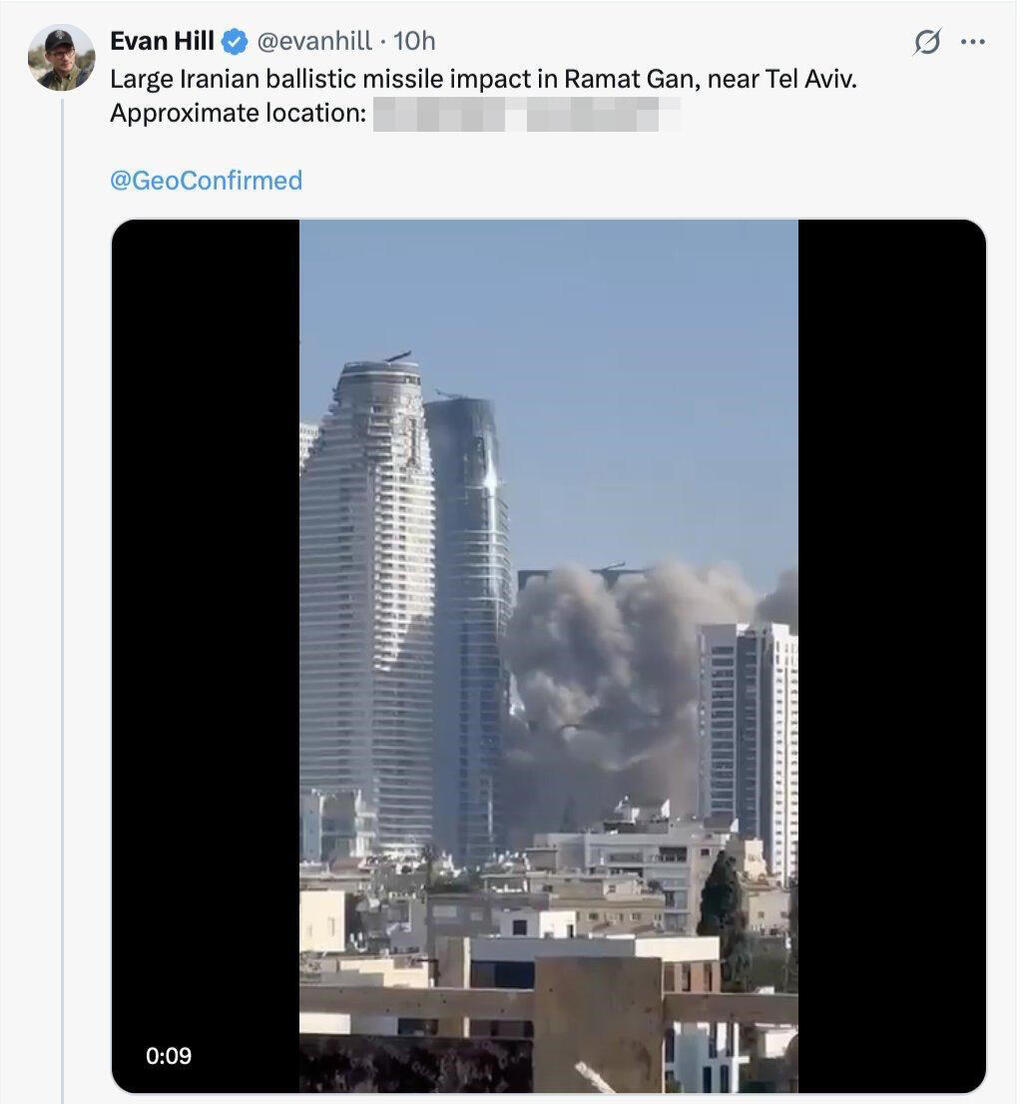
His post tagged GeoConfirmed, a platform specializing in geolocation verification and later linked to a follow-up post with what he described as “more exact” coordinates. Shortly after, Hill set his account to private, limiting access to approved followers only.
Hill has a history of publishing geolocated missile strikes and battle damage assessments in war zones including Syria, Ukraine and Lebanon, often as part of investigations into alleged war crimes. Colleagues told Ynet that his latest post appeared to follow standard investigative practice rather than any intent to harm Israel.
Still, Hill has drawn criticism from pro-Israel and Jewish circles over past reporting that questioned the legitimacy of Israeli military operations, particularly in Gaza. In recent months, he has amplified testimonies comparing Israeli conduct in the enclave to Nazi atrocities.
In one widely circulated post, Hill quoted a doctor who had volunteered in Gaza saying, “I can’t say I went to war. War is a very different thing. There was no war in Treblinka, there was no war in Auschwitz.

(Photo: via X)
“War has two armies. Here you have a population of mostly civilians and women, who have no way to flee.” Hill added, “They’re systematically bombing from the sky. They hit hospitals, they hit journalists. The conditions my colleagues faced were tragic.”
Get the Ynetnews app on your smartphone: Google Play: https://bit.ly/4eJ37pE | Apple App Store: https://bit.ly/3ZL7iNv
In November 2023, Hill posted that Israel’s air campaign in Gaza “might be killing children at a rate unprecedented in 21st-century”—a claim that appears at odds with The Washington Post’s internal guidelines. The outlet prohibits staff from expressing partisan or political opinions online, instructing them to maintain neutrality on social media.
In a separate visual investigation, Hill alleged that Israeli soldiers deliberately fired on a group of Palestinian civilians in Gaza, killing at least two.
Reviewing the film Civil War by director Alex Garland, Hill drew direct parallels between its fictional combat scenes and real footage from Gaza. “These scenes are impossible, these days, not to associate with real-life images of Israeli troops leveling Gazan homes with tanks over the past 19 months,” he wrote.

Iranian missile strike in Ramat Gan
(Photo: GIL COHEN-MAGEN / AFP)
Hill, a rising star in investigative journalism, specializes in visual forensics, open-source intelligence (OSINT) and data journalism. A Columbia University graduate fluent in Arabic, he has covered the Middle East extensively and previously lived in Qatar, Beirut and Cairo.
He joined The Washington Post in 2023 after four years at The New York Times, where he was part of teams that won three Pulitzer Prizes. His work there included exposing the deadly U.S. drone strike in Kabul, documenting airstrikes on Syrian hospitals and investigating alleged Russian war crimes in Bucha, Ukraine.
Earlier in his career, Hill was a senior researcher for Human Rights Watch in Beirut and worked as a journalist for Al Jazeera English in both New York and Qatar. His recent posts underscore the widening gap between Israel’s military censorship regime and the realities of a globalized digital information landscape.
Just days before Hill’s post, Israel’s chief military censor, Brig. Gen. Kobi Mandelblit, issued a warning to Israeli editors and foreign media operating in the country, urging them not to publish operational information, visual documentation or references to strike locations. The memo, also released in English, was meant to address the tendency of some foreign outlets to provide detailed accounts of missile impacts, both in live broadcasts and on social media.
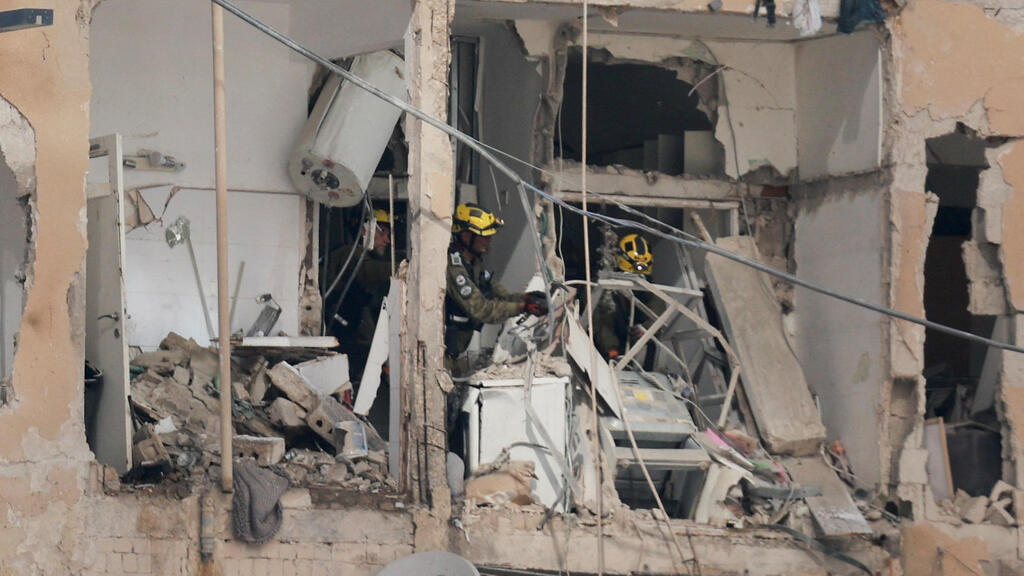
(Photo: REUTERS/Ammar Awad)
However, as Hill’s case highlights, while Israeli journalists remain bound by local law, foreign media and social networks face no such legal obligation—and Israel has little ability to enforce its censorship rules beyond its borders.
The Washington Post has not responded to Ynet’s request for comment on whether Hill’s post was approved by editors or whether his critical reporting on Israel aligns with the outlet’s objectivity standards.