


After Air Force officers were barred from reserve duty for signing a letter calling for an end to the war, as first reported by ynet, they petitioned Israel’s High Court of Justice. In a response submitted Tuesday, Air Force commander Maj. Gen. Tomer Bar informed the court that he has decided there is no obstacle to returning them to service once the war has ended.
The Air Force told the court the officers were not called up “in order to preserve cohesion,” because they had “blurred the line between the civilian sphere and the military sphere.” The officers subsequently withdrew their petition.
Fifteen combat officers in the Air Force were removed from reserve duty in August after signing, in April, a petition calling for an end to the war in Gaza in exchange for the release of all hostages. Some of the officers were slated to take part in a strike on Iran as part of Operation Rising Lion, but were not called up because of their signatures. They petitioned the High Court demanding that the IDF reverse its decision and reinstate them.
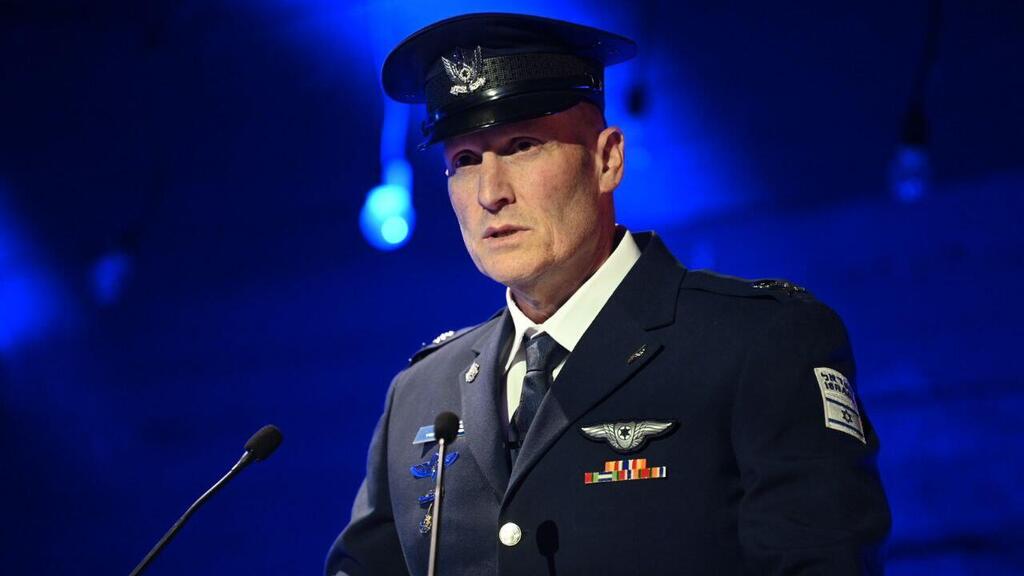
In the Air Force’s written response to the court, the head of personnel stated: “In April, the petitioners signed a letter in the name of aircrew members calling for ‘the immediate return of the hostages, even at the cost of an immediate cessation of the fighting.’ As a result, it was decided not to summon them for reserve duty at that time, in the midst of the war, in order to preserve the corps’ cohesion and operational readiness.”
The response further said that “the reservists signed the manifesto as a group, implying that the IDF acts on political considerations, while using their military identity, namely as aircrew members. This created significant difficulty and tension due to the blurring between the civilian and military spheres. The use, at that time, of military affiliation in a call to halt the fighting, while collectively denying the legitimacy of military action, and while they themselves were taking part in the fighting they were protesting, could have created the appearance of a military organization and harmed the non-political character of the IDF, unit cohesion, and even public trust in the IDF.
“This complexity was further intensified given the unique structure of the Air Force reserve system, which relies heavily on active, continuous reserve service andת in light of the fact that in April 2025 the IDF was at the height of battle planning led by the Air Force, including high-intensity operational preparations for Operation Rising Lion, an unprecedented Air Force operation involving integrated regular and reserve forces. It was therefore essential to ensure that there would be no harm to cohesion within the IDF or to the operational readiness of units in a way that could endanger state security.”
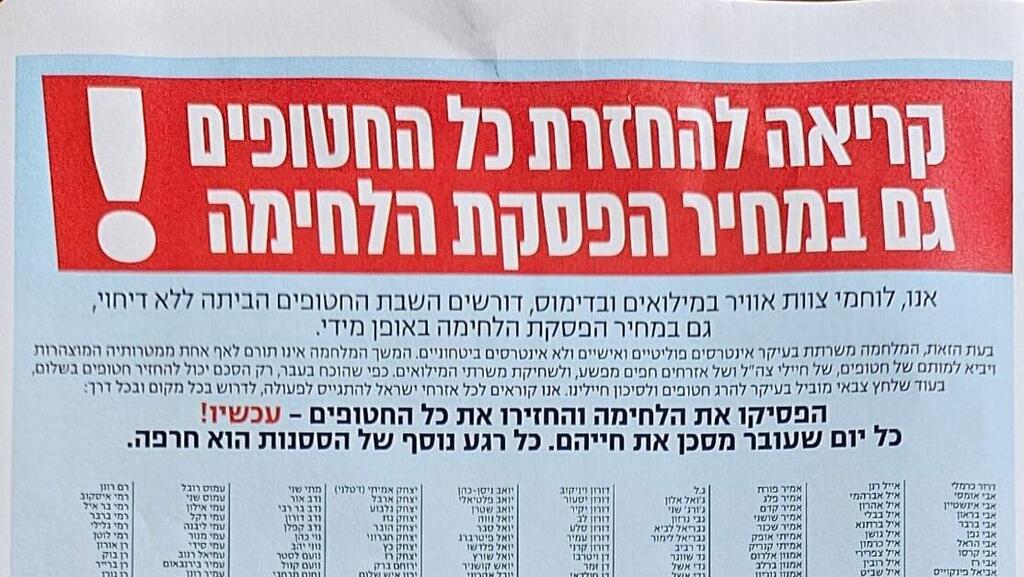
Letter signed by the officers
The Air Force informed the court that, with the end of the war, the officers could be returned to service. “At this time, with the passage of time and the reduction in the intensity of the fighting, there is no longer an obstacle to summoning the petitioners for reserve duty, subject to the decisions of their commanders and their authority. Should there be a military need for the service of any of the petitioners, unit commanders in the Air Force may call them up in accordance with IDF orders and military requirements, while continuing to safeguard the non-political character of service in the unit, unit cohesion in the Air Force, and operational readiness.”
It was also stated that the Air Force commander, who made the decision regarding the letter’s signatories, did not dismiss or suspend them, but rather exercised his authority not to summon them for reserve duty.
After the IDF rescinded the suspension, the petitioners informed the court, through attorneys Giora Erdinast, Noam Hefez and Anat Shorak, that they were withdrawing the petition. They said their call to end the war in order to secure the hostages’ release “expresses a supreme moral imperative, universal, Jewish and democratic, as well as a moral position derived from the value of comradeship, one of the IDF’s core values.”
They added that, contrary to the Air Force commander’s claims, “the decision not to summon the petitioners under these circumstances amounts to a suspension that circumvents the regulations governing dismissal and suspension procedures, and that this conduct, including months-long failure to respond to the petitioners’ appeals, unnecessarily deepened the severe harm to the petitioners and their fundamental rights.”
In a separate statement, the petitioners said: “The IDF’s reversal of the unlawful measures taken against reservists is a necessary step and an important victory for freedom of expression in a democratic state. It is regrettable that we were forced to go as far as the High Court to compel the IDF to correct its mistake. We welcome the final outcome, and above all the return of the hostages and the end of the war, for which we signed the manifesto.”
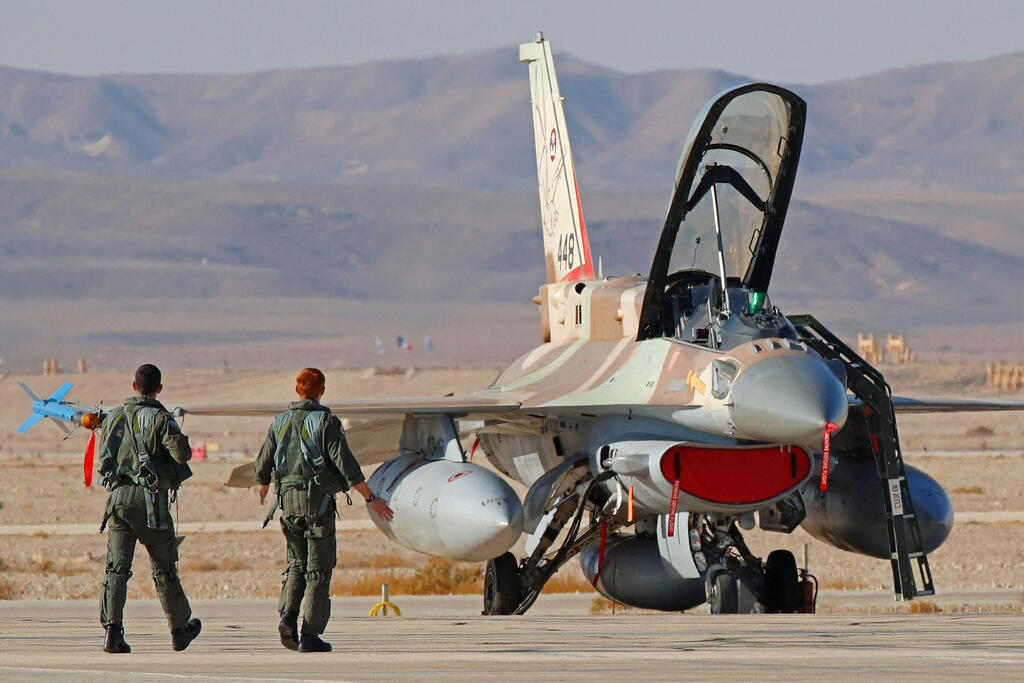
Israeli Air Force F-16 fighter jets in the international Blue Flag exercise at Uvda Base
(Photo: AFP)
Matanya Jerafi, CEO of the Im Tirtzu movement and a reservist, accused the Air Force commander of making “an unfortunate and misguided decision.” “We will not accept double standards in the IDF or the mixing of politics and the military,” he said. “This is one of the factors that led to October 7, the failure to deal with political refusers within the IDF.”
He called on Defense Minister Israel Katz “to intervene immediately and order a uniform policy across the board,” adding: “Anyone who signs letters of refusal and threats must be dismissed. It is unacceptable that an officer of brigadier general rank, a politician masquerading as a reserve pilot, continues to instruct cadets at the flight school. Defense minister, kick ‘Brothers in Arms’ and the like out of the IDF. Keep the IDF clean of non-reporters, refusers, anarchists and the like.”
The suspended officers are aircrew members ranging in rank from major to brigadier general, serving in various reserve roles in the Air Force. All served in reserve duty after October 7, some for dozens or even hundreds of days in operational roles. The most senior among them is a reserve brigadier general serving at the Air Force flight school. After signing the petition, he was suspended from reserve duty until further notice and informed of the decision in a phone call with the flight school commander. Others were also asked by phone to remove their signatures in order to return to service, and were suspended when they refused.
Seventeen additional Air Force reservists, active and retired, who also signed the petition and were temporarily suspended, joined the court petition. Some were reinstated after agreeing to remove their signatures. The petition was titled “A call to bring all the hostages home, even at the cost of ending the war!” It stated, among other things: “Stop the fighting and bring all the hostages home — now! Every day that passes endangers their lives. Every additional moment of hesitation is a disgrace.”
The petition, filed on behalf of the “Academia for Israeli Democracy” associationת argued that “this petition concerns decisions to dismiss, suspend or stop summoning reservists due to their signing of a values-based letter calling for the return of the hostages, even at the cost of ending the fighting. The decisions were made unlawfully, without any procedure, let alone a proper one, and caused severe harm to the petitioners’ constitutional fundamental rights, foremost among them freedom of expression and the right to equality.”
It further argued that the officers “were dismissed and suspended from reserve service without a hearing, without justification, and in a collective and arbitrary manner, in violation of the law and administrative justice. The position expressed by the reservists in favor of returning the hostages, even at the cost of ending the war, which no longer serves its declared objectives, reflects a moral and values-based stance derived from the value of comradeship, one of the IDF’s core values.”