


Israel is closely watching the U.S. operation to break through the Strait of Hormuz and is preparing for its possible repercussions, including renewed fighting with Iran.
An Israeli official described it Monday as a “game of chicken” that will determine who blinks first.
Footage: Adm. Brad Cooper over the Strait of Hormuz
(Video: U.S. Central Command X account)


Gallery

Ships in the Strait of Hormuz
(Photo: Amirhosein Khorgooi/ISNA/WANA (West Asia News Agency) via REUTERS)
“The question is how the Iranians will respond,” the official said shortly before launches from Iran toward the United Arab Emirates. “If they back down, it means they have lost control of Hormuz. And if they decide to fight for the passage, it means an attack.”
U.S. President Donald Trump announced “Project Freedom” on Sunday, under which the United States will help free and escort ships stuck in the Strait of Hormuz. He made clear that if Iran interferes, the U.S. will respond with force.
According to the Israeli official, “Trump is challenging them, and now we will see how important Hormuz really is to them. If he moves ships and tankers through and oil and goods flow over their heads, it means he controls the strait de facto and Iran has lost its last lever of pressure. In any case, it increases the chances of a return to fighting.”
The official said Iran could respond forcefully and “lash out,” potentially requiring the U.S., and possibly Israel, to resume fire. “We are prepared for every scenario, and the IDF is on constant alert. Right now, it depends more on Iran than on Trump.”
At the same time, amid continuing fire in the north, Israel intends to intensify its attacks on Hezbollah. A security official insisted that, contrary to the impression that Israel’s hands are tied, “Hezbollah will be hit in places it did not think we would reach. The Americans may be bothered when we strike in Beirut, but they are less bothered in southern Lebanon. Hezbollah will feel that soon. And if there is an operational opportunity, we will hit its senior officials in Beirut as well.”
Israel and Lebanon are continuing U.S.-mediated talks, but Israeli officials believe the process is going nowhere.
“There is nothing real there,” an Israeli official said. “The Lebanese government does not want to and cannot disarm Hezbollah. But the talks continue in order to ‘drive Hezbollah crazy.’”
Lebanese reports said a third meeting is expected this week, on Wednesday or Thursday, in Washington between Israeli Ambassador Yechiel Leiter and his Lebanese counterpart, Nada Hamadeh Moawad. Israel has not confirmed the report.
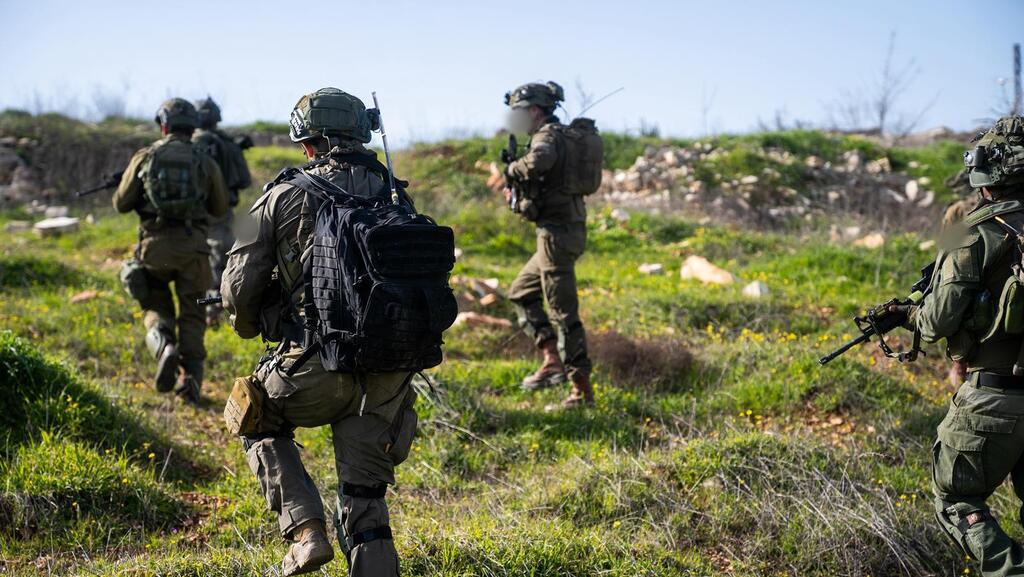
401st Brigade in southern Lebanon
(Photo: IDF Spokesperson’s Unit)
No date has been set for a possible trip by Prime Minister Benjamin Netanyahu to Washington for a possible meeting with Lebanese President Joseph Aoun. Israeli officials say the Lebanese are not interested in such a meeting and are conditioning it on a ceasefire.
According to an Israeli official, the IDF has thinned out its forces in southern Lebanon, where two divisions are now operating — one on defense and one on offense. Still, an Israeli official warned: “This situation will not last much longer. Hezbollah will pay a heavy price for ceasefire violations. For now, we are giving negotiations a chance.”
The official said the problematic figure is Nabih Berri, the leader of the Amal Movement and speaker of Lebanon’s parliament, who he said is helping Hezbollah maintain ceasefire violations. “The Americans are also beginning to understand that the problem lies with Hezbollah, and if we rely on the Lebanese government, there will be no disarmament.”
Another open front for Israel is in the Gaza Strip. Amid the collapse of talks between the Board of Peace and Hamas over the group’s disarmament, an Israeli official acknowledged that Israel currently has no desire to return to fighting in Gaza.
“If Hamas does not agree to disarm, in the long term we will have to return to fighting,” the official said. “But we will not open a third front while the fronts in Iran and Lebanon are threatening to erupt, certainly when you already control it.”
The official said Hamas has strengthened itself in the roughly 47% of the Gaza Strip it controls and is also benefiting from the entry of food trucks, but the group no longer has the capabilities it once had.
“It is very clear what will happen if the IDF enters Gaza when there are no hostages there and it does not need to exercise caution,” the official said.
Over the past two weeks, Board of Peace representative Nikolay Mladenov held talks with Hamas, but the contacts produced no results. He was in Israel on Monday and asked his interlocutors to moderate IDF strikes in Gaza and expand civilian relief for residents.