

After Thursday’s escalation along the northern border, during which the IDF issued five evacuation warnings to residents of southern Lebanon and struck multiple Hezbollah targets, explosions were again heard overnight and Saturday morning across the border.
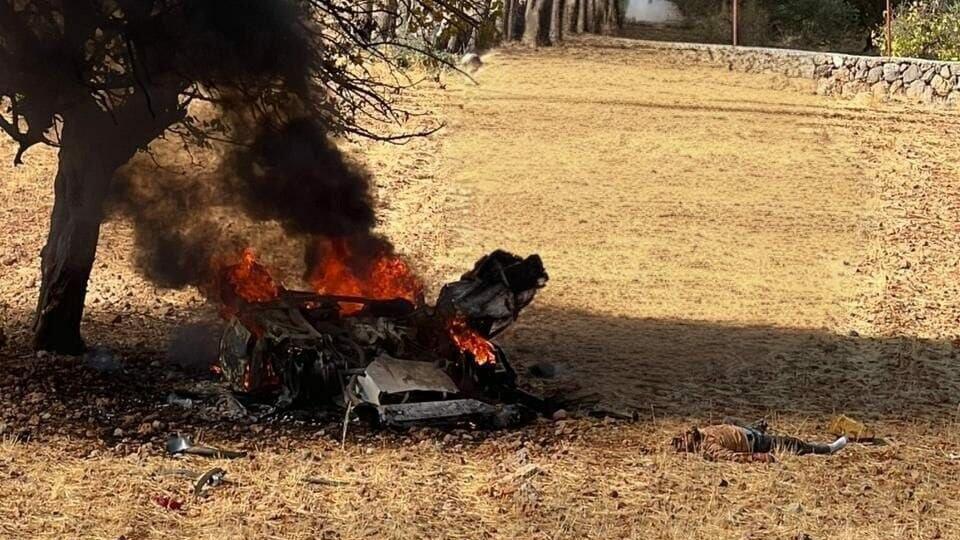
Lebanese media reported a drone strike on a vehicle in Bint Jbeil in southern Lebanon that left seven people wounded, and another strike in the nearby town of Lida targeting a bulldozer. Later in the morning, reports emerged of an Israeli drone attack in Rachaya al-Wadi, in the Bekaa region of eastern Lebanon, killing two people.
Despite the renewed hostilities, Beirut is seeking to project that diplomacy is still alive and that U.S.-led mediation efforts to stabilize the situation continue.
A vehicle hit in southern Lebanon on Saturday morning


Before Thursday’s strikes, Hezbollah issued a statement addressed to Lebanon’s three senior officials; President Joseph Aoun, Prime Minister Nawaf Salam, and Parliament Speaker Nabih Berri, accusing Israel of “repeated violations of the ceasefire on land, sea, and air” and of trying to “impose the disarmament of Hezbollah as a condition for halting the attacks.”
The group claimed that Israel “seeks to strip Lebanon of its ability to defend its sovereignty and force submission to Zionist policy,” calling on Lebanese leaders “to unite around a national position that defends Lebanon’s sovereignty and dignity.” Hezbollah reiterated that it “will not be drawn into political negotiations with the Zionist enemy,” warning that such talks would pose “an existential threat to Lebanon and its sovereignty.”
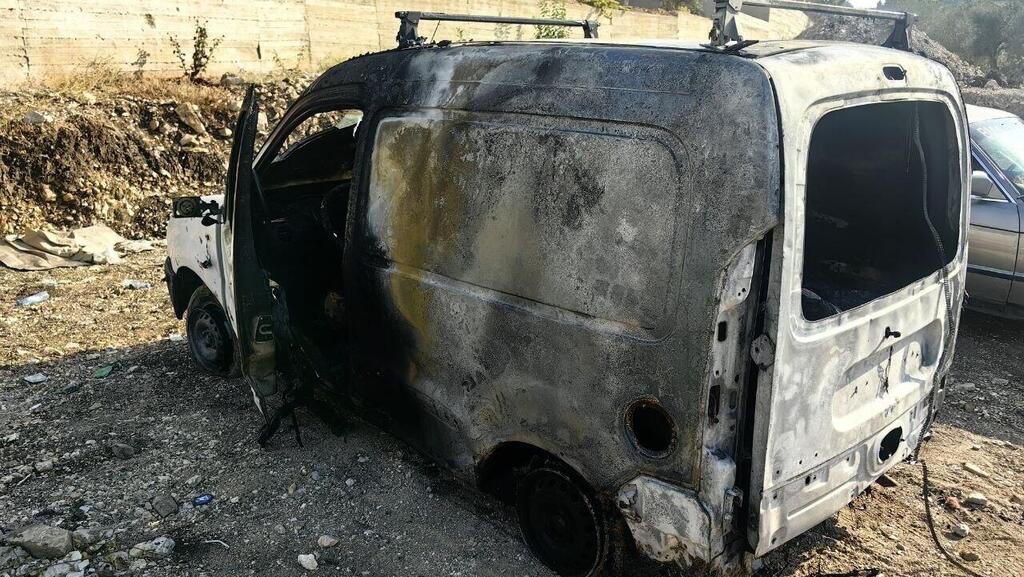
The vehicle hit in Bint Jbeil on Saturday
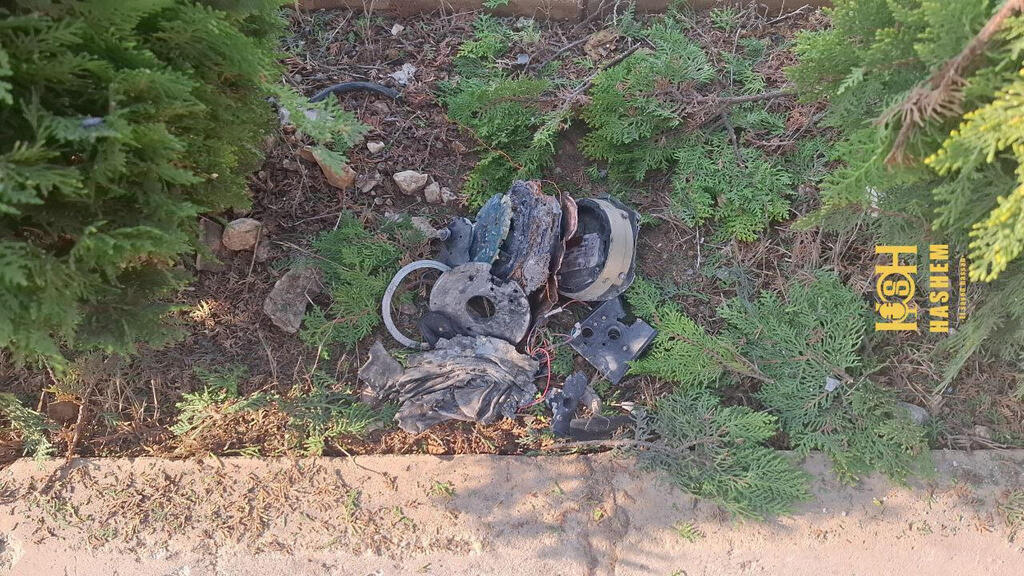
Lebanese footage: remnants of the missile that struck in the south
Prime Minister Salam responded Friday, saying that “the decision on war and peace belongs solely to the state, and no one has the authority to make such a decision.” He said Lebanon had already decided to place all weapons under state control and that the army had begun implementing the first phase of a plan to do so.
He added that Lebanon “will take all necessary measures to end Israeli escalation and secure Israel’s withdrawal.” President Aoun told a World Bank delegation that Lebanon remains committed to the ceasefire, “while Israel continues to occupy five points and intensifies its attacks against Lebanon.”
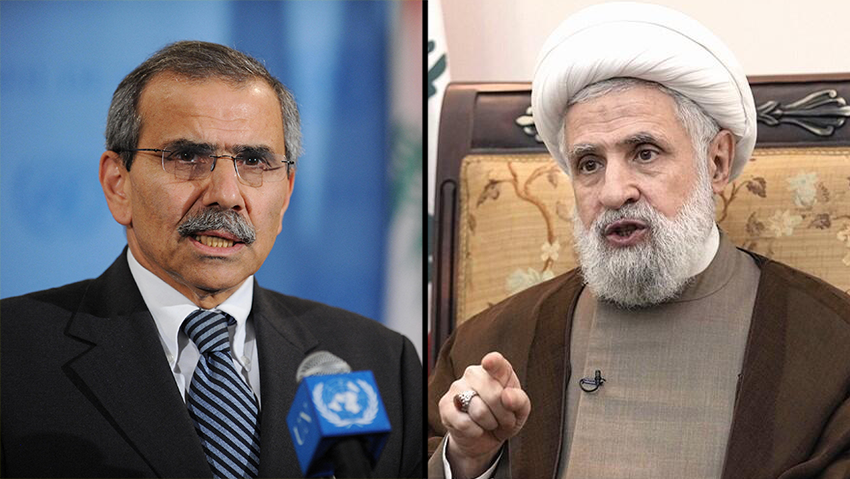
Qassem and Salam: Hezbollah reiterates its rejection of “political negotiations.”
(Photo: Stan Honda / AFP, Bilal Hussein, AP)
The pro-Hezbollah daily Al-Akhbar reported that regional and international contacts continue over Lebanon, “amid reports that Israel is determined to carry out targeted strikes to change the military reality on the ground.” According to the paper, both Aoun and Salam expressed their commitment to continued negotiations and are awaiting an Israeli response to be relayed through Washington.
Egypt has reportedly renewed its involvement, promoting a gradual plan to transfer Hezbollah’s weapons to state control in areas south of the Litani River and in Palestinian camps. Egyptian sources said Hezbollah’s objections stem from “a desire to protect the interests of the Lebanese people,” rather than direct Iranian influence.
A senior Egyptian official told the paper that the process would be long but necessary “to ensure stability before addressing core issues such as Hezbollah’s disarmament,” adding that Cairo “trusts Washington to exert greater pressure on Israel.”
Strikes in villages in southern Lebanon on Thursday
The Saudi-owned Asharq Al-Awsat also reported that Lebanese officials reiterated their commitment to negotiations with Israel under an international monitoring mechanism to enforce the ceasefire, even as Hezbollah insisted it rejects “political negotiations.”
Speaker Berri said that “normalization with Israel is out of the question,” but noted there was no objection to civilian experts participating in monitoring efforts “as was done in 2000.”
Deputy Prime Minister Tarek Mitri told Lebanon’s LBCI network on Saturday that “we received indirect messages indicating that Israel is interested in political communication, but we told them that talks are being conducted under the existing agreement, not at a political level.” He added that “Western diplomats are encouraging negotiations, with some suggesting civilian participation alongside the military delegation, but Speaker Berri stressed there is no need for a new negotiating body since the ceasefire monitoring committee already exists.”
Meanwhile, the IDF is preparing for another “round of attrition” against Hezbollah — even at the cost of several days of escalation. Military officials say the group’s fighting spirit and operational capabilities are being renewed as younger officers replace those killed in Operation Northern Arrows.
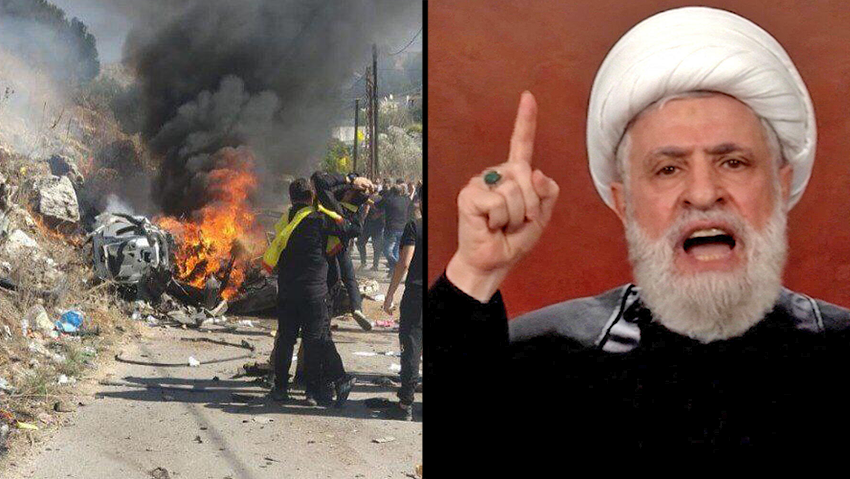
(Photo: Al Manar TV/Reuters)
Lebanon’s army, responsible for collecting Hezbollah’s weapons and which submitted a progress report to the government Thursday, accused Israel of carrying out strikes aimed at “undermining the country’s stability, expanding destruction, perpetuating the war, and preventing full army deployment.”
UNIFIL condemned the recent Israeli strikes, calling them “a clear violation of Resolution 1701.” The peacekeeping force said that “military action on such a scale threatens civilian lives and undermines progress toward a political solution.”
Last week, UNIFIL said it had shot down an Israeli drone operating near Kfar Kila, across from Metula. The interception was carried out by the mission’s French contingent. According to UNIFIL, an IDF drone later dropped a stun grenade toward peacekeepers, followed by tank fire.
The IDF denied the incident, with its Arabic-language spokesman, Lt. Col. Avichay Adraee, saying the drone was downed “without posing any threat, during routine intelligence-gathering and reconnaissance.”
In private conversations, senior Israeli officers have expressed growing frustration with what they describe as “recklessness” and “bullying” by some UN forces, warning that “the peacekeeping force is acting against the IDF and overstepping its mandate.”