

The pro-Iranian Iraqi militia Kataib Hezbollah in Iraq announced Monday evening the death of a senior security figure known as Abu Ali al-Askari.
In a statement, the militia’s secretary-general Abu Hussein al-Hamidawi said: “With pride and acceptance of God’s will, we announce the death of Hajj Abu Ali al-Askari.” The statement added that al-Askari “dedicated his life to raising the banner of truth,” and said his successor would be Abu Mujahid al-Assaf, who will now serve as the militia’s security chief.
The announcement did not specify how al-Askari was killed. However, the Lebanese news agency Unews, which is aligned with the Shiite axis, reported that “Kataib Hezbollah in Iraq mourns its senior security official Abu Ali al-Askari, who was killed as a result of American-Israeli aggression against Iraq.” Saudi network Al-Arabiya cited sources saying that “Kataib Hezbollah leader Abu Ali al-Askari was killed in an airstrike.”
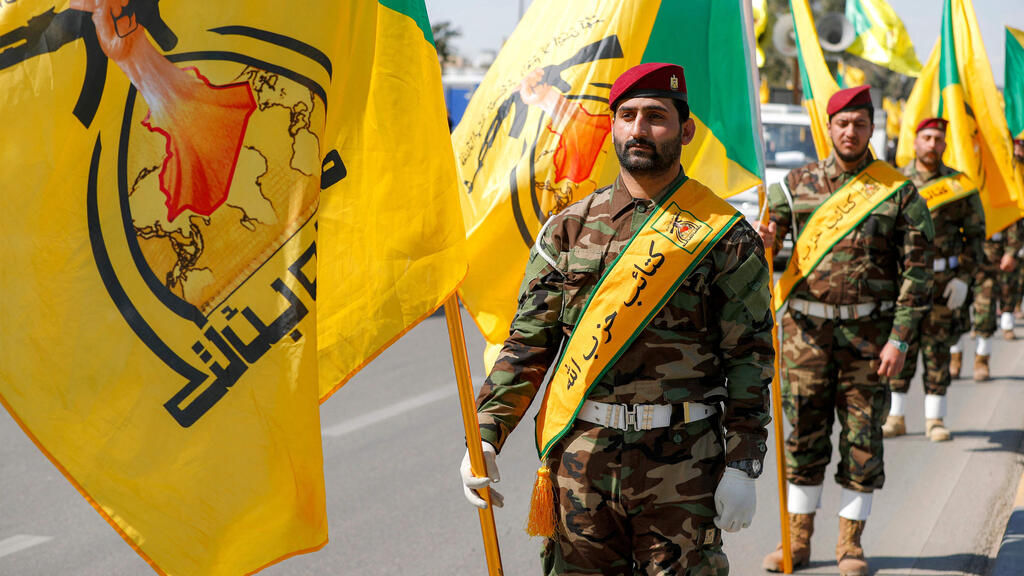
In recent days, strikes have been carried out against pro-Iranian militias in Iraq as part of the wider regional conflict and operations targeting the Iranian-led Shiite axis, which has been carrying out attacks across the region.
Al-Askari was considered a well-known figure and, according to reports, held a series of positions within Kataib Hezbollah while also disseminating the organization’s messages. He managed the group’s intelligence and security affairs, participated in high-level strategic decision-making and was involved in planning both political activities and operations on the ground.
The Sabereen news agency, which is affiliated with pro-Iranian militias, published what it said were the final remarks written by al-Askari, circulated on his Telegram channel. In a message dated March 7, he wrote: “The Americans must understand the scale of the crime of assassinating Khamenei.”
He added that the “Iraqi resistance” is focused on pursuing American forces and expelling them from the country, and declared: “We stand with our brothers in Hezbollah, praying for their steadfastness and victory. Their resistance to Zionist-American aggression embodies the highest ideals of loyalty and courage.”
On February 23, before the war with Iran began, al-Askari claimed in another message that “American preparations are increasing to attack Iran from Syria, through Iraqi Kurdistan, along a land route.” He added that “the Kurds in the region must act rationally and not become involved in a military adventure against Iran.”
Al-Askari’s militia is part of one of the umbrella organizations of Iraqi militias known as the Islamic Resistance in Iraq. According to the group’s recent claims of responsibility, it is playing a significant role in the current conflict and has been attacking “enemy targets” in Iraq and across the region. On Sunday, the Islamic Resistance in Iraq said it had carried out attacks on 24 targets within 24 hours.

Elizabeth Tsurkov was held captive for two and a half years by Kataib Hezbollah in Iraq
(Photo: Leo Correa/AP)
Before the outbreak of the war, Kataib Hezbollah Secretary-General Abu Hussein al-Hamidawi declared: “We call on our fighting brothers around the world to prepare for a comprehensive war in support of Iran.” He said Iran had stood with the oppressed for more than four decades and claimed that forces including Israel were now seeking to subdue it.
“We emphasize that the forces of the resistance axis must support Iran and assist it in every possible way,” he said. “We confirm to our enemies that a war against it will not be easy.” Later, photos were published showing him signing a document volunteering to fight alongside Iran. Following his call, large numbers of volunteers reportedly arrived to sign enlistment forms to assist Tehran in the war.
Elizabeth Tsurkov, who was held captive for two and a half years by Kataib Hezbollah in Iraq, said Monday that “Abu Ali al-Askari was personally involved in holding me captive and spread ridiculous lies about me, even after I was released. He was killed by the United States because Kataib Hezbollah attacked American targets in Iraq and neighboring countries. Kataib Hezbollah also killed hundreds of American soldiers. But most of the blood on this man’s hands was Arab — Iraqis and Syrians.”
First published: 23:31, 03.16.26