


A cease-fire is in effect and the hostage releases are closer than ever, but even as the first phase of a deal unfolds, it remains unclear when and how Hamas will end its role as the ruling force in the Gaza Strip. Militias opposed to the terror group say it is weakening even as activity to dismantle it increases.
“We saw how brittle and weak Hamas is — an organization that depends mainly on strong propaganda,” Hossam al-Astal, commander of the al-Majida clan militia in Khan Younis, told ynet. “In practice, it no longer has significant strength.”

The militia made headlines recently after the IDF struck a Hamas cell that had been preparing to attack its members in Khan Younis; Palestinian reports said more than 22 terrorists were killed. Al-Astal said those events exposed Hamas’ weakness.
IDF eliminated Hamas terrorists who attacked the militia in Khan Younis
(Video: IDF)


A former officer in the Palestinian preventive security apparatus, al-Astal was accused in the 1990s of collaborating with Israel. He was among those who joined Yasser Abu Shabab’s militias before founding his own armed group in Gaza. In the interview, he stressed his desire to help “sane residents” restore “quiet, ordinary life” to the area.
Al-Astal said he established his militia, presenting himself as a savior from Hamas rule and invited residents to his area in the Kizan al-Najar neighborhood, which the IDF evacuated and transferred to his control. He said the area is under his direct responsibility and that he coordinates with the leader of the Abu Shabab militia, which controls parts of eastern Rafah and eastern Khan Younis, though he operates independently.
Describing Hamas’ state after recent fights with his clan, al-Astal said the clashes revealed shortages in uniforms, resources and training. “We are in Kizan al-Najar; we have many civilians in the compound, and there is no Hamas presence there. It’s only a matter of time until we topple Hamas fighters for good,” he said.
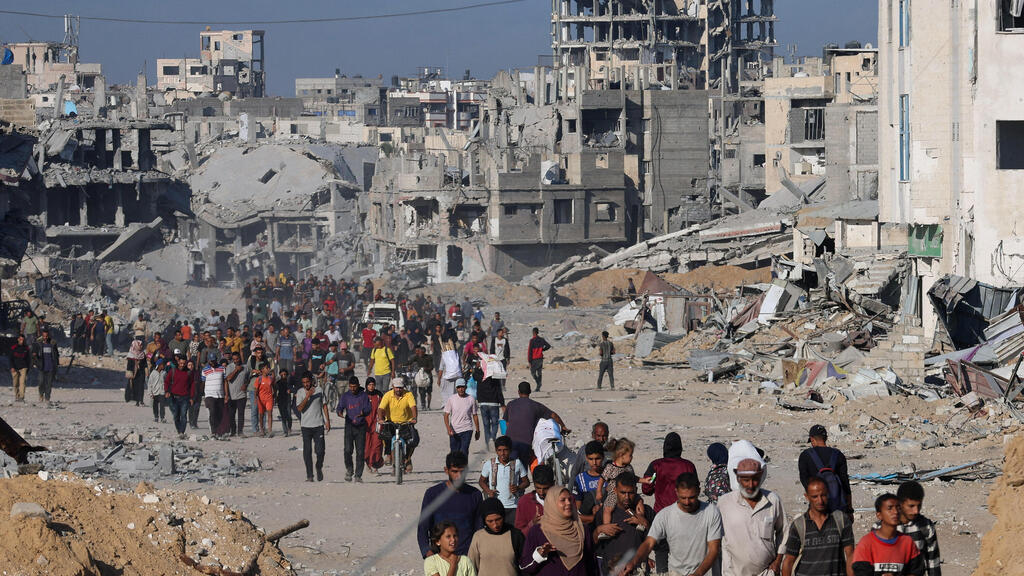
The Gaza Strip
(Phoot: Reuters/Ramadan Abed)
Asked about footage showing Hamas terrorists executing rebels, he said he was not moved. “They drag people from the tents. Not all of them are connected to us; it’s meant to frighten people and restore fear to residents’ hearts. You can’t impose rule only by the sword like before the war,” he said.
On foreign relations and contacts with outside actors, al-Astal said: “We maintain close ties with several Western countries, with the United States and even with Israel. We want them to support residents who refuse Hamas rule — to disarm them and stop the fear the organization creates.”
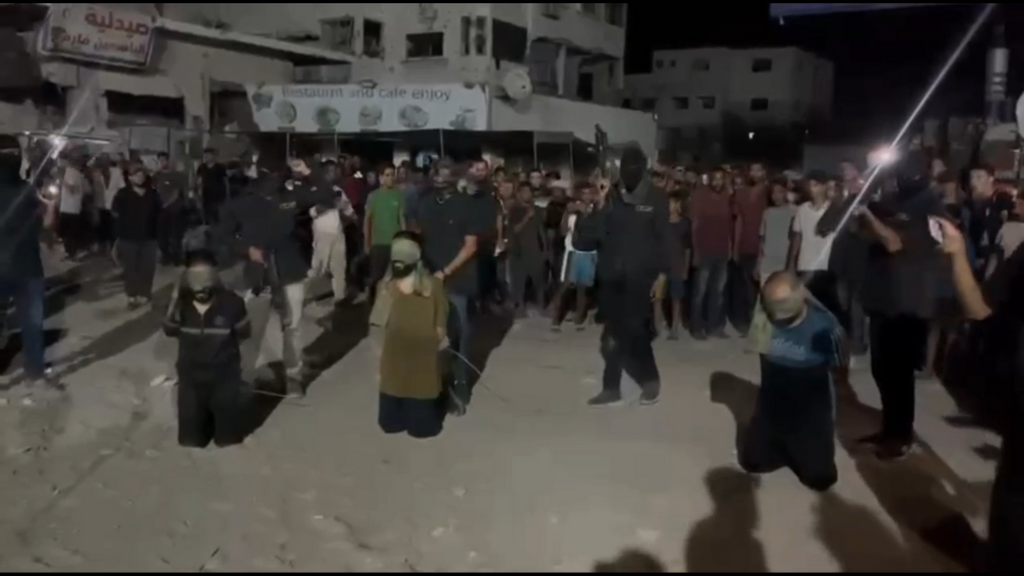
Hamas terrorists executing rebels
Still, he said the fight is far from over. “We now have a harder war — to get rid of these people, the terror operatives,” he said. “We are people of peace; we want people to live in the calm that existed before October 7 and before Hamas rose to power. Israelis will be able to visit Gaza and residents will receive medical care in Israel. We don’t want more wars.”
Al-Astal also called for the hostages’ release. “That is most important: to bring them home, create a reality of peace and brotherhood, and hold this terrorist organization to account,” he said.
'Hamas’ real war'
The images emerging on the ground as the war ends — of Hamas fighting militias and rebel activists — no longer intimidate the insurgent forces. The Quds-aligned network reported Saturday that Hamas security organs arrested several suspects in northern Gaza.
According to reports, the Raad unit has operated from north to south to strike armed cells formed in recent months, such as those linked to Yasser Abu Shabab. Some fighters were killed and others arrested during pursuits in Jabaliya and Beit Lahia.
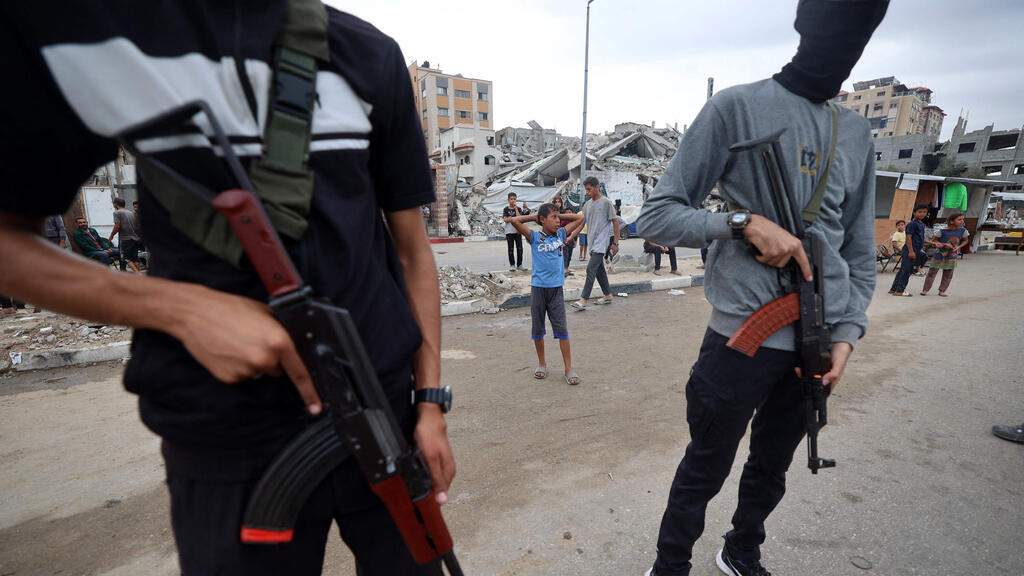
Hamas terrorists
(Photo: Eyad Baba/ AFP)
The end of the war with Israel and the cease-fire have not brought calm to the Strip. Hamas now faces a significant internal threat: armed clashes with local clans that hold power and influence and have become a direct challenge to the group’s control. Two days ago, clashes between Hamas cells and members of the Abu Werda clan near the Gaza port left three Hamas fighters and two clan members dead and dozens wounded.
Disputes with the clans are partly explained by an alleged Israeli policy to recruit prominent clans to oversee humanitarian aid distribution. Early in the war, Hamas executed the mukhtar of the Dagmash clan in northern Gaza out of fear of external manipulation.
The clans’ power rests on economic capacity and possession of weapons that are not always under Hamas’s control. For Hamas, the struggle with major clans is “the real war” — a combination of command crisis, internal threats and armed confrontations that could lead to another wave of violence in the coming weeks and months. Meanwhile, militias in Gaza report they are preparing for intensive fighting against Hamas. “We are ready to bring down Hamas,” members of the Abu Shabab militia told ynet and Yedioth Ahronoth.