


As Israeli Air Force pilots achieved air superiority over Iran in less than 24 hours, flying repeated missions deep into enemy territory and striking hundreds of targets, their operations relied on the technical teams who received each aircraft for only a few hours before preparing it for the next sortie.
One of the officers overseeing that complex logistical effort is Maj. D, 34, commander of the technical branch in Squadron 106, known as “Spearhead.” Together with her soldiers, she prepares the aircraft in a continuous cycle from mission to mission.
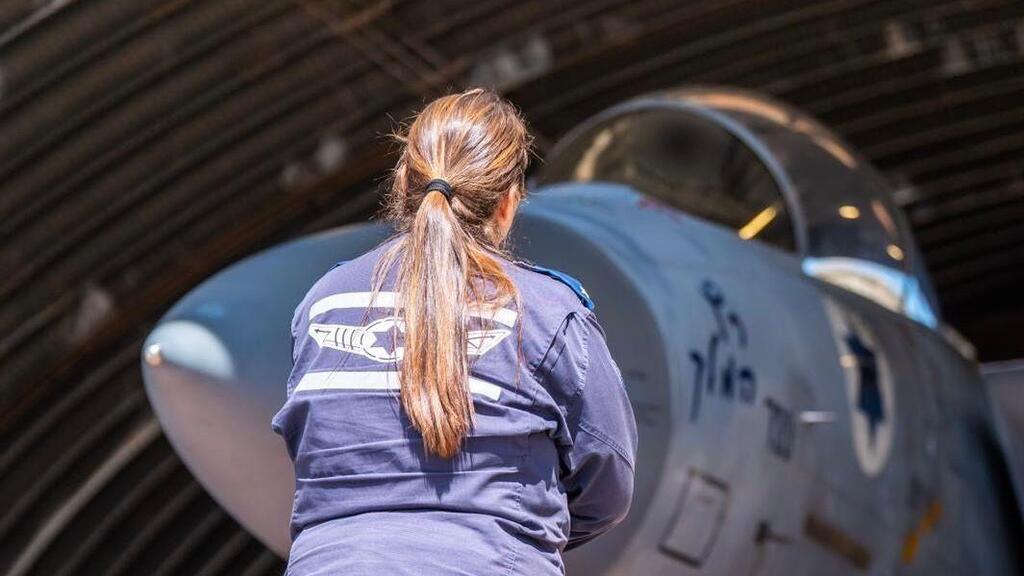
“Preparations focused mainly on lessons from the previous round with Iran, Operation Rising Lion. This is different. We prepared for something more intense,” she said.
She added that in the days leading up to the current campaign, the unit knew it was coming and maintained strict compartmentalization. “On the one hand, I projected routine. On the other hand, we carried out emergency actions. That’s a challenge with the people I command and with my family. I couldn’t tell them what was about to happen. The past period was very intense. We maintained the aircraft because we didn’t know when it would start, and we carried out treatments and inspections.”
According to Maj. D, the mix of routine and emergency created unusual situations. “We had pilots who had just completed flight school. In routine times, they would be flying continuously, but in practice, we only familiarized them with the aircraft and made adjustments because we had to prepare the planes.”
When the war began, Maj. D, who is married and a mother of two young children, said her family had to evacuate the base where they live. “On Saturday morning, I packed a bag for my children and my husband. They got into the car and left. I don’t see my kids, and that’s very hard, but they send video clips and they are used to this situation. They know what their mom does. My eldest told me before they left, ‘Mom, there’s a war. We’re going to fight the bad guys.’”
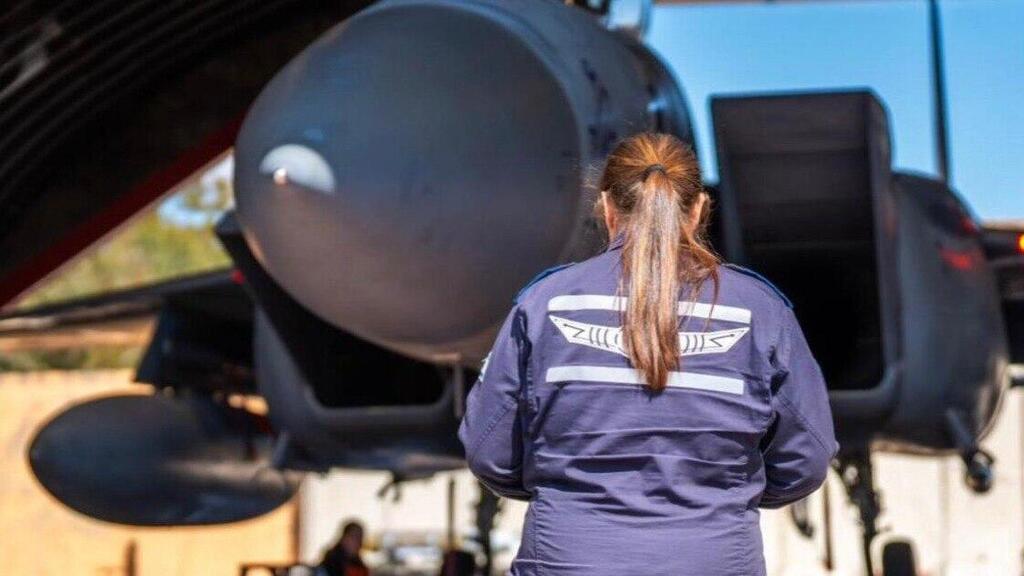
'Mom, there’s a war. We’re going to fight the bad guys'
(Photo: IDF)
She said the main difference between Operation Rising Lion and the current operation, Roaring Lion, is the intensity and urgency. Alongside a sense of mission, there was concern about meeting the required pace.
“The only concern is that there will be heavy fire, more than last time, and that hasn’t really happened,” she said. “As for the work itself, it is much more intense.”
“I am constantly planning the next flights. Aircraft have just taken off and I have a little over three hours to prepare for the next sortie,” she added. “I plan the next munitions that need to arrive. In Rising Lion there were longer breaks between waves. Now the pilots are flying many more sorties. There is no pause. They barely rest. They return from a mission, rest two or three hours, eat and go back up. We operate in shifts and, thanks to the reservists, who are a backbone that eases the burden, we meet the missions.”
She described the turnaround process when a jet returns. “It works like a factory. The munitions are delivered to the underground bays and wait for the aircraft. Then inspections are carried out and the plane is handed to the pilot. The technician who checked the aircraft and its engines gives a thumbs-up, ‘all serviceable,’ to the pilot. They look at each other. The technician steps back, the pilot releases him, and then takes off again.”
“In my view,” she added, “an aircraft has karma. When it knows it is on a mission, it does not allow itself to tire or accumulate malfunctions.”
Amid ongoing debate over women’s service in the military, Maj. D said dozens of women are providing critical support to the mission. “I feel pride. What we are doing is for future generations, so we can sit our grandchildren on our knees and exist with zero threats to the State of Israel. It is a mission.”