

For nearly two years since Hamas’ October 7, 2023 terror attack, Israel sought to block Turkey from playing any role in negotiations with the terror group. Instead, Jerusalem relied on Egyptian and Qatari mediation — not on Turkish President Recep Tayyip Erdogan, who repeatedly defended Hamas, compared Prime Minister Benjamin Netanyahu to Hitler, and accused Israel of genocide.
Now, as the implementation of U.S. President Donald Trump’s Gaza plan advances and talks move toward a second phase of the agreement, Turkey’s involvement is no longer in question. By Trump’s initiative, Ankara was brought into the negotiations through the front door — and its participation became crucial in sealing the deal that led to the current ceasefire.

Erdogan signed the accord this week at the “Peace Summit” in Sharm el-Sheikh alongside Trump, Qatari Emir Tamim bin Hamad Al Thani, and Egyptian President Abdel Fattah el-Sissi. Turkey will also take part in the international task force helping to locate the remains of hostages held in Gaza.
Trump trusts Erdogan: “He’ll bring order”
Despite Ankara’s newfound role, Erdogan and Foreign Minister Hakan Fidan have not softened their rhetoric toward Israel. On Monday, during the Sharm summit, Turkish media reported that Erdogan threatened to cancel his attendance and return home if Netanyahu appeared. His plane even briefly diverted before landing in Egypt, turning back only after Netanyahu canceled his participation.
Before the first hostages were released, Erdogan accused Israel of having “a long history of breaking promises after ceasefire agreements.” Later, he urged Washington to “keep up the pressure on the Israeli government,” adding, “It’s vital that the agreement is implemented and that the U.S. maintains its leverage over Israel.”
Donald Trump speaks about Erdogan in the Egypt summit


Given Erdogan’s open identification with the Muslim Brotherhood, Turkey’s growing foothold in Gaza and its involvement in postwar diplomacy are raising alarm in Jerusalem.
According to Dr. Gallia Lindenstrauss, a senior researcher at the Institute for National Security Studies (INSS), “For a long time, Israel strongly opposed any Turkish involvement in Gaza’s ‘day after.’ But due to Trump’s pressure — and because U.S.-Turkey relations are at a high point — Trump seems to trust Erdogan to bring some order to the Middle East.”
She explained that Turkey’s leverage over Hamas made it an essential player: “Because Turkey and Qatar host Hamas and facilitate its logistics and funding, Erdogan was able to pressure the organization. That helped clinch the deal.”
“Turkey is seen as one of the actors that contributed to the agreement,” Lindenstrauss continued. “This opened the door to deeper Turkish involvement in Gaza — something Ankara has long sought and considers a major diplomatic success.”

Trump trusts Erdogan
(Photo: Evan Vucci / AFP)
Still, she warned, “Turkey is a hostile actor toward Israel, both in rhetoric and in deeds. This development is not desirable for Israel. Yes, Turkey has peacekeeping experience and a professional military, but allowing it a major role in Gaza goes against Israeli interests. Israel has tried to limit Turkey’s influence in southern Syria; giving it access through Gaza is strategically dangerous.”
“A game changer”
Dr. Rami Daniel, another INSS researcher and Turkey expert, said Ankara’s involvement was “critical” to securing the ceasefire. “Erdogan wanted to be seen as a relevant and powerful player,” he said. “In the past, Turkey funneled large amounts of aid to Gaza and took pride in its opposition to Israel — more than any other country. But that strategy failed. Even countries hostile to Israel didn’t follow Turkey’s lead. Until recently, Erdogan couldn’t position himself as a key mediator — but Trump changed that by bringing Turkey and Qatar together. It was a game changer.”
“Hamas eventually realized it was cornered,” Daniel added. “Iran supported it militarily, Qatar politically and financially, and Turkey logistically and diplomatically. When that triangle collapsed, Hamas had no choice. Turkey’s engagement was crucial to break the deadlock — but it comes at a price for Israel. Erdogan hasn’t changed his tone. He still boosts Hamas’ legitimacy and calls to pressure Israel instead. Turkey helped with phase one — the hostage releases — but the next phase, the long-term arrangement, will be much harder with Ankara involved.”
“Erdogan has dreamed of a role in Gaza since Oct. 7”
As for Turkey’s future involvement, Lindenstrauss said, “We don’t yet know the full scope of what Turkey’s role will be, but Ankara’s statements are increasingly grandiose. Turkish officials even said their troops could be deployed to Gaza if necessary. For now, it’s clear Turkey will take part in the mission to locate the remains of hostages, and possibly monitor the ceasefire.”
Last week, Turkey’s Defense Ministry said, “Our forces, experienced in establishing and maintaining peace, are ready for any mission assigned to them.”

Hamas terrorists in Gaza
(Photo: Reuters/Ramadan Abed)
According to Lindenstrauss, the deeper Turkey and Qatar become involved, the harder it will be to marginalize Hamas. “There are still unresolved questions about the transition period: who will make up the international force, what will become of Hamas, and whether it will be fully disarmed or retain partial control.”
Daniel added that “roles for the future of Gaza have not yet been defined. Trump’s plan is broad and conceptual. Erdogan has dreamed of having a role in Gaza since October 7 — now he’s getting it, and he’ll try to make himself as central as possible.”
The Syrian connection: “Israel is seen as an obstacle”
Asked what Israel should do, Daniel replied, “Ultimately, not only Israel wants Hamas gone. Egypt doesn’t want Hamas, nor do the Emiratis. Most regional countries are closer to Israel’s position — disarming Hamas and establishing a new governing structure — than to Turkey’s.”
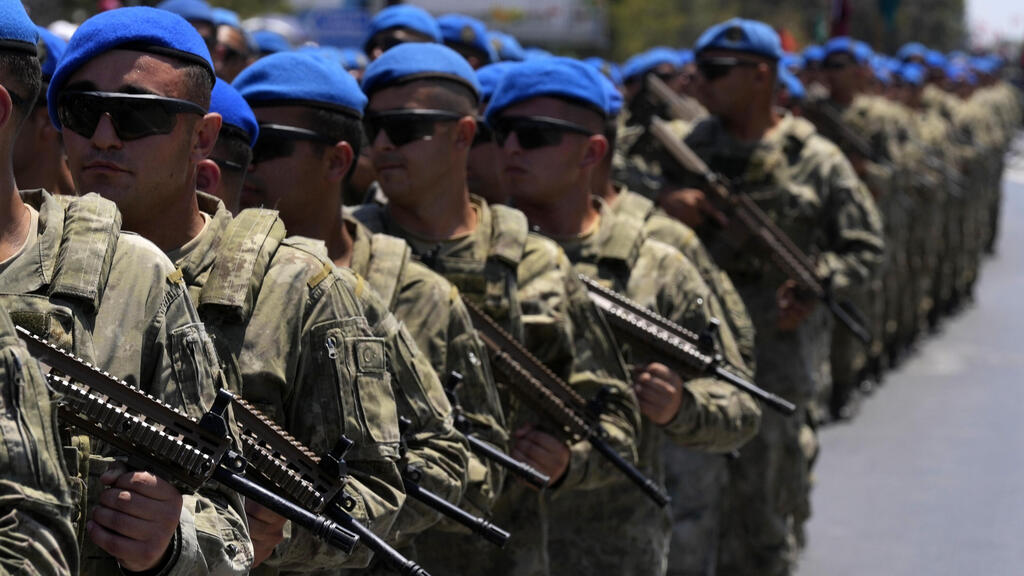
Turkish soldiers
(Photo: AP/ Petros Karadjias)
He warned, however, that “Turkey’s weakness lies in going against the regional and global current. Most Middle Eastern leaders want Hamas eliminated, but right now, Turkey is strong. Its position could shift suddenly.”
Lindenstrauss agreed: “The less military involvement Turkey has, the better. While its participation in the search for fallen hostages isn’t a major issue, giving Ankara any authority to determine whether the ceasefire holds is dangerous. Turkey sides with Hamas. The idea of Turkish troops in Gaza is deeply concerning — what happens if Israel accidentally strikes them? Tensions are high enough as it is.”

Ahmad al-Sharaa
(Photo: Ludovic Marin/ AFP)
Ultimately, she said, “Turkey and Qatar don’t want Hamas destroyed — they want it to survive in some form. That’s fundamentally at odds with Israel’s interests.”
Regarding the rising hostility between the two nations, Lindenstrauss noted that Turkey remains a “problematic player for Israel for three reasons: its growing regional assertiveness, Iran’s weakening — which strengthens Ankara — and the evolving situation in Syria. Turkey now has deeper interests in southern Syria, where Israel is seen as a disruptive actor. That’s why the two countries maintain a ‘hotline’ to avoid aerial incidents.”
She added, “The current rhetoric fits Turkey’s long-held narrative that foreign powers are trying to undermine it. In such an atmosphere, every statement made by Israel is amplified — and every Turkish outburst echoes back even louder.”