

Hundreds of Arad residents demonstrated Thursday against what they described as increasing religious coercion in the city. Arad has seen a growing ultra-Orthodox population in recent years. Most recently, members of the Gur Hasidic dynasty purchased the city's shopping mall and sought to ban the display of women's images in public areas. The protest also came in the wake of clashes last week between Gur Hasidim and secular residents that escalated into a brawl.
The demonstrators called for the resignation of Mayor Yair Maayan and carried signs reading, "Shame, you sold out Arad," alongside a picture of Deputy Mayor Guy Brioza.
Hundreds of Arad residents demonstrated Thursday against what they described as increasing religious coercion in the city
(Video: Ilana Curiel)


Olga Bolichev, an Arad resident, said, "The city is becoming more ultra-Orthodox. We feel it everywhere. They spit at us on the buses. They throw stones at us. It's a danger to the public. They are not willing to live in peace, and we've come to fight for our city."
Elitaya Sevet said: "This is my sixth year living in the city, and I see it getting worse and worse. They're trying to take over, and people are letting them. They keep promising us everything will be fine and that there will be room for us too. It's become a nightmare. They want to drive us out. They shout, 'You'll sell us your homes.' They shout, 'We'll turn this place into Bnei Brak.' And that's exactly what's happening."
Gallery

The protest also came in the wake of clashes last week between Gur Hasidim and secular residents that escalated into a brawl
(Photo: Ilana Curiel)
Former Mayor Nisan Ben Hamo said, "The residents of Arad have shown that when it comes to fighting for their home, they do not give up. This sends a clear message to the mayor: 'Your coalition cannot continue.' I am proud of the residents."
Large police forces, including four mounted officers, were deployed to secure the demonstration.
As previously reported, violent clashes broke out last week between secular youths and ultra-Orthodox residents in Arad during a protest organized by the ultra-Orthodox community in support of exemptions from military service. The demonstration, which involved vehicle convoys from dozens of locations across 19 cities from northern to southern Israel, turned violent after secular counterprotesters blocked the ultra-Orthodox participants' vehicles. Videos from the scene showed pushing, punches and kicks.
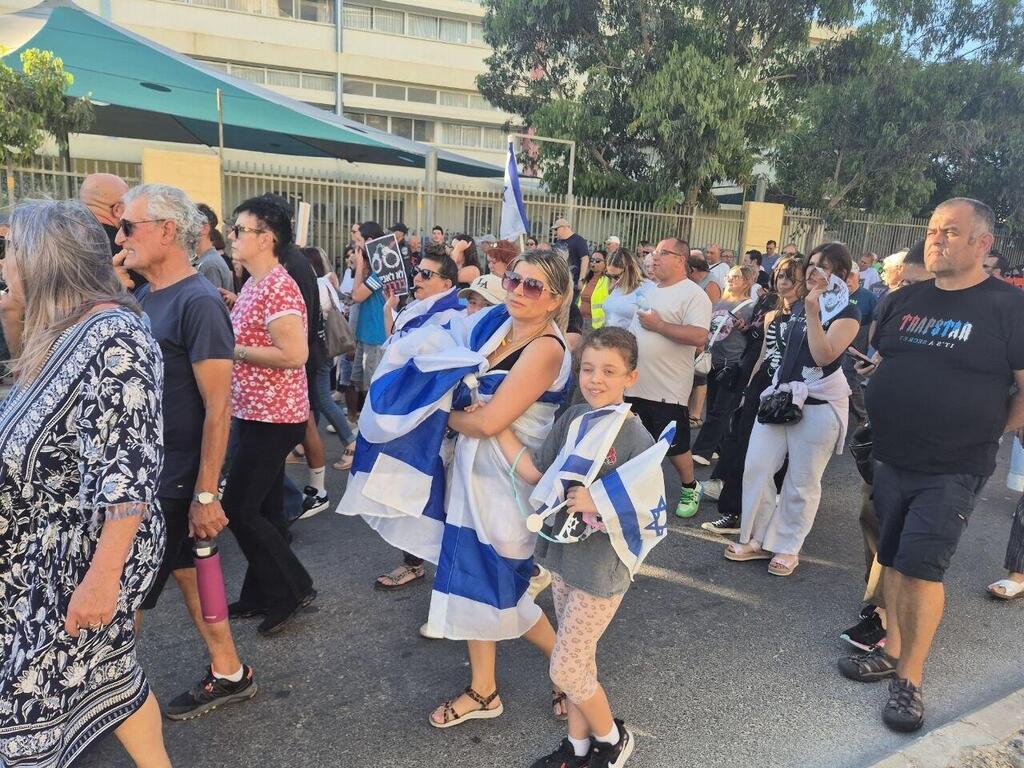
'The residents of Arad have shown that when it comes to fighting for their home'
(Photo: Ilana Curiel)
The clashes are seen by many residents as a symptom of broader demographic changes in Arad, where the ultra-Orthodox population is growing faster than any other segment of the city's population. Secular residents have decided to push back against what they view as a transformation of the city's character, and the struggle has reached a boiling point.
A resident identified only as S., who joined the counterprotest blocking the ultra-Orthodox convoy, told ynet at the time that she had suffered a broken arm just two days earlier during celebrations organized by ultra-Orthodox residents following the release of a suspect accused of domestic violence offenses.
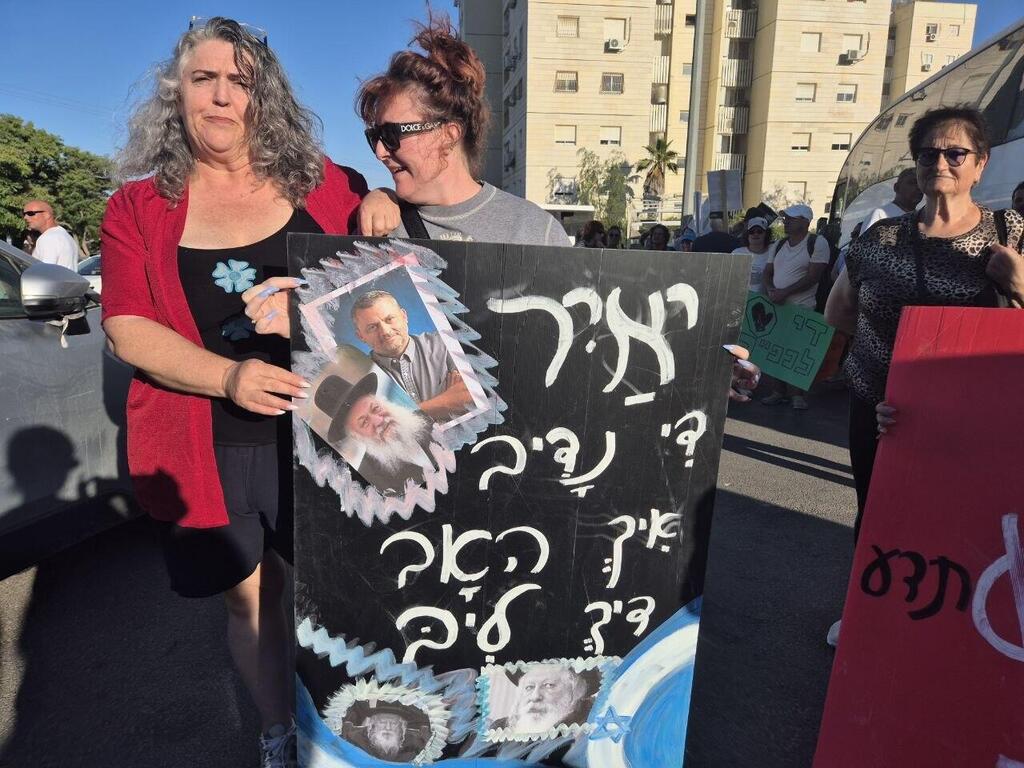
Secular residents have decided to push back against what they view as a transformation of the city's character
(Photo: Ilana Curiel)
"They broke my arm, and I ended up in the emergency room," she said. "I came with an Israeli flag, and they grabbed it from me."
The struggle by Arad's secular residents has long since become a daily battle over public space. Recently, during peak hours, Metropoline's Route 3 buses were replaced by buses operating with informal gender separation. The arrangement was not officially sanctioned. Israeli law prohibits gender segregation on public transportation, and all passengers are entitled to sit wherever they choose. The municipality said the directive "does not apply to Arad residents," but the Gur Hasidic community decided that its male and female students would travel separately.

The struggle by Arad's secular residents has long since become a daily battle over public space
(Photo: Ilana Curiel)
Earlier, Gur Hasidim purchased the city's shopping mall. Within a month of the acquisition, store owners said they began receiving demands from the new management. One kiosk removed photographs of women from its display at management's instruction, while other businesses were asked to make their storefronts more "modest."
The owner of one business said a member of the new management team "came here and said there couldn't be any pictures of women at the kiosk. We took everything down, everything, everything. Anything that had any connection to women was removed from the display. I was shocked. I know it's illegal. We all know it's illegal. But they're the owners."