

Internet and telephone services remained largely shut down across Iran on Tuesday, more than half a day after authorities cut connectivity in what appeared to be an effort to contain a widening wave of anti-government protests, according to internet monitoring groups.
NetBlocks, which tracks global internet activity, and a database run by the Georgia Institute of Technology that analyzes internet shutdowns said the blackout in Iran was still nearly total after about 12 consecutive hours, leaving residents of the Islamic Republic without access to the web.
Iran internet blackout enters 12th hour as regime plans Revolutionary Guard deployment


The shutdown came a day after senior officials in Iran’s judiciary and security services warned they would respond forcefully to demonstrations. Despite the threats, protests continued to spread. Witnesses told The New York Times that crowds gathered in multiple neighborhoods across Tehran and in other cities, including Mashhad, Bushehr, Shiraz and Isfahan. According to the accounts, demonstrators included men and women, young and old.
A senior Iranian government official told The New York Times that officials had been urgently calling and messaging one another, uncertain how to contain the escalating unrest. The official said the Revolutionary Guard, which is typically responsible for border security rather than domestic policing, would likely assume control of efforts to restore order.
In its first public response to the large-scale overnight protests, Iran’s state television blamed what it called “terrorist agents” of the United States and Israel for setting fires and inciting violence. The broadcaster said there were casualties but did not provide details.
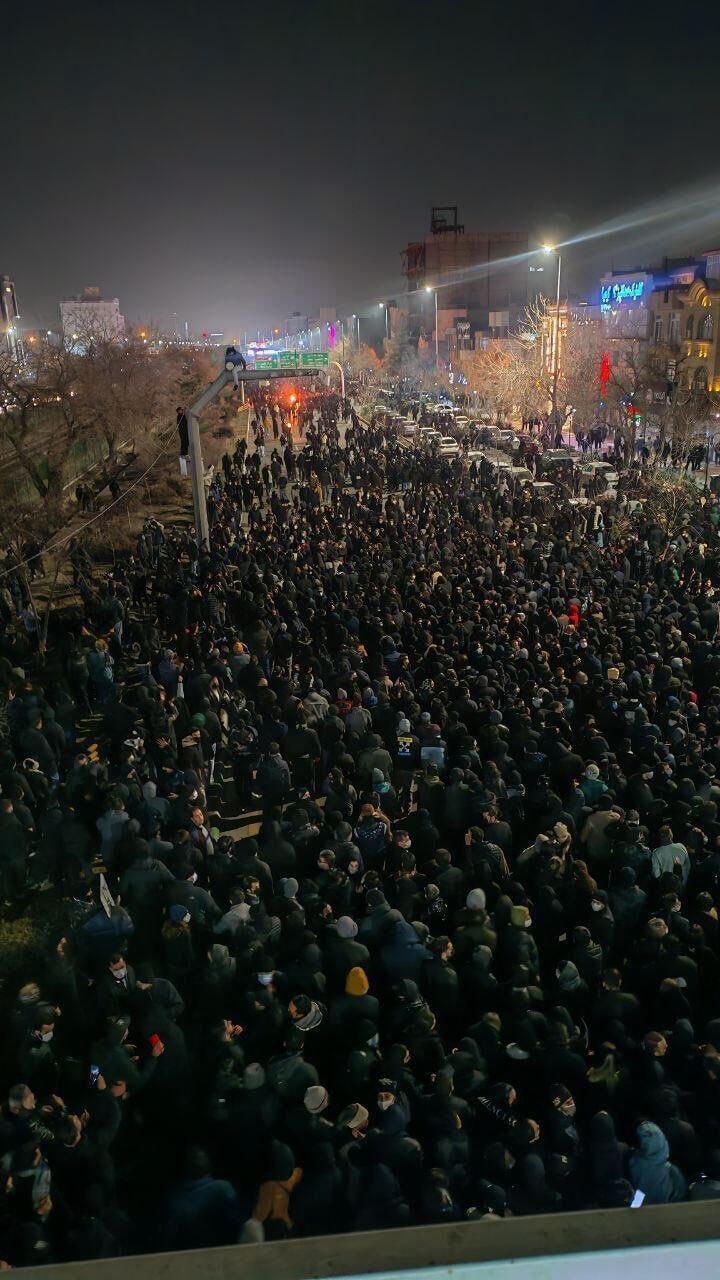
Videos recorded Monday night showed government buildings and symbols of the state set ablaze in several locations, including in Tehran. The protests were largely peaceful during the early evening, but tensions escalated after nightfall as demonstrators torched cars, buildings and objects in the streets. Fires were reported near Kaj Square in Tehran, where thousands were seen in the streets. In Karaj, west of the capital, footage showed protesters fleeing after gunfire was heard.
U.S. President Donald Trump issued a stark warning to Iran’s leadership, saying the United States would respond forcefully if authorities violently crack down on demonstrators.
Speaking to Fox News, Trump accused Iran’s government of using lethal force during past unrest. “In the past, they’ve started shooting the hell out of people,” he said. “All of a sudden, people without any weapons whatsoever are standing there, and you have machine guns gunning them down, or they take them to prisons and then hang them and kill them.”
“They played rough,” Trump added. “If they do that, we’re going to hit them very hard. We can hit them hard. We’re ready to do it.”
The protests began nearly two weeks ago over worsening economic conditions and the sharp decline of Iran’s currency, the rial. What started in Tehran’s Grand Bazaar spread to other cities, with a significant escalation reported Monday night. The London-based opposition outlet Iran International claimed that millions took part in demonstrations across the country during the day.
Iran International reported several acts of arson, saying protesters set fire to a television building in Isfahan, burned police motorcycles in Tehran and torched a billboard in the capital bearing the image of Qassem Soleimani, the former commander of the Quds Force who was killed in a U.S. strike. Protesters in Tehran also burned images of Supreme Leader Ayatollah Ali Khamenei and chanted “Death to the dictator” at demonstration sites in the capital and elsewhere.
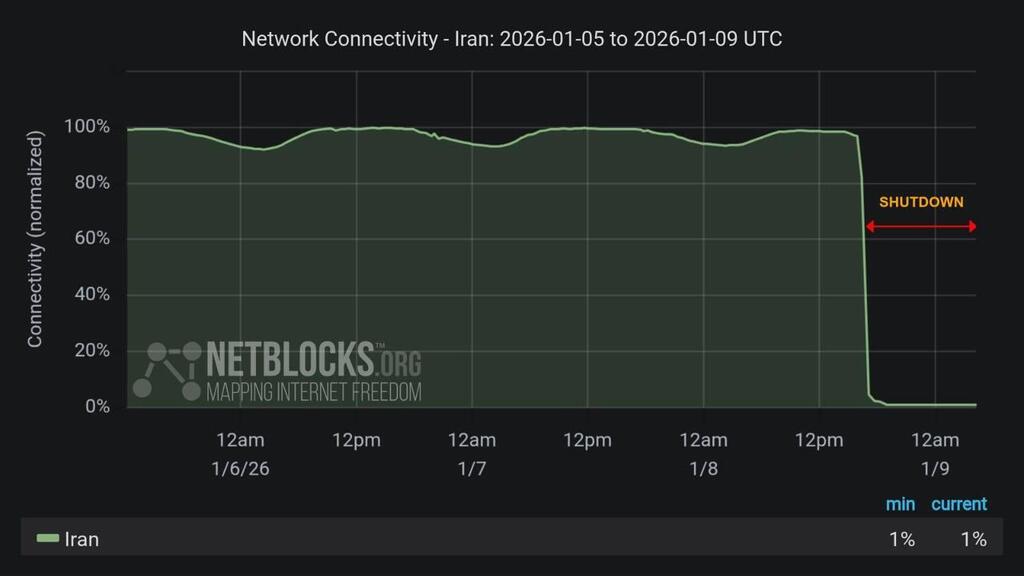
Iran internet blackout
(Photo: NetBlocks)
The Norway-based group Iran Human Rights said at least 42 protesters have been killed during 12 days of unrest. The organization said hundreds were wounded and more than 2,270 people were arrested. Iranian authorities and state media have reported at least 21 deaths, including members of the security forces.
President Masoud Pezeshkian said Monday night that authorities should show restraint and avoid violence against demonstrators.
The unrest intensified after Reza Pahlavi, the exiled crown prince and son of the shah overthrown in Iran’s 1979 Islamic Revolution, called on the public to take to the streets. Chants heard at protests included “This is the final battle, Pahlavi will return.”
Although Pahlavi has faced criticism over his support for Israel, particularly during the brief conflict with Iran in June, demonstrators in some cities voiced support for him on Monday night. Protesters chanted “Long live the shah,” including in the city of Khomein, the birthplace of Ayatollah Ruhollah Khomeini, the founder of the Islamic Republic.