

Naveed Akram, 24, who is accused of carrying out the massacre at Sydney’s Bondi Beach during the recent Hanukkah holiday, appeared overnight Sunday for the first time in an Australian court.
Akram faces 59 charges, including 15 counts of murder and 40 counts of wounding with intent to murder, as well as a terrorism offense, after allegedly killing 15 people alongside his father, Sajid Akram, who was killed at the scene.
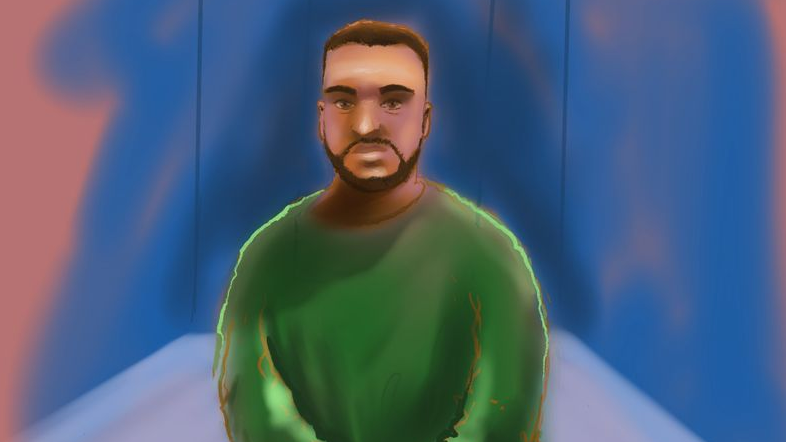
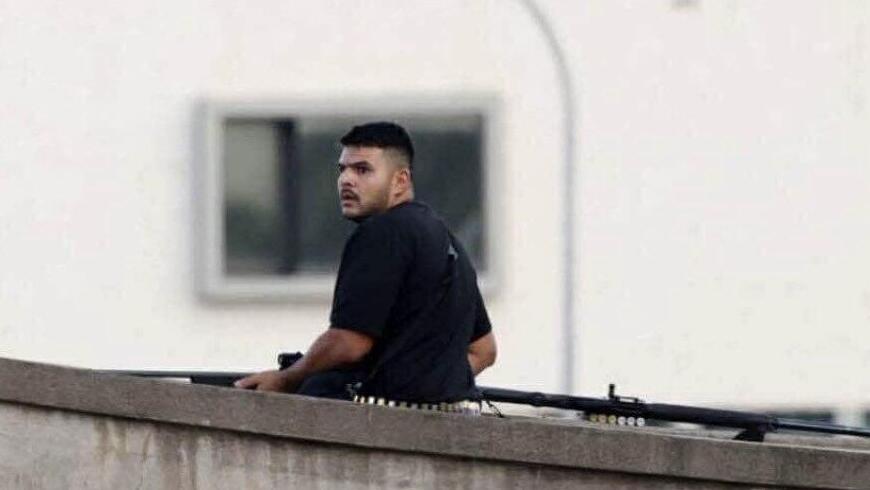
Naveed Akram in footage from the December attack last year
According to Australian media reports, the hearing was a procedural case review. Akram appeared via video link from the Goulburn Correctional Centre, a high-security prison southwest of Sydney, where he is being held pending trial.
Wearing a green prison uniform, Akram sat silently for most of the hearing and spoke only to confirm that he had heard arguments regarding an extension of suppression orders on the identities of those killed in the attack. It was the first time he has been seen or heard since the deadly shooting. Australia’s ABC network reported that Akram sat for most of the session with his hands on his thighs. “Yes,” he replied briefly when asked whether he had heard the discussion on extending the suppression orders.
Outside the courthouse, Akram’s lawyer, Ben Archbold, said his client was feeling “as well as can be expected” given the “very onerous conditions” at the detention facility. The defense attorney said it was “too early” to say whether Akram would plead guilty and noted that he had not discussed details of the alleged attack with him. “I have not spoken to him about the attack in that context,” he told reporters. “All we are doing at the moment is beginning the process. We are waiting for the brief of evidence. I have nothing further to add.”
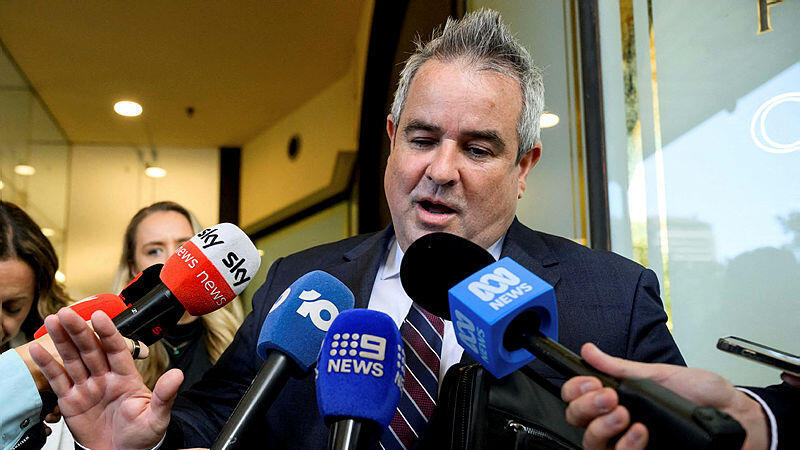
Akram's lawyer
(Photo: BIANCA DE MARCHI, AAP (REUTERS))
Archbold said he had visited Akram in prison. “He is simply a client, and he is a client who requires representation. We do not allow our personal views to interfere with our professional obligations. The matter has been adjourned. I have nothing further to add.” The case is due back in court in April.
The attack at Bondi took place in December during a “Hanukkah by the Sea” event organized by the Chabad Jewish community in Sydney near Bondi Beach, attended by about 1,000 people. Two terrorists — Sajid Akram, 50, and his son Naveed, 24 — opened fire from a nearby bridge at revelers below. The father was killed at the scene and the son was seriously wounded and arrested. Islamic State group flags and improvised explosive devices were found in their vehicle.
Documentation of the attack


Fifteen people were killed, including Chabad emissaries, elderly attendees and a 10-year-old girl. Dozens more were wounded. Australian authorities described it as the country’s deadliest terrorist attack in about 30 years.
In early January, Australian Prime Minister Anthony Albanese announced that in the wake of the massacre, his government would establish a Royal Commission — Australia’s highest form of public inquiry — similar to what in Israel is known as a state commission of inquiry. Albanese, who initially opposed the move, saying it would delay the criminal investigation by several years, later told a news conference that the commission was “the right format, at the right time and under the right conditions to achieve the outcome necessary for our unity and national security.”
Last week, President Isaac Herzog visited Sydney in solidarity with the victims. During his trip, clashes erupted between pro-Palestinian demonstrators — thousands of whom took to the streets to protest the Israeli president’s visit — and local police.
At a ceremony held last Tuesday at the Chabad synagogue at Bondi Beach, not far from the scene of the attack, the World Zionist Organization and the Jewish Agency for Israel, on behalf of the State of Israel, granted official recognition to the victims as “victims of hostile acts motivated by antisemitism.”
First published: 06:05, 02.16.26