


The IDF said Thursday that Iran sent about $2 billion to Hezbollah over the past year, roughly double its usual annual support, helping the Lebanese terrorist group rebuild after its last war with Israel.
The money was used to restore Hezbollah’s capabilities after the 2024 conflict, which ended with a ceasefire in November of that year, the military said.
IDF forces operating in southern Lebanon
(Video: IDF)


Israeli officials had previously assessed that Hezbollah would struggle to finance its recovery after that war and the collapse of Syrian President Bashar Assad’s government. But the military said Iran nevertheless transferred about $2 billion to the group, allowing it to resume firing hundreds of rockets a day in the current war and to launch drones as well.
The military said Iran’s budget for the Persian year 1404, running from March 2025 to March 2026, was about $58.7 billion, including $15.85 billion for defense, or about 27% of total spending. It said Tehran typically sends Hezbollah about $1 billion a year, but that amount doubled over the past year.
Iran also sends hundreds of millions of dollars annually to Hamas, terrorist organizations in the West Bank, Yemen’s Houthi rebels and Shiite militias in Iraq, the military said. It added that Hezbollah was now struggling to bring money into Lebanon because Israel had significantly damaged the transfer chain.
Asked about the earlier Israeli assessments that Hezbollah would have difficulty rebuilding, military spokesman Brig. Gen. Effie Defrin did not address the discrepancy directly.
Gallery
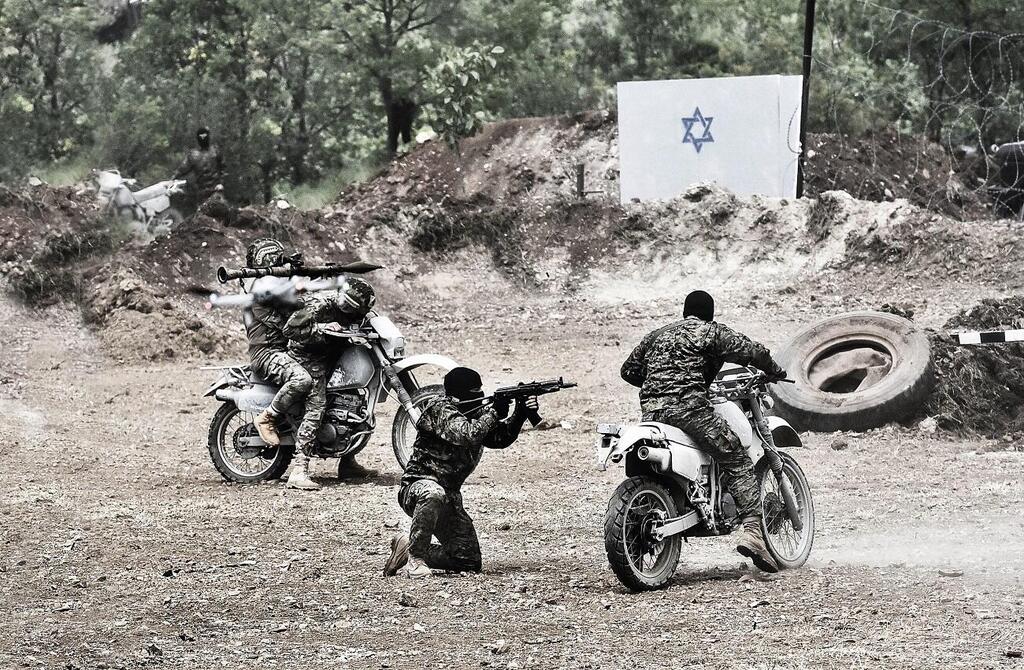
Members of Hezbollah’s elite Radwan Force hold military drills near the Israeli border, May 2023
(Photo: AFP)
“We struck every attempt at force buildup,” Defrin said. “This is a terrorist organization that does everything to harm Israeli civilians. This is another opportunity to underscore the face of the Iranian regime: in 2025, when the economic situation was deeply troubled, they invested huge sums in strengthening Hezbollah. They are greatly weakened, and they still manage to harm us in one way or another, but we will continue to strike until the threat is removed.”
The military said four divisions were operating in southern Lebanon and were nearing what it described as the line for removing the threat of direct anti-tank missile fire on Israeli communities. It said the forces were targeting anti-tank missiles, Hezbollah’s elite Radwan Force and terrorist infrastructure in border villages.
The 146th Division was operating in the Ras al-Bayada sector and had cleared the border town of Naqoura, the military said. The 162nd Division killed three terrorists in a clash with troops from the Nahal Brigade’s Reconnaissance Battalion, it said. The 91st Division was operating near Houla, and the 36th Division in the Qantara sector.
The military said it would continue overnight strikes on economic targets, including gas stations in Lebanon. It said more than 40 terrorists had been killed at sea and on land in recent fighting, and that nearly 1,000 terrorists had been killed since the start of the campaign in Lebanon. It also said it had struck dozens of command centers, combat sites, weapons depots and anti-tank launch positions across the country.
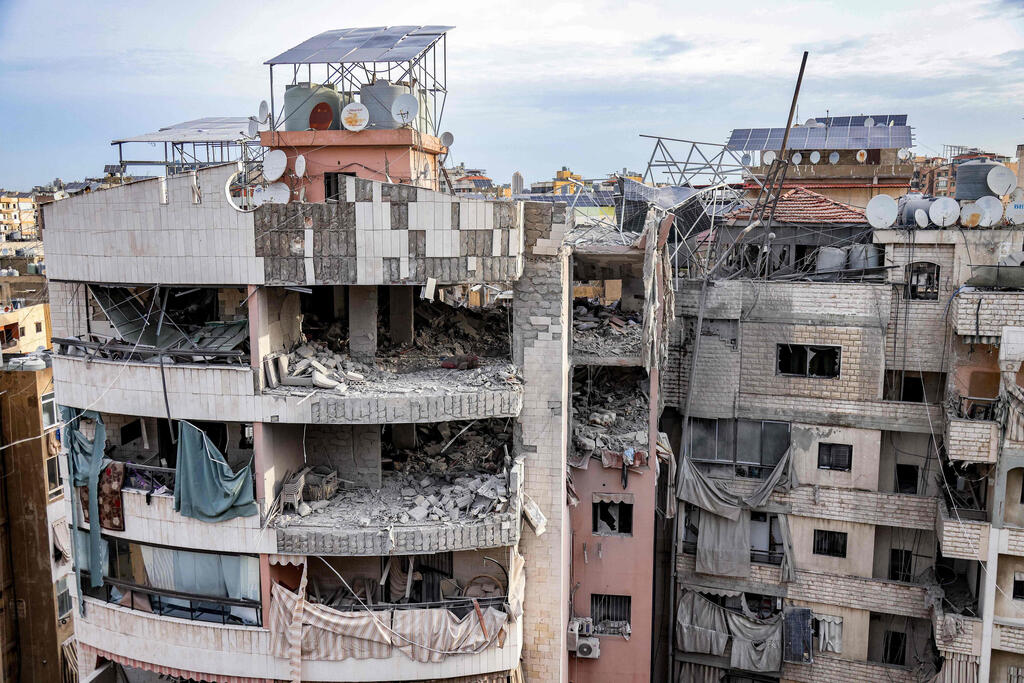
Destruction in the Hezbollah stronghold of Dahieh in Beirut following Israeli strikes
(Photo: Ibrahim AMRO / AFP)
The fighting is part of a broader war that Lebanon’s prime minister said has already displaced more than 1 million people in the last month. Israel resumed major strikes after Hezbollah fired into Israel on March 2 in support of Iran after the United States and Israel began their war on Tehran.
Separately, Agence France-Presse reported Thursday that 18 European countries called on Israel and Hezbollah to end the war. In a joint statement, foreign ministers from countries including Italy, Spain, Belgium, Poland and Ireland said Israeli military operations in Lebanon and Hezbollah’s attacks should stop, and called on Israel to fully respect Lebanon’s sovereignty and territorial integrity. France and Britain were not among the signatories.