

Lebanese Prime Minister Nawaf Salam said on Thursday there was no end in sight to a war that had already displaced a million people over the last month, as families fleeing Israeli strikes said they were exhausted by repeated rounds of conflict.
Lebanon is entering the second month of conflict between the Iran-backed terrorist group Hezbollah and Israel, which has pledged to occupy swaths of southern Lebanon as part of a "security zone" to protect its own northern residents.
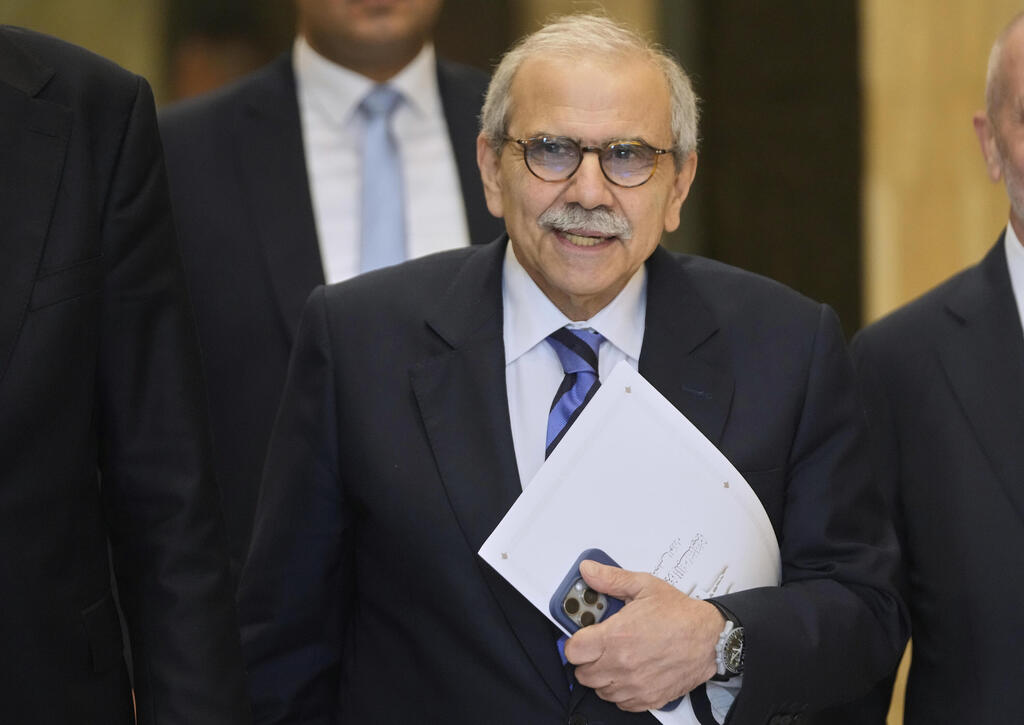
"Lebanon has become a victim of a war - one whose outcomes and end date no one can predict," Salam told reporters on Thursday after a meeting of his cabinet.
"The positions of Israeli officials, and the practices of their army, reveal far-reaching goals, including a significant expansion in the occupation of Lebanese territories, dangerous talk about establishing buffer zones or security belts, and the displacement of more than one million Lebanese," Salam said.
Israel's assertion that its military will retain control of southern Lebanon has fuelled fears of a long-term occupation, after a two-decade Israeli presence ended in 2000.
Salam said his government would redouble diplomatic and political efforts to end the war. A call by Lebanese President Joseph Aoun for direct talks with Israel has so far received no response.
Salam salutes Lebanese still in south
Israel has continued to carry out strikes on Lebanon after a 2024 ceasefire ended its last war with Hezbollah, while keeping troops stationed on five hilltop positions in southern Lebanon.
IDF forces operating in southern Lebanon
(Video: IDF)


Israel launched a full-scale air and ground campaign after Hezbollah fired into Israel on March 2 in solidarity with Iran after the U.S. and Israel began their war on Tehran.
Salam, without naming Hezbollah, condemned coordinated attacks carried out with Iran's Revolutionary Guards. More than 1,300 people have been killed in Israeli strikes and about a fifth of Lebanon's population has been displaced. Israel has issued evacuation orders covering around 15% of Lebanese territory.
"I want to direct the biggest salute to our people who are staying in their hometowns and villages in the south, and want to reiterate that we stand by them," Salam said.
Tens of thousands of Lebanese have remained in their homes in southern Lebanon, even as Lebanese troops withdraw from the area to avoid confronting Israeli troops. They include around 9,000 Lebanese Christians living in a cluster of border towns, who told Reuters they were determined to stay despite the advancing military operations.
Lebanese want wars to stop
Salam also stressed the need to preserve internal stability as the war strains Lebanon's sectarian political faultlines. Some communities have been reluctant to host displaced families.
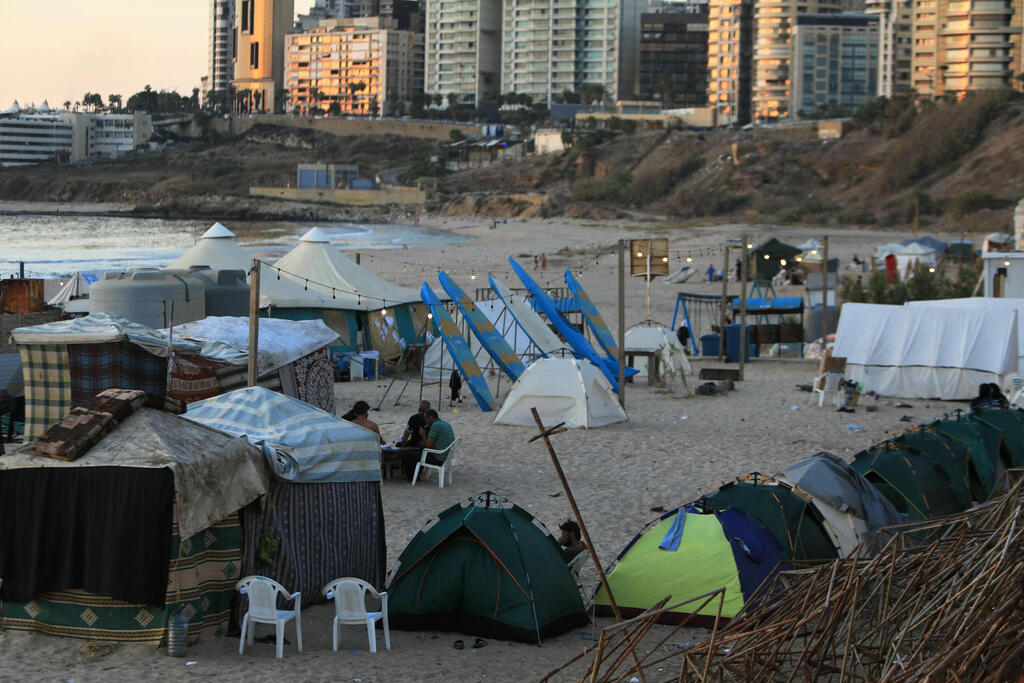
Displaced Lebanese shelter in an encampment in Beirut
(Photo: AFP)
As the war drags on, Lebanon is examining ways to house those families in the long-run. Mohammad al-Badran, a Syrian who had lived for years in Beirut's southern suburbs, known as Dahieh, said he and his family were turned away when they sought shelter in a mountainous area outside the capital. Dahieh is a stronghold of Hezbollah.
Badran, his wife and their four children - the youngest of whom was born barely two weeks before the war started - are now sleeping in a makeshift tent area in the capital.
His 10-year-old daughter, Nour, can hear the sound of Israeli strikes on the nearby southern suburbs. "The sound is loud, the children are crying, and I feel like the missiles are flying above us," she said.
Ali al-Aziz, who also fled the southern suburbs, told Reuters that Israel should withdraw from Lebanon so that the conflict could end and he could go back home. "We want the war to end once and for all. Not for a war to happen every year or every ten years," he said.