


With Israel’s sixth submarine now docked at Haifa Naval Base and formally joining Shayetet 7, the Israeli Navy’s submarine flotilla, ynet was given a rare look inside one of the military’s newest and most secretive weapons platforms: INS Drakon.
Packed with pipes, intelligence screens, machinery, command systems and narrow passageways, the roughly 70-meter submarine is designed to operate for extended periods far from Israel while remaining almost entirely concealed.
INS Drakon in Haifa Bay
(Video: IDF)


INS Drakon arrived in Israel last week after a 24-day voyage from Kiel, Germany. The Navy says the submarine brings with it some of the most advanced technology in its arsenal. It is expected to become fully operational in about two months, after Israeli weapons and intelligence systems are installed and integrated.
The vessel was formally welcomed Thursday in a ceremony attended by President Isaac Herzog, Defense Minister Israel Katz and IDF Chief of Staff Lt. Gen. Eyal Zamir.
“This is the result of almost 14 years of preparation,” said Lt. Col. O., commander of INS Drakon, who spent years accompanying the submarine’s construction in Germany. “It really is an enormous project. We carried out a huge number of actions to make it possible for the submarine to reach Israel.”
The process, he said, involved Israeli teams going through the submarine system by system and section by section, first while it remained above water and later during sea trials and dives.
“You literally go pipe by pipe, check every machine and approve it, making sure it works perfectly before signing off on it and transferring it into Israeli hands,” he said.
Only after the lengthy inspection and transfer process was completed did the submarine formally become Israeli territory under maritime law, even while still in Germany.
Testing at depth
The process was not entirely smooth.
German waters are relatively shallow, while testing a submarine properly requires dives hundreds of meters deep. That meant sailing north of Denmark into waters between Norway, Sweden and Denmark.
The original plan was to dock periodically in one of those countries rather than make repeated trips back to Germany, but the Israeli crew did not receive the necessary permission.
“I don’t know why it didn’t happen,” Lt. Col. O. said. “No one really says it officially, but it dragged on and the approval never came.”
Instead, the crew sailed from Germany to the deep-water training area at the beginning of each week and returned at the end.
“It would have been preferable to dock there, but we made adjustments and overcame it,” he said. “In the end, it didn’t really delay us, at least not tactically.”
Ladders, pipes and almost no privacy
Getting aboard Drakon is an experience in itself.
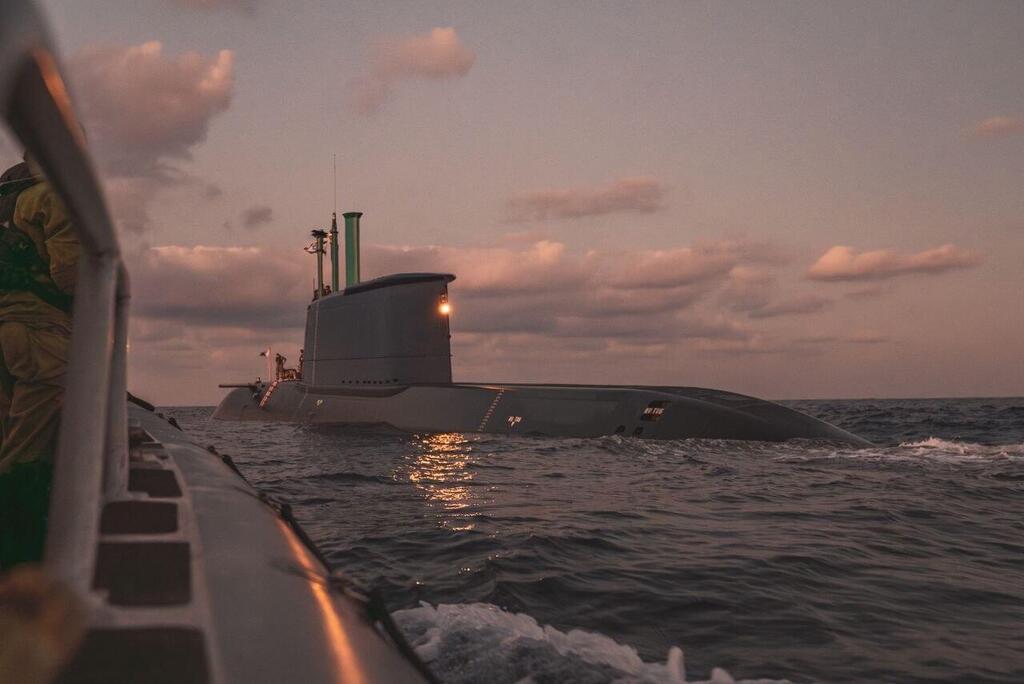
After a roughly 20-minute ride from Haifa Naval Base aboard a small Navy vessel, the submarine appears as a massive black structure sitting low in the water. Reaching the bridge requires climbing a rope ladder, followed by a vertical ladder down into the submarine itself.
Inside, there is almost no wasted space.
Machinery, buttons, command systems, pipes and cables fill nearly every corner. Dozens of sailors and officers work in close quarters, each dependent on the others and each required to know exactly what to do.
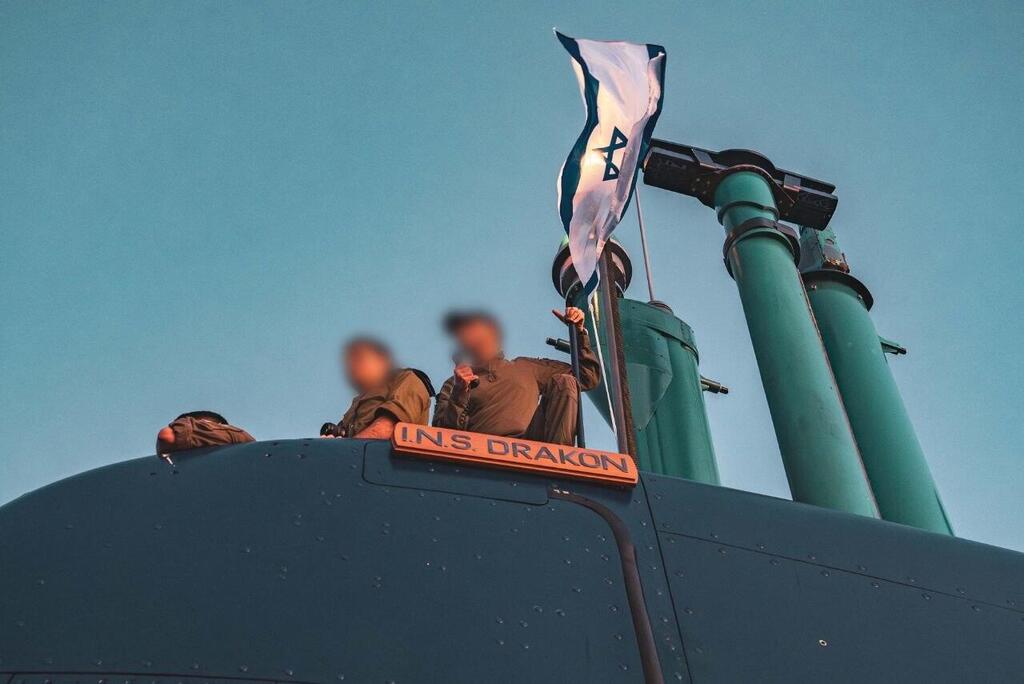
(Photo: IDF)
Most of the sailors are in their 20s. They left Germany at the beginning of the month, stopped at several points along the way and reached Israel after almost a month at sea.
Col. Y., commander of Shayetet 7, said the ability to function together in such a confined environment for prolonged periods is a crucial part of submarine service.
“The ability to stay together for so long in conditions like these is not something to take for granted, and the people who come here know that,” he said. “You really live together inside one vessel for many days.”
Unlike other submarines in the Navy, Drakon has two showers and two toilets, a small but meaningful improvement for a crew living underwater for extended periods.
There is also a slightly larger communal space known as the “atmosphere room,” where sailors can watch movies and television series or simply spend time together.
There are no phones and almost no contact with the outside world. For days or weeks, every crew member depends on the others.
A sixth submarine once questioned
INS Drakon is the Israeli Navy’s sixth submarine.
When it was ordered years ago, the decision sparked a major public debate over whether Israel needed a sixth submarine at all, a controversy that later became intertwined with the wider submarines affair and the establishment of a state commission of inquiry.
Today, however, the discussion has shifted toward the submarines Israel expects to receive in the future. Those vessels are intended to replace older submarines rather than increase the overall size of the fleet.
From inside Drakon, Brig. Gen. Guy Levy, chief of staff of the Israeli Navy and the officer responsible for force buildup, described what the new vessel brings that its predecessors did not.
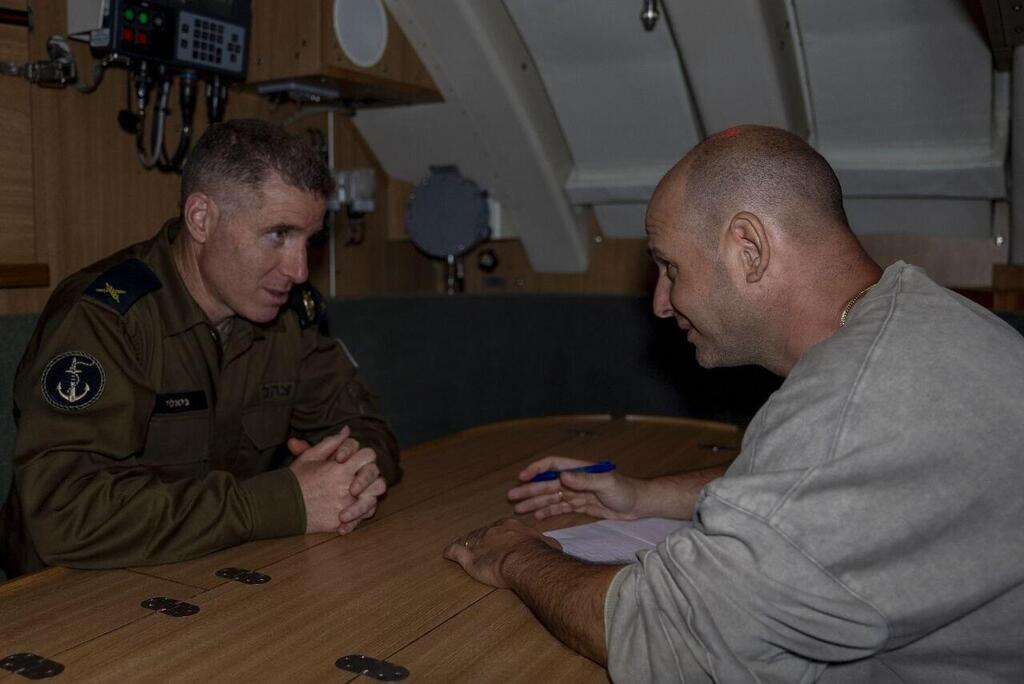
Brig. Gen. Guy Levy, chief of staff of the Israeli Navy
(Photo: IDF)
“This submarine brings new and lethal combat capabilities,” Levy said. “It brings the ability to remain at sea longer, the ability to carry more weapons, and it does so under complete secrecy and in distant places where Israel has never been before.”
The current war, he said, has reinforced the Navy’s assessment of the growing strategic importance of maritime power.
“Look at what is happening in the world now,” Levy said. “This war proves to us how critically important control of the maritime arena is.”
He pointed specifically to developments around the Strait of Hormuz and Bab el-Mandeb Strait.
“I know the missions of the Navy and the missions assigned to us by the political echelon and the General Staff,” he said. “There is a critical need for these platforms, and beyond that there is a need to expand the Navy in response to the developing threats from neighboring countries in the Middle East.”
The report notes that Levy did not explicitly name Turkey, although the expansion and modernization of the Turkish Navy is closely watched by Israeli defense officials as Ankara increasingly treats maritime power as a strategic asset.
‘Under the enemy’s nose’
INS Drakon is estimated to have cost around 500 million euros.
Its name combines a reference to the Hebrew name Dakar with the image of the dragon, a mythical creature chosen to convey strength.
Operationally, however, the submarine’s greatest advantage is not its size but its ability to remain unseen.
“When you take a 3,000-ton vessel with significant weaponry and extremely advanced intelligence-gathering systems, and manage to bring it all the way to an enemy coast, remain under his nose, collect intelligence, strike and leave without him even understanding you were there, you realize you are dealing with something completely different,” Levy said.
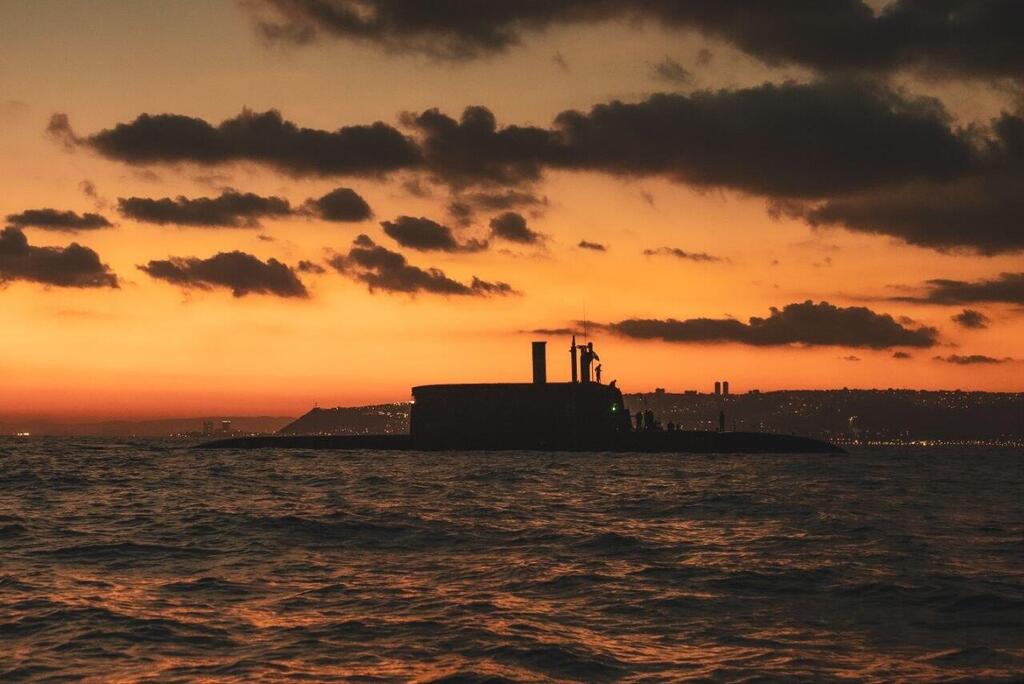
(Photo: IDF)
“The submarine’s secrecy is extraordinarily significant.”
Drakon can operate independently but is also designed to work alongside other IDF branches. According to Levy, it can transport special forces and participate in combined operations with other units.
“The submarine fleet does not stand alone,” he said. “The Navy is undergoing a significant transformation in response to the threats developing around us.”
Levy pointed to Houthi activity around Bab el-Mandeb and Iranian actions around the Strait of Hormuz as examples of how control of maritime chokepoints can affect entire regions.
“The actions of the Houthis at Bab el-Mandeb and the Iranians at Hormuz give terrorist organizations and additional states an appetite to look toward the maritime arena, and we see that very clearly,” he said.
“We are now building a Navy that will be more lethal, have a longer operational reach and complete secrecy ahead of the next rounds of fighting Israel will face.”