


The New York Times reports that residents in Tehran have described “very heavy” Israeli strikes in several areas of central Tehran, according to text messages and social media posts.
The attacks reportedly include residential neighborhoods in the Iranian capital. Some residents said they could see and hear Iran’s air defense systems responding to “small Israeli drones.”
Iran’s Supreme Leader Ali Khamenei issued a new threat against Israel following the overnight launch of a single missile, making no mention of the United States. In a post on X, he wrote: “The Zionist enemy made a grave mistake and committed a serious crime. It must be punished — and it is now being punished.”
The post was accompanied by an AI-generated image showing a massive barrage of missiles striking buildings in a city — clearly a civilian target — despite the fact that only one missile was launched overnight and it was successfully intercepted.
The interception of the Iranian missile


Sirens sounded on Sunday overnight in central Israel, and the IDF reported that a single missile was fired and intercepted.
NBC News reported that in the days leading up to the U.S. strike on Iran, Tehran issued a direct threat to President Donald Trump, warning that in retaliation, it would activate dormant terror cells within the United States.
According to two American officials and another source familiar with the details, the message was delivered to Trump through an intermediary during last week’s G7 summit in Canada — a summit Trump left earlier than planned to hold consultations regarding the war with Iran. On Sunday overnight, the State Department issued a global travel advisory urging U.S. citizens to exercise increased caution. Simultaneously, the Department of Homeland Security released a general terror alert, warning that the conflict with Iran is creating “a tense security environment in the U.S.”
Gallery
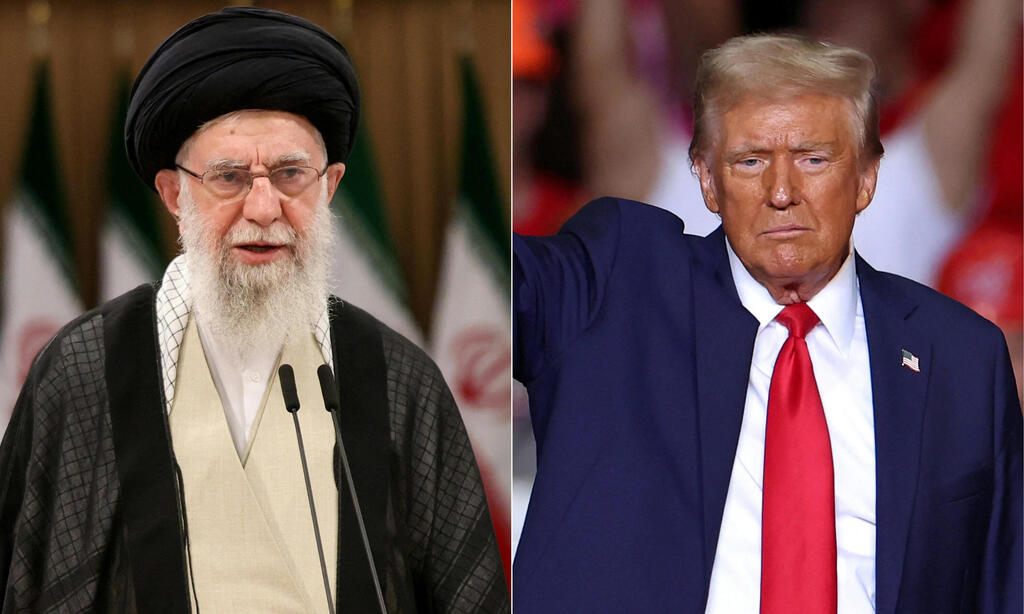
Iranian Supreme Leader Ayatollah Ali Khamenei, US President Donald Trump
(Photo: CHARLY TRIBALLEAU and ATTA KENARE / AFP)
U.S. Vice President J.D. Vance told NBC earlier that the administration is taking the possibility of a domestic terror attack very seriously and expressed confidence that law enforcement agencies are capable of responding to the threat.
U.S. President Donald Trump on Sunday hinted at possible regime change in Iran, less than a day after ordering a large-scale U.S. military strike on the country’s nuclear facilities.
“It’s not politically correct to use the term, ‘Regime Change,’ but if the current Iranian Regime is unable to MAKE IRAN GREAT AGAIN, why wouldn’t there be a Regime change??? MIGA!!!” Trump wrote on Truth Social.
The message followed what Trump called a “spectacular military success” — a series of coordinated strikes on three of Iran’s most fortified nuclear sites: Fordow, Natanz and Isfahan. U.S. B‑2 bombers dropped “bunker buster” munitions while Tomahawk missiles were launched from submarines, targeting facilities believed to be central to Iran’s nuclear enrichment program.
The Pentagon confirmed that the B-2 bombers have since returned safely to Whiteman Air Force Base in Missouri. Trump noted their arrival in a follow-up post, writing, “The GREAT B-2 pilots have just landed, safely, in Missouri. Thank you for a job well done!!!"
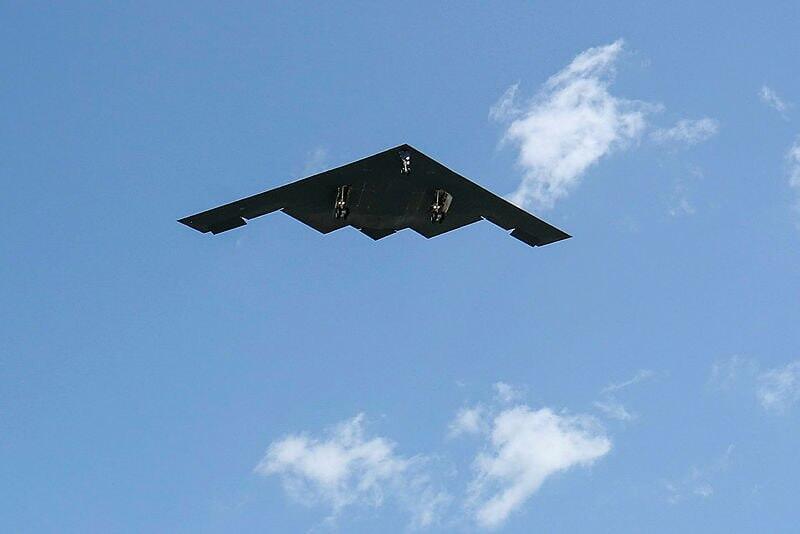
B-2 stealth bomber
(Photo: AP Photo/David Smith)
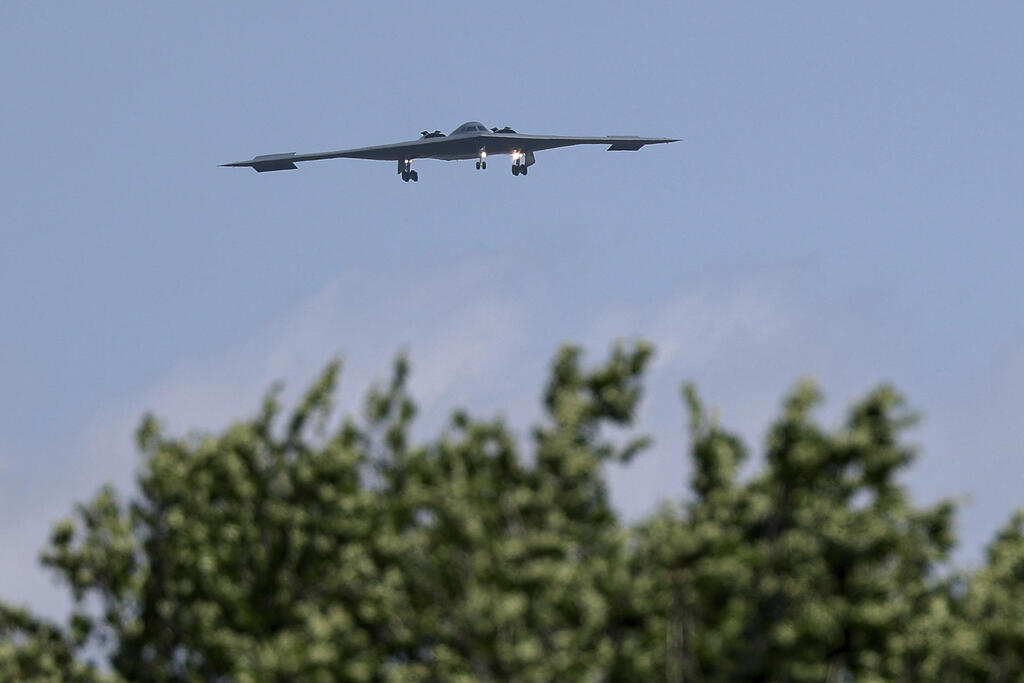
B-2 stealth bomber
(Photo: AP Photo/David Smith)
While Trump stopped short of formally endorsing regime change in a televised address on Saturday night, his Truth Social post reignited speculation over his administration’s ultimate intentions. The remark suggested a shift toward a more confrontational posture with Tehran, reminiscent of early 2000s rhetoric that preceded past U.S. military interventions.
Get the Ynetnews app on your smartphone: Google Play: https://bit.ly/4eJ37pE | Apple App Store: https://bit.ly/3ZL7iNv
Iran responded by condemning the attacks as a “heinous crime” and warned of “everlasting” consequences, saying the path to diplomacy had been closed. Meanwhile, Prime Minister Benjamin Netanyahu welcomed the strike and called it a “historic turning point,” adding that Trump’s decision would “change history.”
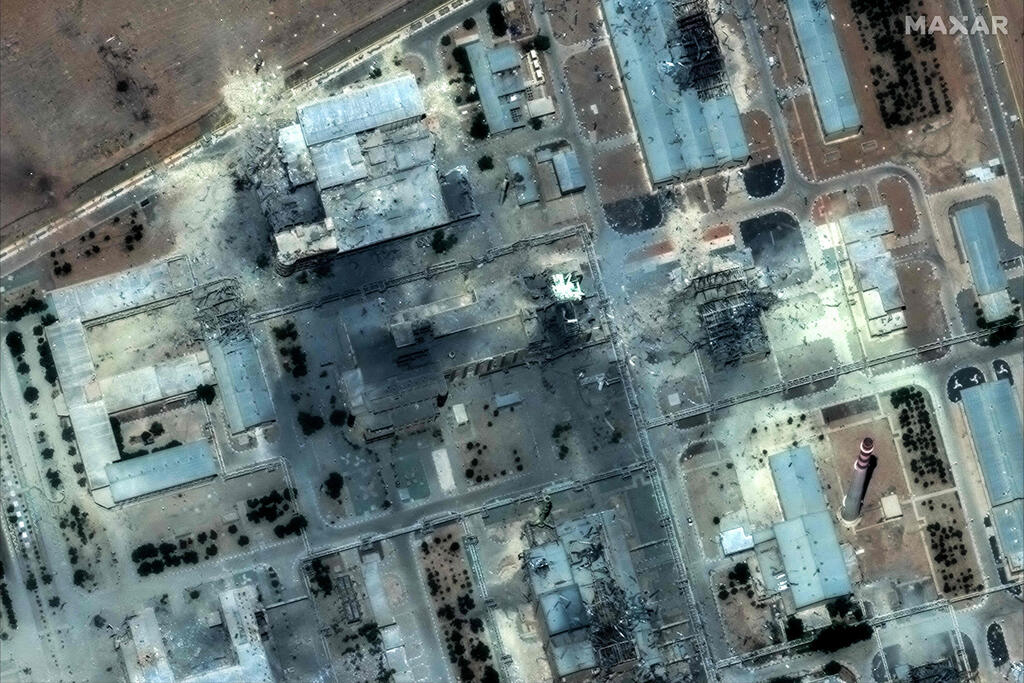
Satellite images show heavy damage to Iran's nuclear facility in Isfahan
(Photo: SATELLITE IMAGE ©2025 MAXAR TECHNOLOGIES / AFP)
Meanwhile, the International Atomic Energy Agency reported that underground tunnel access at the Isfahan nuclear site was damaged during the strikes. Prior to the attack, officials had said much of Iran’s enriched uranium stockpile was stored underground at the site.
Earlier, the IDF said it had launched two waves of strikes on western Iran and Tehran. According to the military, roughly 20 fighter jets struck military targets using more than 30 guided munitions, based on intelligence provided by the Military Intelligence Directorate.
The Security Cabinet is set to convene Monday at 10 p.m. in a secure underground bunker for the second time since launching Operation Rising Lion.
First published: 00:31, 06.23.25