


Prime Minister Benjamin Netanyahu convened a security consultation with his small security cabinet on Sunday evening on Lebanon, as the IDF prepares to hand over two limited withdrawal areas in southern Lebanon to the Lebanese army under the framework agreement signed between Israel and Lebanon.
The two areas, described in the agreement as “pilot areas” because they are meant to test the phased handover mechanism, are both in the Nabatieh region, near the towns of Frun and Zawtar al-Sharqiyah. At this stage, Israel is waiting for the Lebanese army to announce that it is ready to enter the areas, as well as for U.S. Central Command approval to move ahead. The United States is closely accompanying the process and is serving as a kind of referee and coordinator.
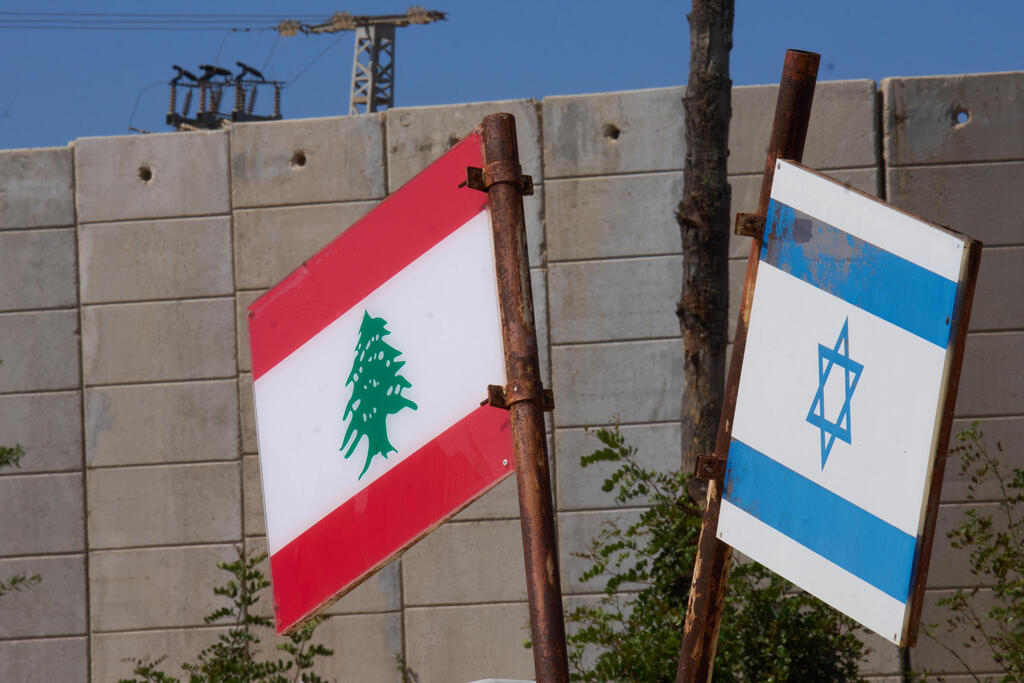
The framework agreement, signed about a week ago, provides for a partial Israeli withdrawal from designated areas in southern Lebanon and their transfer to the Lebanese Armed Forces. At the same time, it allows the IDF to remain in most of the areas it controls inside the security zone until the threat from Hezbollah is removed.
The agreement says the process will be mutual, gradual and based on clear conditions. Under the plan, the Lebanese Armed Forces will restore effective sovereign authority over all of Lebanon, subject to the verified disarmament of non-state armed groups and the dismantling of their related infrastructure, allowing the IDF to gradually redeploy its forces out of Lebanese territory.
The following clause states that the Lebanese army will gradually assume full and effective security responsibility in the limited handover areas, which will serve as a mechanism for the verified and phased redeployment of IDF forces and the deployment of Lebanese troops.
The framework agreement also includes an unpublished military annex setting out implementation details. The annex includes a Lebanese commitment to try to locate the remains of missing Israelis, a clause related to missing Israeli navigator Ron Arad that Israel insisted on including.
Under the agreement, working groups will also be established to continue contacts toward a comprehensive peace and security agreement. Lebanon also commits to stop acting against Israel in international organizations and legal institutions.
Still, the timetable for the agreement remains unclear, as does the exact size of the enclaves or areas from which the IDF is expected to withdraw.
At a press conference last week, Netanyahu described the agreement as “a severe blow to Iran and Hezbollah.”
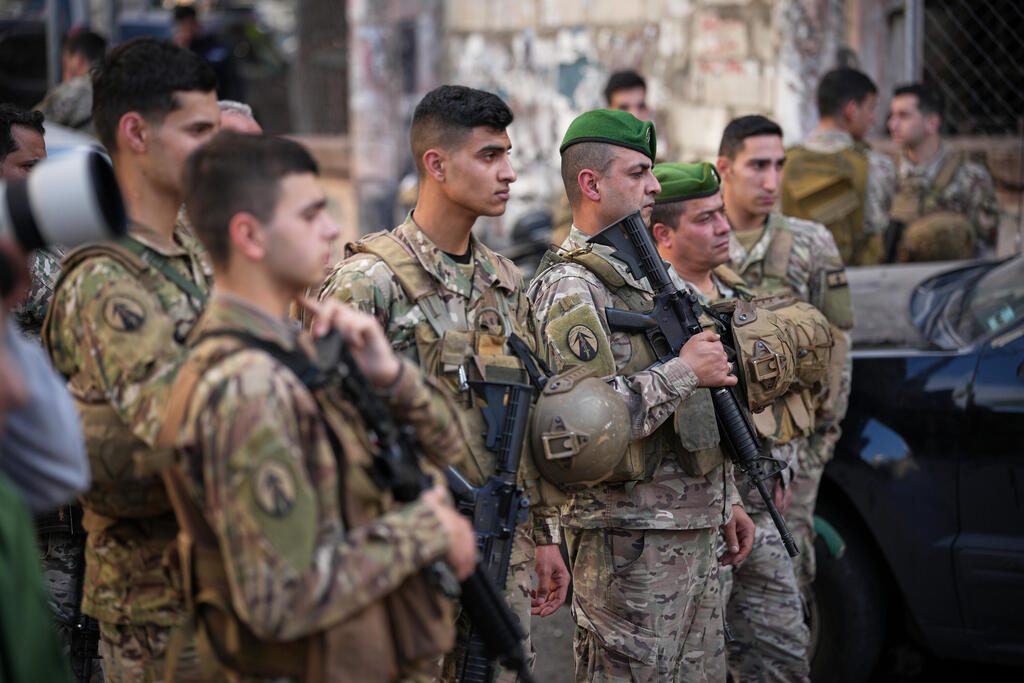
Lebanese troops in Beirut
(Photo: AP Photo/Emilio Morenatti)
“Iran tried to force us into a withdrawal from southern Lebanon,” he said. “You heard those demands all the time, and you also heard their disappointment, their criticism of the agreement, theirs and Hezbollah’s. I insisted on our vital interests and opposed the idea that a withdrawal would be imposed on us by force.”
Netanyahu presented a map of the yellow line, the security zone in which the IDF has already taken control of areas beyond the line, and marked the two areas from which the IDF would withdraw. He said most of the two areas are outside the yellow line, though one includes a certain section inside it.
He added that the IDF itself had defined the two areas as unnecessary from a security standpoint.
“Israel remains in the yellow zone, the security zone that protects us, and that is a huge achievement, huge,” Netanyahu said. “What did they try to do? They tried to get us out of there through all kinds of means and pressure, and that of course did not happen.”
The U.S.-backed agreement was signed last week after four days of negotiations in Washington. In the full text published by the White House, Israel and Lebanon stated their aspiration to begin a process that would end decades of armed conflict and establish peace.