

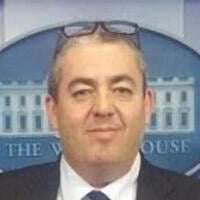
The last hostage, Sgt. First Class Ran Gvili, has yet to be returned to Israel despite a Hamas promise, even as US envoy Steve Witkoff announced Wednesday night the launch of phase two of President Donald Trump’s plan for the Gaza Strip.
The American announcement made no reference to opening the Rafah crossing in both directions, a component Israel has viewed as one of its last remaining levers for the return of Gvili’s body. Israeli officials say preparations are underway for possible military action to dismantle Hamas if it becomes clear the terror organization does not disarm on its own.
Gallery

(Photo: AP Photo/Alex Brandon, REUTERS/Amir Cohen, AP Photo/Khalil Hamra, REUTERS/Nathan Howard)
Witkoff’s statement did not spell out concrete steps for how Hamas would be disarmed. Against that backdrop, defense officials are now awaiting instructions from the political leadership on whether to make operational preparations to open the Rafah crossing. No such order has been issued so far, and Prime Minister Benjamin Netanyahu appears to be insisting on the return of Gvili, which is why the directive to open the crossing has not yet been given.
The assessment within the Israel Defense Forces is that Hamas will not give up its weapons of its own accord. If Israel does not see progress in that direction, the military is preparing for an operation, likely coordinated with the United States. A senior security official said the planned technocratic administration would handle civilian affairs in Gaza and would have no connection to Israel, stressing that Hamas must be disarmed under US conditions and that Israel would carry out that task itself if necessary.
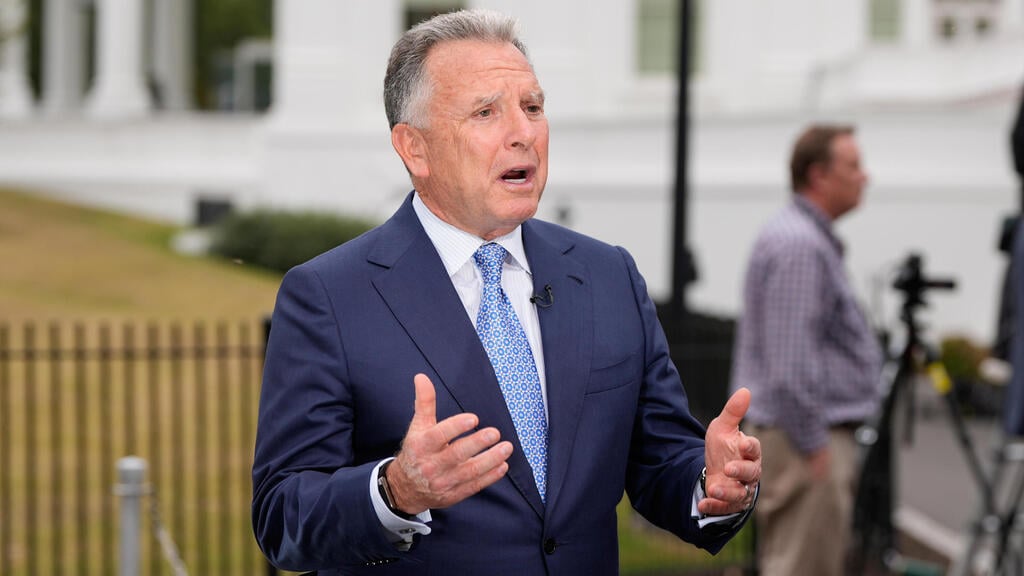
US envoy Steve Witkoff
(Photo: AP Photo/Alex Brandon)
After the US announcement, Netanyahu spoke with Talik Gvili, Ran’s mother, and said phase two focuses on dismantling Hamas and demilitarizing the Gaza Strip, without an IDF withdrawal. “The prime minister made clear that bringing Ran home is at the top of our priorities, and that the declarative move to establish a technocratic committee will not affect efforts to return Ran to burial in Israel,” his office said. “He stressed that information conveyed to the mediators by the coordinator for hostages and missing persons, Gal Hirsch, and his team must immediately be translated into effective action on the ground.”
Netanyahu told Gvili’s mother that the Rafah crossing has not been opened because of Israel’s insistence on Ran’s return, and that Israel’s efforts include intelligence and operational activity as well as contacts with mediators. “Hamas is required to meet the agreement’s demands and make a 100 percent effort to return all slain hostages, to the last of them, Ran Gvili, a hero of Israel,” Netanyahu said.
Talik Gvili said after the call that the transition to phase two does not mean an end to the struggle to bring her son home. Gvili, a fighter in the Border Police special patrol unit, was killed on October 7 while defending Kibbutz Alumim.
Footage from the search in the Gaza Strip for Ran Gvili


Phase two includes the establishment of a Palestinian technocratic administration in Gaza, to be run by Palestinians whom Israel does not view as affiliated with Hamas or the Palestinian Authority. However, despite Netanyahu’s assurances that the Palestinian Authority will have no role in the “day after” the war, former senior PA officials and former officers in its security services are expected to serve on the committee that will run the strip. It is to be headed by Ali Shaath, a former deputy Palestinian planning minister.
At the same time, Trump is continuing preparations to establish a “Peace Council” that he will head, with former UN Middle East envoy and former Bulgarian foreign and defense minister Nickolay Mladenov set to manage it in practice. Mladenov is expected to oversee the implementation of Trump’s plan and serve as a conduit between the Palestinian technocratic administration and the Peace Council. He visited Israel last week and met with Netanyahu and senior Palestinian officials. The Peace Council is to be unveiled Jan. 23 in Davos, Switzerland.
Phase two is also expected to include the creation of an international stabilization force for Gaza, known as the ISF. During a cabinet meeting on Wednesday, ministers were told the United States is close to announcing its establishment. Officials said Washington has at least three countries ready to send troops. Past reports named Italy, Pakistan, Bangladesh and Azerbaijan among them. Security officials assessed the force would not confront Hamas.
Witkoff warned: 'Failure will bring serious consequences'
“We are announcing the launch of Phase Two of the President’s 20-Point Plan to End the Gaza Conflict, moving from ceasefire to demilitarization, technocratic governance, and reconstruction,” Witkoff wrote earlier on X. He said the United States expects Hamas to “comply fully with its obligations,” including the return of the last hostage, Gvili. “Failure to do so will bring serious consequences,” he warned.
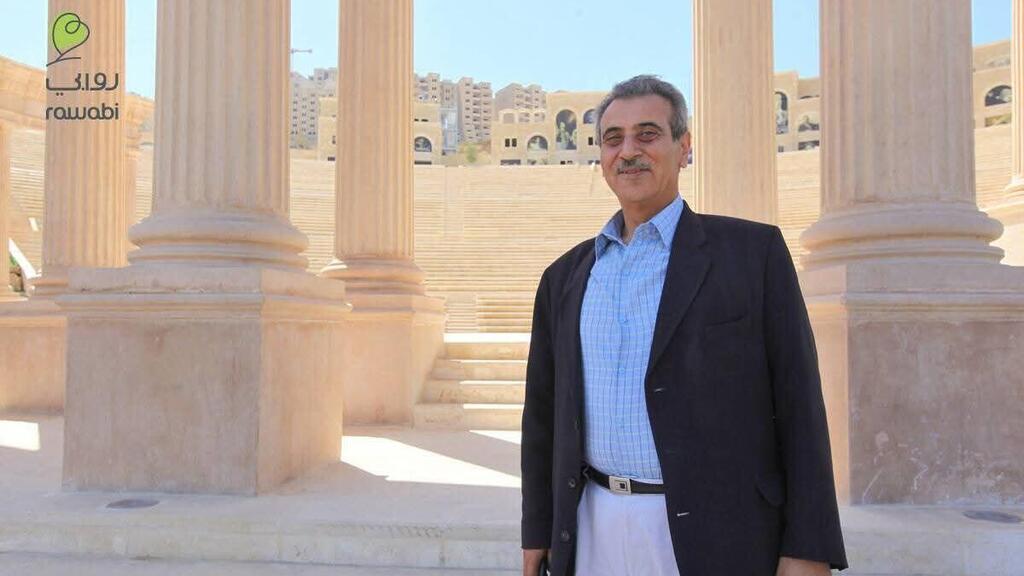
Ali Shaath, the former deputy minister who will head the Palestinian technocratic administration
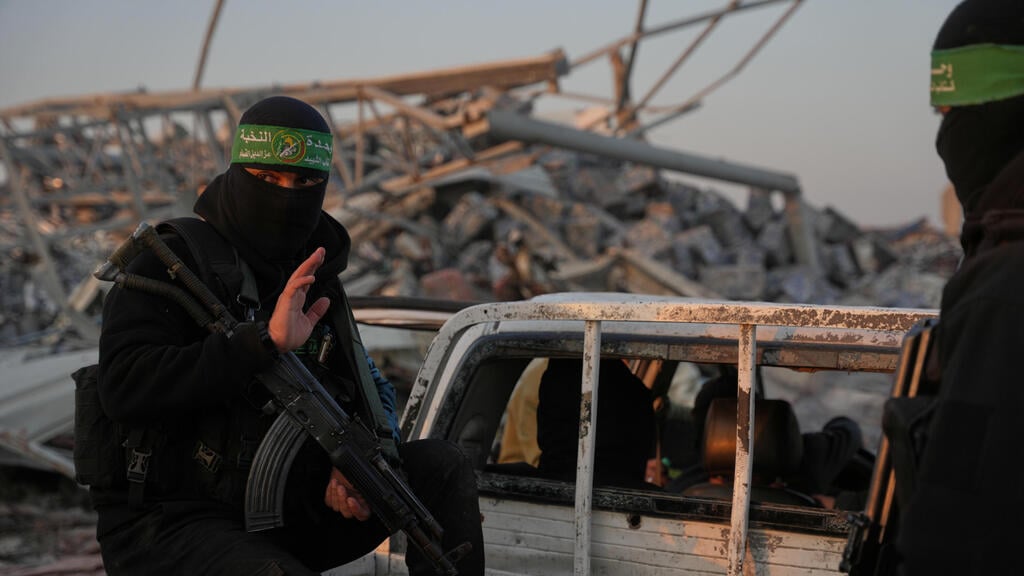
Hamas in Gaza
(Photo: AP Photo/Abdel Kareem Hana)
Witkoff said the announcement was made on Trump’s behalf and that phase two includes establishing a transitional Palestinian technocratic administration in Gaza, the National Committee for the Administration of Gaza, or NCAG. Demilitarization and full reconstruction of the strip would begin in phase two, “primarily the disarmament of all unauthorized personnel,” he said.
“Phase One delivered historic humanitarian aid, maintained the ceasefire, returned all living hostages and the remains of twenty-seven of the twenty-eight deceased hostages,” Witkoff added, thanking Egypt, Turkey and Qatar for their mediation efforts.
Israeli security officials said the figures slated to run Gaza under Trump’s plan are familiar and acceptable to Israel. “These are Fatah figures who are not extremists and are similar to Palestinian Authority officials Israel works with,” one official said. “The test will be implemented, beginning with a pilot neighborhood in Rafah. There is no expectation of a withdrawal from the ‘yellow line’ in the near future, and conditions on the ground are not expected to change anytime soon.”
Ben Gvir-Zini exchange and the figures set to run Gaza
During a cabinet meeting earlier this week, Shin Bet chief David Zini said Israel had approved the names of 15 members of the NCAG technocratic committee. The final list was approved after some candidates were rejected, and Zini said none of the 15 are affiliated with Hamas or the Palestinian Authority. Still, most have clear ties to the PA.
National Security Minister Itamar Ben Gvir objected to the inclusion of Shaath, who served as a Palestinian deputy planning minister under former PA leader Yasser Arafat, arguing he is a PA figure. Zini countered that Shaath met the criteria set by the political leadership. “What is this supposed to be?” Ben Gvir said. “He went from a senior PA official to a human rights activist?”
Ben Gvir later said the exchange was not a confrontation. “A minister is allowed to ask questions and even object to a decision, especially when the decision is not the Shin Bet chief’s,” he said, adding that he holds Zini in high regard.
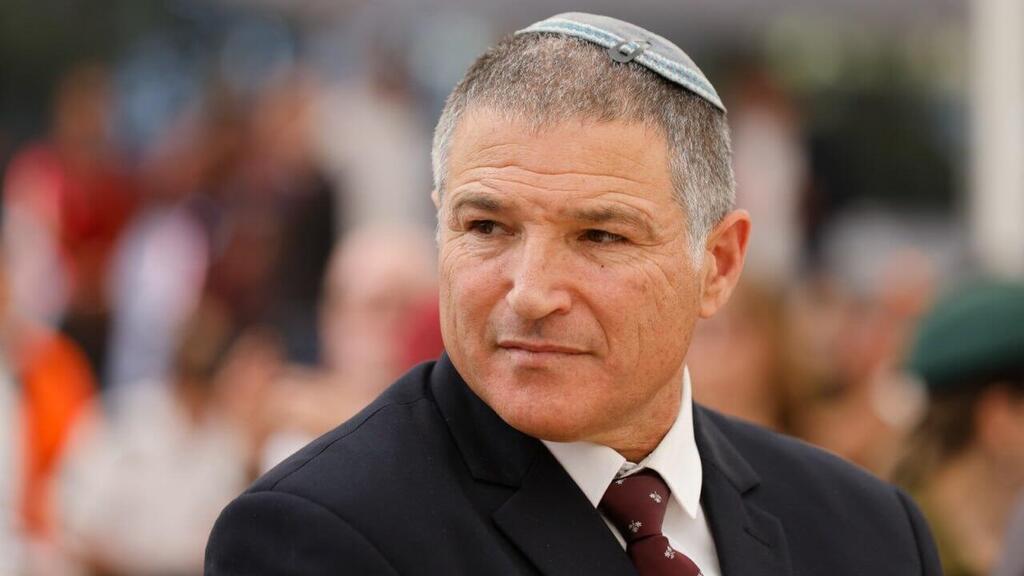
Shin Bet chief David Zini
(Photo: Olivier Fitoussi)
Members of the Palestinian committee were selected from professional figures with institutional and security experience. They are expected to hold their first meeting at the US Embassy offices in Cairo after members from Gaza join those arriving from PA-controlled areas.
In addition to committee chairman Ali Shaath, who previously held senior posts within the Palestinian Authority and served as a deputy planning minister, earlier reports identified several members: Abdul Karim Ashour, head of an agricultural aid organization in Gaza and a social activist; Aed Yaghi, director of a medical aid organization in Gaza; Ayed Abu Ramadan, head of Gaza’s Chamber of Commerce; Jaber al-Daour, president of the University of Palestine in Gaza; Bashir al-Rais, an engineering consultant; engineer Omar Shamali, who oversaw Palestinian telecommunications in Gaza; Ali Barhoum, an engineer and adviser to the Rafah municipality; and attorney Hana Tarzi, the first Christian woman lawyer in Gaza.
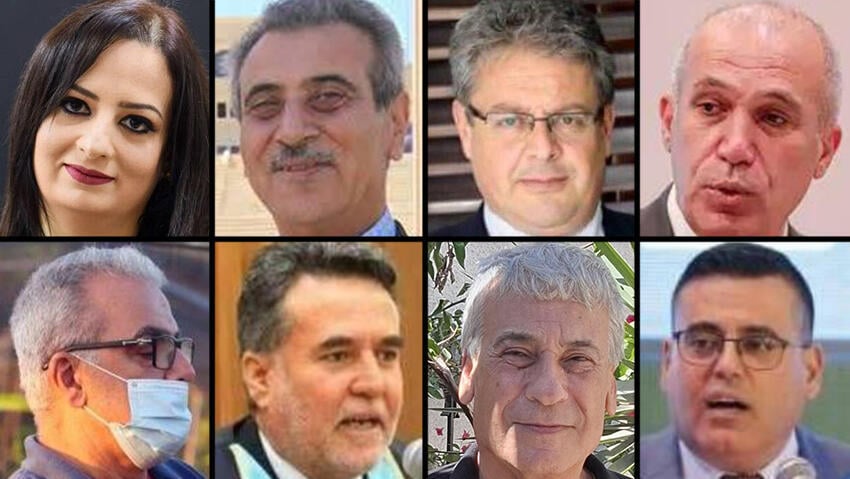
Clockwise from top right: Aed Yaghi, Bashir al-Rais, Ali Shaath, Hana Tarzi, Omar Shamali, Abdul Karim Ashour, Jaber al-Daour and Ayed Abu Ramadan
The remaining committee members are Mohammad Bseiso, owner of one of Gaza’s largest law firms, who will oversee judicial affairs; Sami Nasman, a retired senior officer from Palestinian Authority security forces, responsible for internal affairs; Arabi Abu Shaaban, in charge of the Land Authority; Osama al-Saadawi, an engineer and entrepreneur who previously served as a minister in the Palestinian government in Ramallah and will oversee housing; Husni al-Mughni, responsible for tribal affairs; and Bashir al-Rais, who will handle finance.
Senior Hamas official Taher al-Nunu told Al Jazeera the group welcomes the establishment of the technocratic committee. He said efforts are underway with mediators to open crossings, allow humanitarian aid into Gaza and secure an Israeli troop withdrawal. Hamas spokesman Hazem Qassem said the group demands that the US administration compel Israel to complete its phase one commitments, calling the move to phase two “a positive and important development.” He added Hamas is “ready to transfer administration of the strip to an independent technocratic committee and facilitate its work.”
The article was prepared with the participation of Einav Halabi.