

It was a question politicians from both the coalition and opposition used to answer briefly and unequivocally in the weeks and months after Oct. 7, 2023: How should the failures that led to the day nearly 1,200 Israelis were murdered be investigated?
In the years since, however, the issue has become a politically charged question at the heart of Israel’s political divide. A survey by ynet and Yedioth Ahronoth, which approached the various parties to determine their positions, found that most coalition parties do not want to publicly answer what framework they believe should investigate the massacre that occurred while they were in power. Among opposition parties, the answer remains far clearer, while several newer parties are trying to formulate alternative models.
Likud
Likud, the ruling party on Oct. 7 and since, did not provide an official response on its preferred framework for investigating the failures. Many Likud ministers said immediately after Oct. 7 that they supported establishing a state commission of inquiry as provided for under existing law. Months after the disaster, however, as Prime Minister Benjamin Netanyahu’s circle began developing a line against establishing such a commission, ministers and lawmakers withdrew their support one after another and opposed its establishment. Likud later sought to advance a private bill creating an alternative body described as a “national” commission, but the effort was not completed before the end of the Knesset term.
Yashar!
Gadi Eisenkot’s Yashar! said: “The first decision of our government will be to establish a state commission of inquiry into the Oct. 7 massacre. The commission will be established in accordance with Section 1 of the Commissions of Inquiry Law, 1968.”
Beyachad
Naftali Bennett’s Beyachad said: “We will establish a state commission of inquiry in accordance with the law within the first five minutes of the first government meeting, on the day the government is sworn in.”
Religious Zionism
Religious Zionism, headed by Finance Minister Bezalel Smotrich, was the only coalition party to provide a detailed response.
The party said: “Religious Zionism supports establishing a national, independent, genuine and fair commission of inquiry that will enjoy the public’s confidence and uncover the truth about the Oct. 7 disaster. We will under no circumstances support a ‘state’ commission of inquiry, which is a sanitized term for a one-sided and biased commission whose members would be appointed by Isaac Amit, who does not enjoy the confidence of most of the public and was not democratically elected, based on political considerations and foreign interests, especially when they themselves should be investigated.”
Otzma Yehudit, Shas and United Torah Judaism
Like Likud, the three other coalition parties declined to respond.
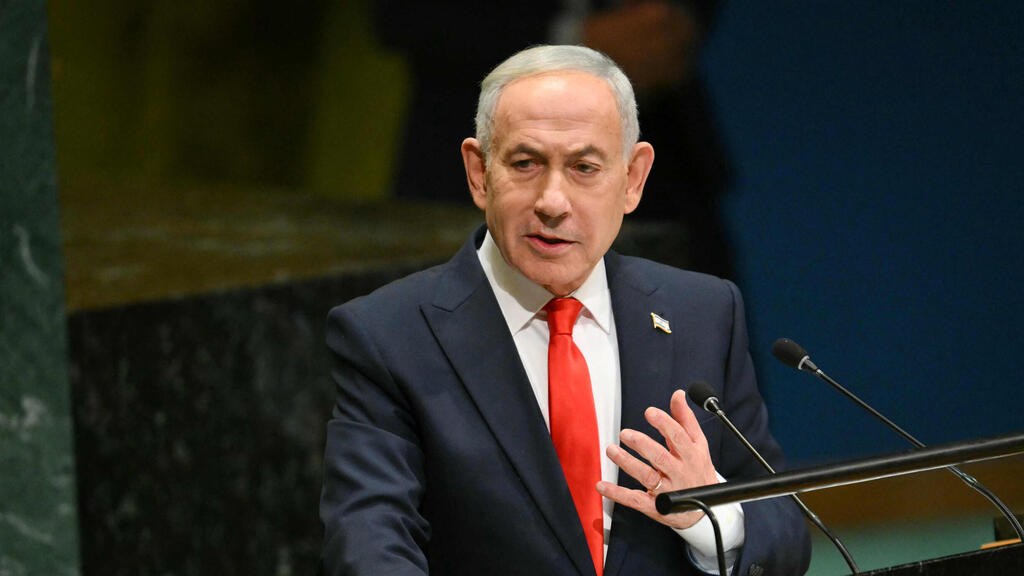
Netanyahu. How will the gravest failure in Israel’s history, which occurred on his watch, be investigated?
(Photo: ANGELA WEISS / AFP)
Yisrael Beytenu
Avigdor Liberman’s party said: “We support establishing a state commission of inquiry exactly according to the existing law in the State of Israel. This will be the first decision we make in the government we establish.”
The Democrats
The Democrats, headed by Yair Golan, said: “Establishing a state commission of inquiry will be the first decision the party advances in the next government. The commission will thoroughly investigate the entire chain of decisions and failures that led to Oct. 7, as well as the management of the war with regard to the definition of military objectives, diplomatic moves and decision-making surrounding hostage deals. The commission’s members will be appointed by the president of the Supreme Court, as required under the Commissions of Inquiry Law, 1968.”
Ra’am
Ra’am, headed by Mansour Abbas, said: “A commission of inquiry into the events of Oct. 7 is not currently at the center of Ra’am’s agenda during the election campaign. Nevertheless, Ra’am believes there is a need for a comprehensive, independent and impartial investigation of the events of Oct. 7 that will examine all the failures and decisions that led to the disaster.”
Joint List
The Joint List said: “We support establishing a state commission of inquiry under existing law, headed by a Supreme Court justice and appointed by the president of the Supreme Court. The Joint List calls for expanding the commission’s mandate to include a comprehensive examination of the policies of occupation, blockade and rejection of peace under Netanyahu governments, which are central causes of the Oct. 7 massacre.”
Amcha Yisrael
Amcha Yisrael, headed by Ofer Winter, said: “The fact that no commission of inquiry has been established to this day is a disgrace for the coalition and opposition, which do not want to get to the truth. Immediately upon the establishment of the next government, a commission of inquiry will be formed. The commission must enjoy the maximum possible public confidence. None of the proposals currently on the table meets that definition. We have an excellent proposal: a secret vote in the new Knesset to appoint the commission’s chair and deputy chair, retired judges who will select the remaining members of the commission. Next week we will unveil our full framework to the public.”
Zehut
Moshe Feiglin’s Zehut said: “Absolutely in favor. A deep, thorough and uncompromising investigation. And most importantly: a neutral commission with unlimited powers that will investigate all responsible parties: the government, the security agencies and, of course, the judiciary and unelected legal officials. We will establish it immediately upon the formation of the government. The coalition and opposition will appoint its members equally.”
The Reservists and Economic Party
The joint list headed by Yoaz Hendel and Yaron Zelekha said: “We support a state commission of inquiry. It is preferable to reach broad agreement on its composition. Who should appoint it? The Supreme Court, with a preference for Sohlberg.”
Blue and White
Benny Gantz’s Blue and White said: “Blue and White has supported and continues to support establishing an independent and impartial state commission of inquiry into Oct. 7. The guiding principle is that no political or security official should be involved in establishing the commission, and therefore the current mechanism is a good one.”