

Saudi Arabia has shut down the East-West oil pipeline after it was damaged in attacks. CNN on Friday evening published a satellite image showing smoke rising following the strike on the pipeline, a strategic export route that allows Riyadh to transport 5 million barrels of oil a day.
The attack, which took place overnight Wednesday into Thursday, came after Saudi Arabia and the Houthi rebels resumed exchanging strikes, which also targeted energy and oil facilities. So far, no party has claimed responsibility. CNN reported that pumping stations located near the pipeline itself were hit. According to a U.S. official, the attack was carried out using drones launched from Iraq.
Gallery
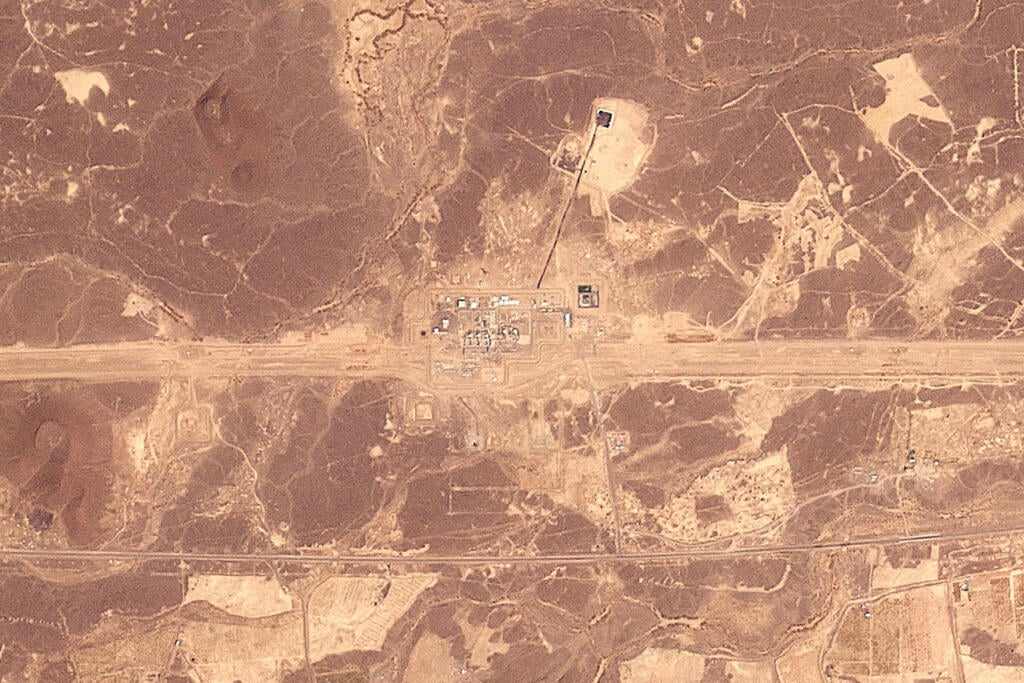
Satellite images of one of the fire sites along the pipeline route, Sept. 6
(Photo: AFP PHOTO / (C) 2026 PLANET LABS PBC)
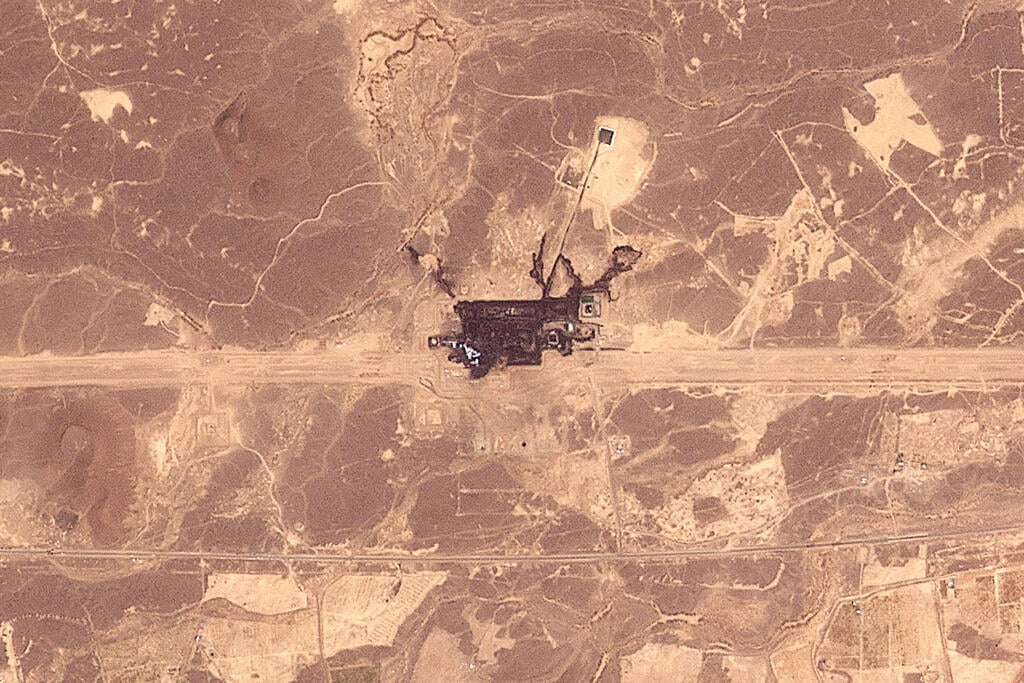
Satellite images of one of the fire sites along the pipeline route, Sept. 11
(Photo: AFP PHOTO / (C) 2026 PLANET LABS PBC)
A source familiar with the details said the United States was working to gather intelligence about the incident. CNN noted that although the origin of the attack is unknown, Iran-aligned militias in Iraq have previously used drones to attack Saudi Arabia. Satellite images show nine major fire sites near the Saudi oil pipeline. Satellite images from Planet Labs show one of the fire sites along the pipeline route. Another satellite image captured smoke rising from one of the fires.
Iran’s Tasnim news agency has previously described the oil pipeline as “the only other major alternative to the Strait of Hormuz.” The pipeline stretches 1,200 kilometers (745 miles), carrying oil from the country’s east to the western port of Yanbu on the Red Sea coast. It serves as a kind of bypass route, allowing Saudi Arabia to transport its own oil without being dependent on waterways that could be blocked by Iran’s Revolutionary Guards.
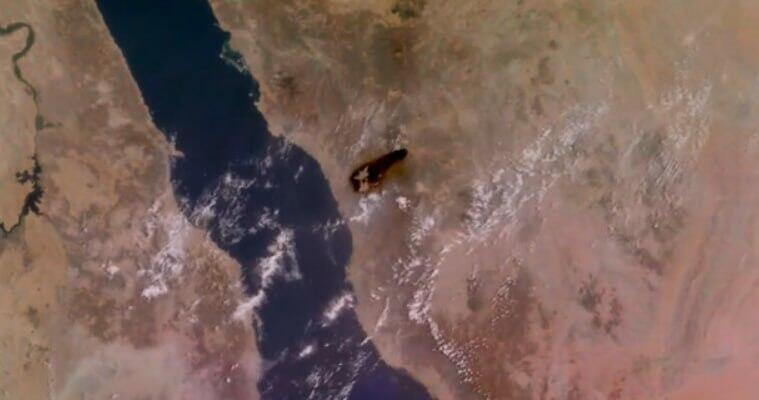
Smoke plume following the fire
(Photo: AFP PHOTO / (C) "© 2026 Copernicus Sentinel Data)
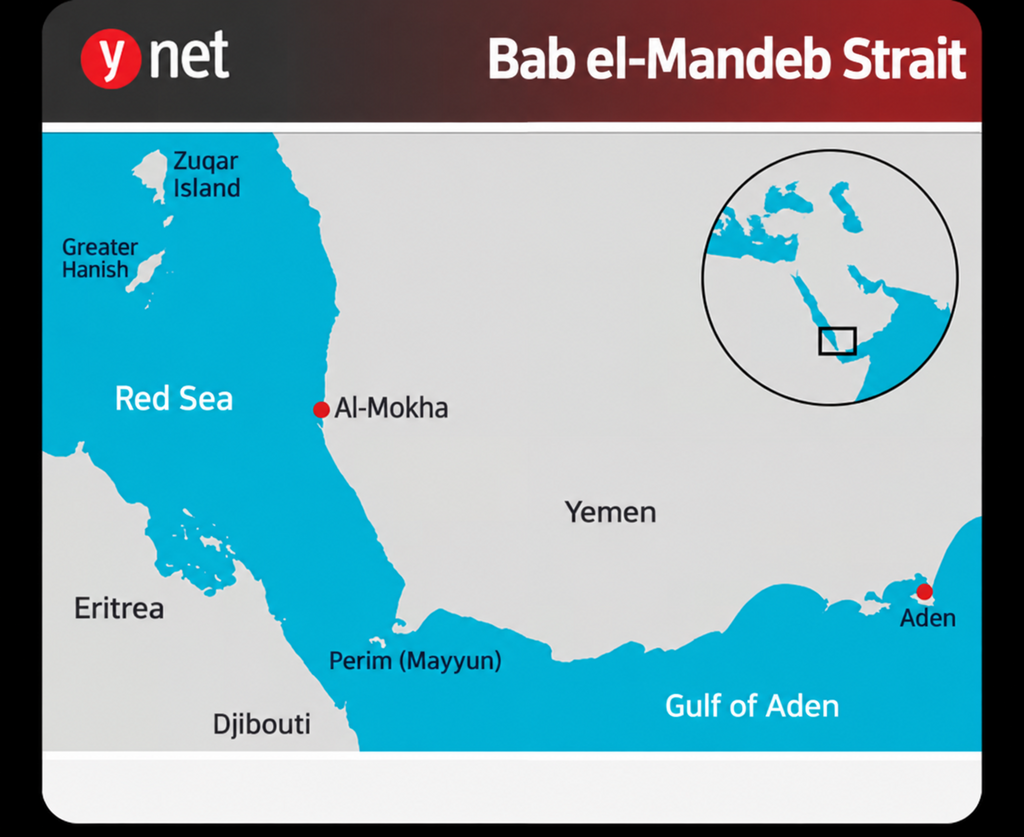
Meanwhile, according to various reports, the foreign ministers of Gulf states will meet next week with Iranian Foreign Minister Abbas Araghchi against the backdrop of the dramatic developments involving the Houthis and their takeover of the Bab el-Mandeb Strait.
“The Gulf states have found themselves in a situation they have sought to avoid for decades — both shipping routes vital to them are under threat at the same time, while the power they have relied on to protect them is, for now, unable to provide them with a clear way out,” Yoel Guzansky, a former National Security Council official, senior researcher and head of the Gulf Program at the Institute for National Security Studies, told ynet. “Hormuz is disrupted, the threat to Bab el-Mandeb is growing and the economic and security costs are mounting.”
Iran, too, is under sanctions that are hurting its economy and is looking for a way out. Iranian Foreign Ministry spokesman Esmaeil Baghaei said earlier that “there are plans to hold a regional meeting with the participation of the countries bordering the Gulf.” Against the backdrop of continued attacks in those countries, aimed mainly at U.S. bases, Baghaei said that “Iran is committed to building trust and cooperation among the countries of the region, with the aim of strengthening regional peace and stability.”
“Iran seeks to foster trust among the countries of the region without interference from actors outside the region,” he said. “The initiative to convene the foreign ministers of the countries bordering the Persian Gulf and the Sea of Oman represents a significant development in building regional trust and cooperation. We hope the meeting will pave the way for deeper mutual understanding among the peoples of the region.”
Although Gulf states have not confirmed that the meeting will take place, Baghaei said it would be held Monday in Oman, without specifying which countries would attend other than Iraq. “The meeting will address the results of discussions between Iran and Oman regarding the establishment of safe corridors for commercial shipping in the Strait of Hormuz,” he added. “As long as aggressive actions and illegal interference by the United States, the American naval blockade and economic warfare continue, the security of navigation through the strait cannot be guaranteed.”
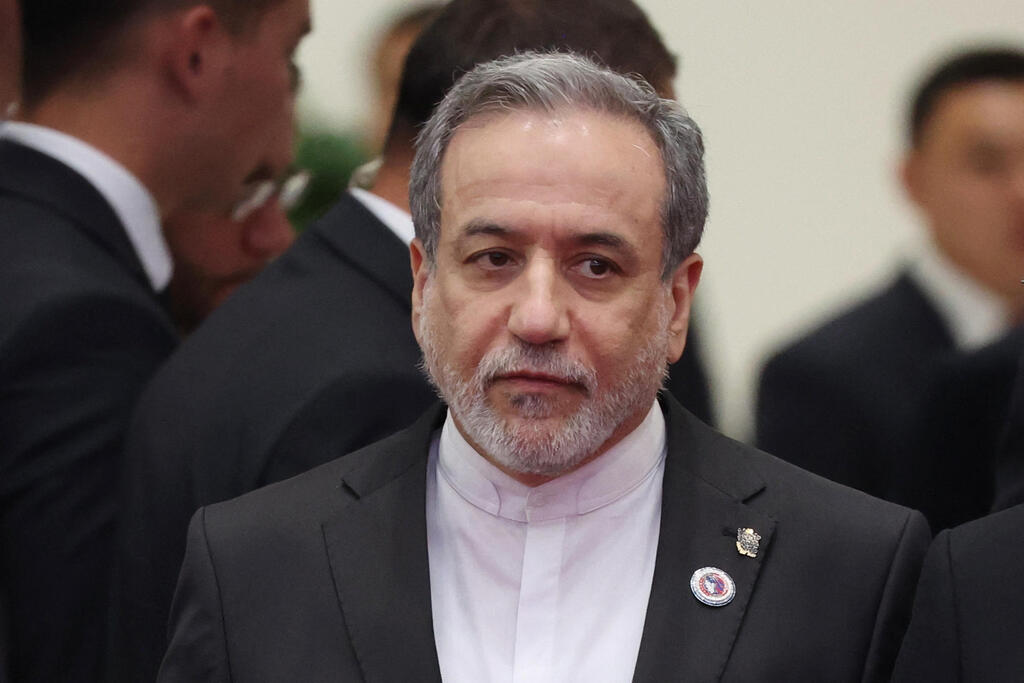
An arrangement with Iran is problematic, but the countries are looking for breathing room. Araghchi
(Photo: Vyacheslav PROKOFYEV / POOL / AFP)
Guzansky told ynet that this does not represent a change in the Gulf states’ attitude toward Iran, and certainly not an expression of trust in it. “This is an attempt by countries under intense pressure to gain some breathing room — even if doing so requires them to negotiate with the party that is largely responsible for their predicament,” he added.
“Oman and Iran have been trying for some time to advance a temporary arrangement to manage shipping through Hormuz. Each side has a different objective. Iran wants the Gulf states to help bring about an easing of the U.S. blockade of its ports, while the Gulf states are interested first and foremost in restoring as much normal traffic as possible for tankers and merchant ships. From their perspective, this is not about Iran but about economic survival: energy exports, imports of goods and the continued operation of Gulf ports.”
An arrangement with Iran is problematic for them. “If Iran can disrupt shipping and then negotiate the terms for restoring it, it is effectively being rewarded for the threat it created,” Guzansky said. “Such an arrangement also does not guarantee that Tehran will not use the same leverage again in the future. The Gulf states know this very well — and yet they are coming to the table.”
Concern over the lack of a clear path forward
The war broke out more than six months ago, and the Americans have yet to find a solution to the significant bargaining chip Iran has learned to wield.
“This may be the most important point. The very willingness to seek an arrangement with Iran demonstrates the severity of their situation and their concern over the absence of a clear American path forward,” Guzansky said. “For years, the working assumption in the Gulf was that the United States was the ultimate guarantor of freedom of navigation. Today, the question in Gulf capitals is not only whether Washington is strong enough, but whether it knows what it wants to achieve, how long the campaign will last and how it is supposed to end.”
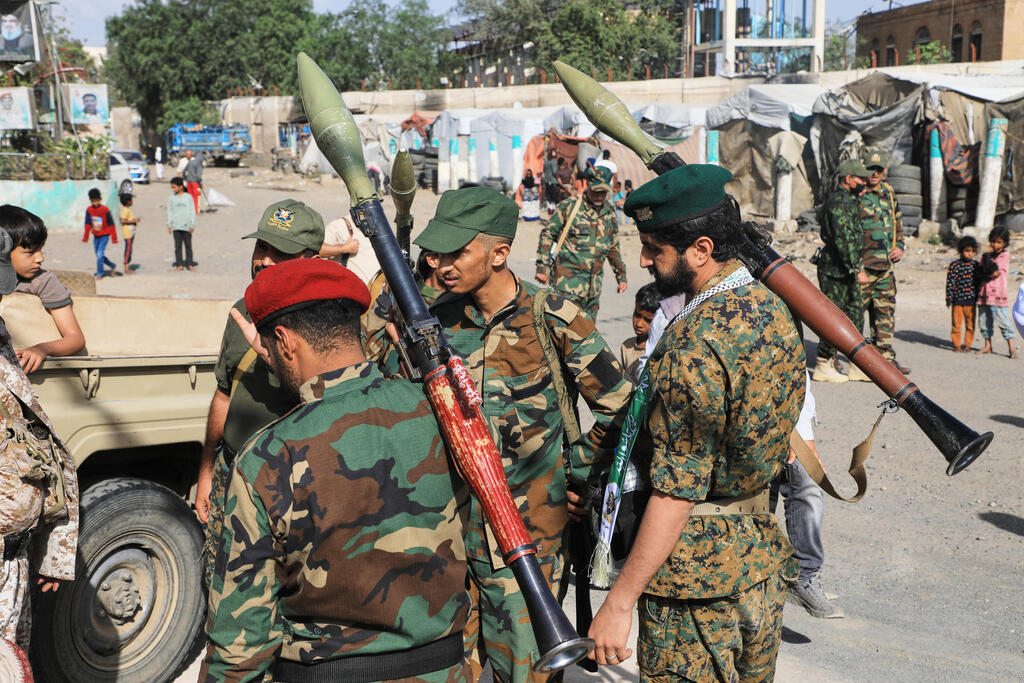
'A bad development.' Houthi rebels in Sanaa
(Photo: AP)
That concern, Guzansky added, has grown even more acute in light of developments in the Red Sea. Officials in Yemen’s internationally recognized, Saudi-backed government acknowledged Friday that the Houthis, Iran’s allies, had reached the coastal town of Dhubab and taken control of the Bab el-Mandeb Strait. Israeli officials called it a “bad development” but made clear that “if we are not attacked, we will not intervene.” The United States, too, has so far declined to come to the aid of its Gulf allies.
According to Axios, Saudi Crown Prince Mohammed bin Salman called U.S. President Donald Trump after the Houthis seized strategic islands in the Red Sea and captured a nearby port city, amid fears that they would block Bab el-Mandeb. The U.S. president rejected the request, according to the report. U.S. officials were quoted as saying the administration does not currently intend to take direct military action against the Houthis.
Saudi Arabia has the option of routing some of its oil exports westward through the Red Sea, but that advantage is now being eroded.
“Instead of one chokepoint, the Gulf is now facing two,” Guzansky stressed. “The problem is no longer how to bypass Hormuz, but how to ensure safe access to global markets at all — hence the urgency. The Gulf states cannot base their policy on the assumption that the United States will eventually solve the problem. They need relief now. If the path to that relief runs through Iran, they are willing to explore it — even though they know it is a partial, temporary and risky solution.”
Iran as an insurance policy?
For Iran, by contrast, the process itself represents a strategic opportunity. According to Guzansky, “Tehran wants to change the equation: Instead of the Gulf states pressuring the United States to increase pressure on Iran, they may begin pressuring Washington to reach understandings with Tehran. In this way, Hormuz is transformed from leverage for disrupting shipping into leverage intended to influence relations between Washington and its allies.”
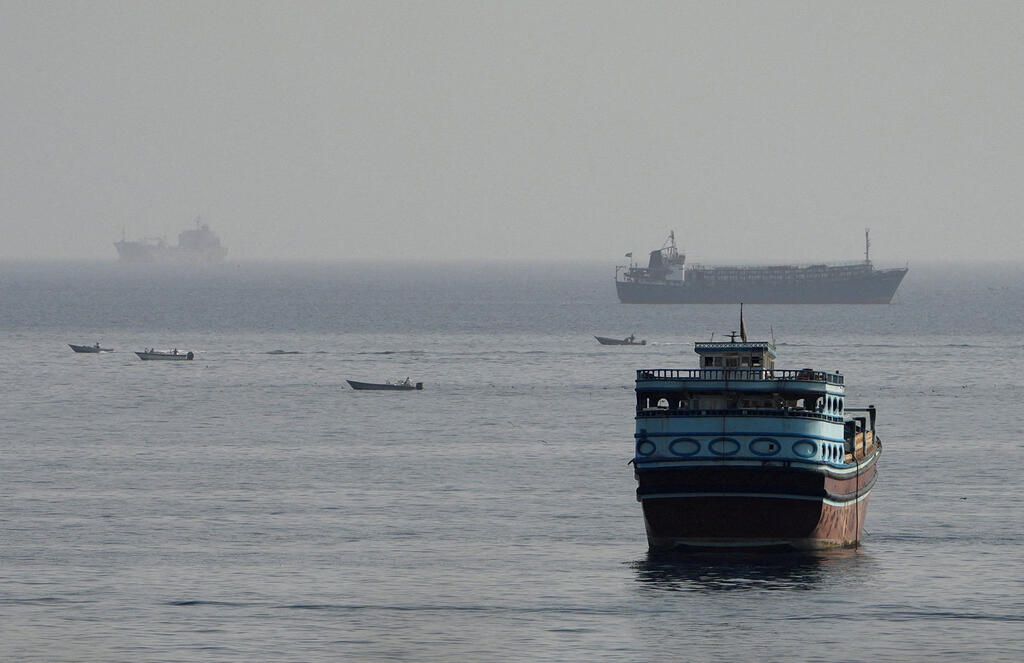
'The party threatening freedom of navigation also becomes the address for negotiations'
(Photo: REUTERS/Stringer)
This is not a scenario in which the Gulf states choose Iran over the United States, he said.
“It is enough for Iran to make them understand that exclusive reliance on Washington is too costly and too risky. If the Gulf states conclude that protecting their interests requires them to maintain an independent channel with Tehran in parallel, Iran has already succeeded in expanding its room for maneuver. That is also why the meeting in Oman is part of a broader phenomenon.”
In such a situation, he explained, the Gulf states are not replacing the United States but spreading their risks. They are adding partners, building overlapping security frameworks and maintaining simultaneous ties with actors whose interests do not always align. From their perspective, there is no contradiction. When no single power provides all the security they need, it makes sense to hold several insurance policies at the same time.
Guzansky said it would be wrong to view the contacts in Oman as evidence of diplomatic success or the beginning of a thaw in relations between the Gulf states and Iran.
“There is a difference between expanding partnerships and seeking relief,” he said. “In the latter case, the party threatening freedom of navigation also becomes the address for negotiations over restoring it. This is a situation the Gulf states did not want to find themselves in and one the United States certainly would not want to see.”
“This is first and foremost a move born of necessity — a Band-Aid the Gulf states are placing over a much deeper wound — and the message to Washington is clear. The Gulf states still want the United States, still need it and still view it as their main security pillar. But they are not prepared to wait indefinitely for it to provide a solution. When their vital interests are at risk, they will look for a way out — even if that route runs through Tehran.”
So, according to Guzansky, this is not an abandonment of the United States but rather a warning to it: Allies that are uncertain where the power protecting them is taking the campaign begin preparing their own escape routes. For Iran, the very fact that this is happening is already an achievement.