

On Christmas Eve, just a week and a half before the operation to capture Venezuelan President Nicolas Maduro began, Vatican Secretary of State Cardinal Pietro Parolin urgently summoned the US ambassador to the Holy See, Brian Burch, to seek details about Washington’s plans for Venezuela.
The meeting was reported Friday by the Washington Post, citing government documents. Parolin urged the United States to show restraint and informed the ambassador of a possible escape route for Maduro, including potential asylum in Russia.
Gallery
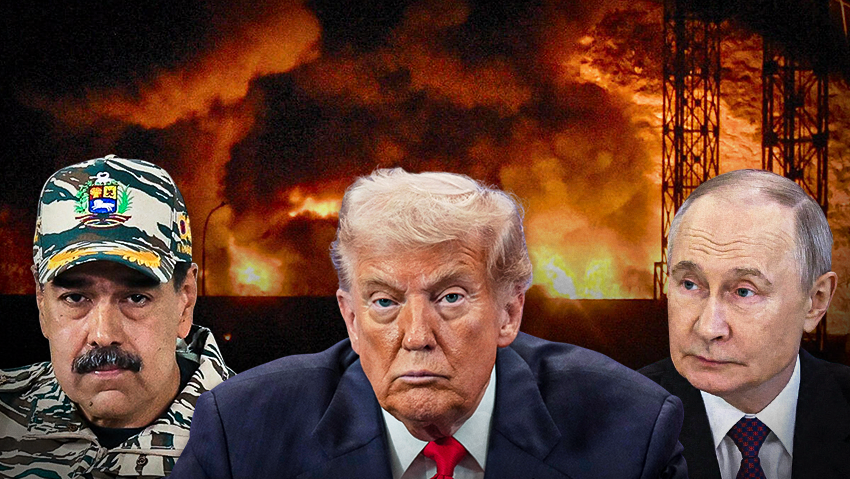
‘Asylum in Russia with access to his money and a guarantee from Putin’: the offer and the refusal
(Photo: Mark Schiefelbein/ AP, Zurimar Campos / Venezuelan Presidency / AFP, Reuters)
According to the report, Parolin asked whether the United States intended to act solely against drug traffickers or whether President Donald Trump’s administration was aiming for full regime change. Documents obtained by the Post indicate that the Vatican’s top diplomat acknowledged Maduro needed to leave Venezuela but called on Washington to allow him a way out and even suggested the United States set a deadline for his departure.
The Post noted that for several days Parolin sought access to Secretary of State Marco Rubio in what was described as a desperate effort to prevent bloodshed and instability in Venezuela. During his conversation with the US ambassador, Parolin said Russia was prepared to offer Maduro asylum.
Handcuffed and surrounded by police, Maduro is led from a helicopter on his way to a New York court


‘What was proposed was that he would leave and be able to enjoy his money,’ said a person familiar with the Russian offer. ‘Part of that request was that Putin would guarantee his safety.’
That meeting inside Vatican City was one of many failed attempts by the United States and mediators, including Russia, Qatar, Turkey and the Catholic Church, to avert a diplomatic crisis and find Maduro a safe haven before the US raid to capture him. According to the report, efforts to secure an escape route continued for a long time, and Maduro was warned just days before he was seized, but refused to leave Venezuela. ‘He did not agree to a deal,’ said a person who knows him. ‘He simply intended to sit there and watch people create a crisis.’
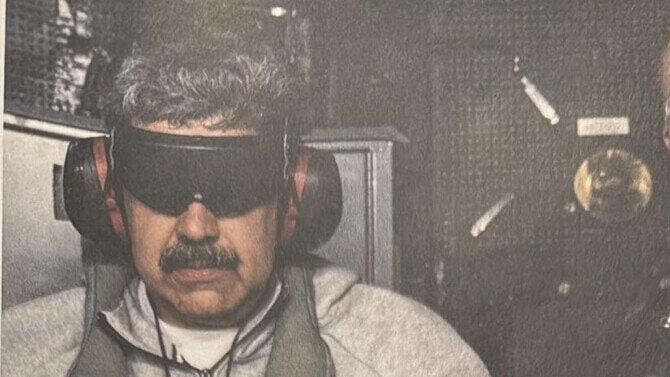
First footage of Maduro after his capture
Another source said Maduro believed a phone call he held with Trump last November ‘went fine,’ when in fact he was told his time was up. A senior White House official said Trump told him during that call that ‘there is the easy way or the hard way.’ Maduro rejected an offer to meet Trump and believed he could cling to power. Officials familiar with a White House meeting on Venezuela said Maduro was also offered exile in Turkey or another willing country, including assurances he would not be extradited to the United States, but angrily rejected the proposal.
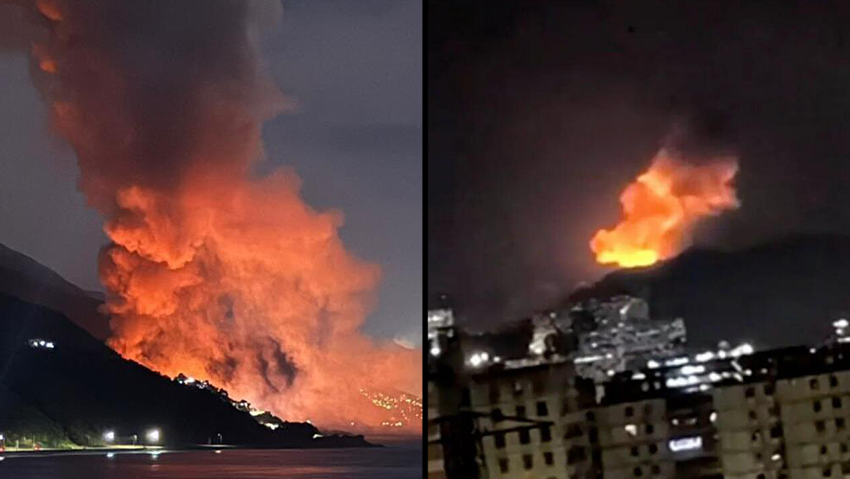
Explosions in Caracas on the night of the US raid
The New York Times reported this week that the decision to remove Maduro, following a months-long pressure campaign, was made only after he rejected a final ultimatum from Trump late last month to leave Venezuela for exile in Turkey. According to the report, Maduro’s continued televised appearances, sometimes joking, dancing and projecting calm in the face of Trump’s threats, convinced some in the administration that he was mocking Washington and testing what he believed was a bluff.
The Vatican press office said in response that it was ‘disappointing that parts of a confidential conversation were revealed that do not accurately reflect its content,’ noting the meeting took place during the Christmas period. Burch’s spokesman referred questions to the State Department, which declined to comment. Kremlin spokesman Dmitry Peskov also did not respond to a request for comment.
The attack, the chaos and the capture
Late last week, on the night between Friday and Saturday, the US attack on Venezuela began. Numerous explosions were reported in Caracas, along with strikes near the massive Fuerte Tiuna military base, home to the Defense Ministry headquarters and residences of senior government and military officials.
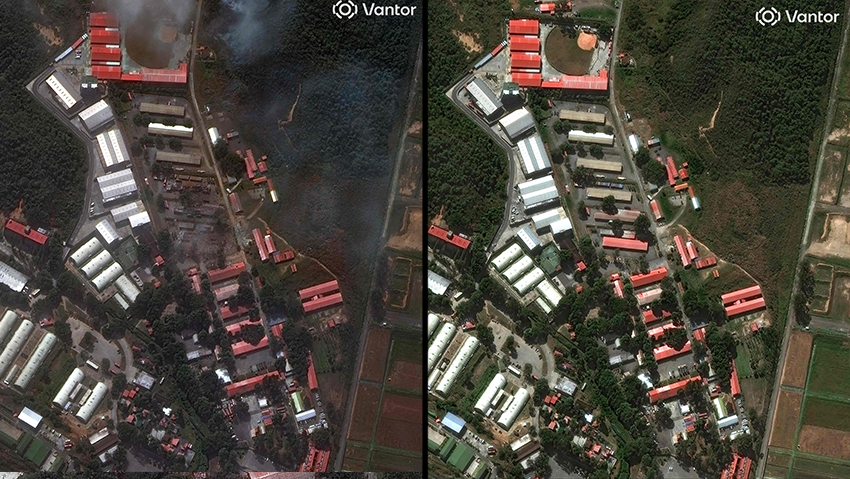
The Fuerte Tiuna military base before and after the US raid
(Photo: AFP PHOTO/ SATELLITE IMAGE ©2025 VANTOR)
Maduro escorted by law enforcement officers
(Video: RapidResponse47)
Shortly afterward, Trump announced that Maduro had been captured along with his wife. ‘The United States of America successfully carried out a large-scale strike against Venezuela and its leader, President Nicolas Maduro, who together with his wife was captured and flown out of the country,’ Trump wrote.
By the following morning, US media reported that Trump had authorized the operation several days earlier. Administration officials told CBS that the military had discussed launching the strike during Christmas, but prioritized operations against ISIS in Nigeria. Additional ‘windows’ followed, but the mission was delayed again due to weather conditions. Officials said the military sought better conditions to gain a tactical advantage.
Maduro’s capture, which Venezuela says occurred amid bombing that killed at least 100 people, was carried out by the US Delta Force, the same unit that killed ISIS leader Abu Bakr al-Baghdadi in 2019. A source familiar with the operation said the CIA identified Maduro’s location after Trump authorized covert intelligence activity in Venezuela months earlier. Two sources told Reuters the CIA had a source inside the Venezuelan government who helped track Maduro’s movements.
Trump later told Fox News he watched the operation live from his Mar-a-Lago estate. ‘It was amazing,’ he said. ‘We were surrounded by generals who knew exactly what was happening. Different types of helicopters and fighter jets, breaking into places that cannot be broken into. Steel doors built just for that. I have never seen anything like it. I watched it like a television show.’ Trump said Maduro was captured in a ‘fortress,’ later calling it a ‘palace,’ adding that he tried to reach a safe room behind steel doors. ‘He did not even have time to hide.’
Reports said the attack involved stealth RQ-170 drones and more than 150 aircraft, including F-35 and F-22 jets that targeted Venezuelan air defenses, alongside bombers supported by F/A-18 Super Hornets, B-1B Lancers, E-2 Hawkeye early warning aircraft and EA-18 Growlers. Military experts believe the near-total darkness in Caracas resulted from the use of a US ‘blackout bomb.’
Detention in the US and the White House video
After being removed from Venezuela, Maduro landed in New York with his wife and was taken off the plane in handcuffs, surrounded by dozens of federal agents. The White House celebrated his arrest by releasing a video on its official X account showing Maduro previously calling Trump a coward and daring him to ‘come and get me’ at the Miraflores Palace.
The video then cuts to Rubio saying, ‘If you did not know, now you know,’ followed by an image of Maduro in shackles aboard a US vessel and footage of Trump smiling as he walks through the White House corridors.
Trump: ‘We will run Venezuela until a safe transition of power’
(Video: Reuters)
At his first court appearance in New York, his legs chained, Maduro identified himself in Spanish. ‘I am the president of the Bolivarian Republic of Venezuela. I was kidnapped. I am innocent. I did nothing wrong. I am an honorable man,’ he said. The hearing lasted less than 30 minutes. The judge scheduled his next court appearance for March 17.
US backs Maduro’s deputy over Nobel laureate
Trump said the United States and Venezuela are not at war and signaled Washington would remain involved in the country’s near future. Contrary to opposition demands, he said Venezuela is not yet ready for elections. ‘It is going to take time,’ he told NBC. ‘We have to heal that country.’ Trump said Venezuela’s socialist government, now led by Delcy Rodriguez, Maduro’s former vice president who was sworn in after his transfer to the United States, is ‘cooperating’ with Washington. ‘We are getting along very well,’ he said. Rodriguez, vice president since 2018, is considered relatively pragmatic within the Caracas leadership. According to the New York Times, senior Trump administration officials identified her in advance as someone who could work with the United States after Maduro’s removal. At this stage, Trump reportedly prefers her leadership over opposition leader Maria Corina Machado.
In her first interview since Maduro’s capture, Machado, who won the Nobel Peace Prize in late 2025, said she hopes to return to Venezuela soon and that her movement is ready to compete in and win free elections. ‘I plan to return as soon as possible,’ she told Fox News. ‘We believe a transition of power must move forward.’ Machado fled Venezuela in a secret US-assisted operation and traveled to Oslo to receive the prize, which she dedicated to Trump. After Maduro’s capture, she praised Trump and said she wanted to personally award him a Nobel Prize. ‘January 3 will be remembered as the day justice defeated tyranny,’ she said. She thanked Trump for ‘his bold vision and historic actions against this narco-terrorist regime. This is a massive step forward on the path to democracy.’
Amid US willingness to work with Rodriguez, Machado said Maduro’s successor is ‘among the main architects of torture, persecution, corruption and drug trafficking’ and a key ally of Russia, China and Iran. ‘She is not someone international investors can trust. Venezuelans oppose her,’ Machado said. Asked about the possibility of Machado becoming Venezuela’s president, Trump said ‘it would be very hard for her to lead. She does not have the support or respect inside the country.’ The regime barred Machado from running in the 2024 elections, which the opposition and international observers said were stolen.
First published: 15:37, 01.10.26