

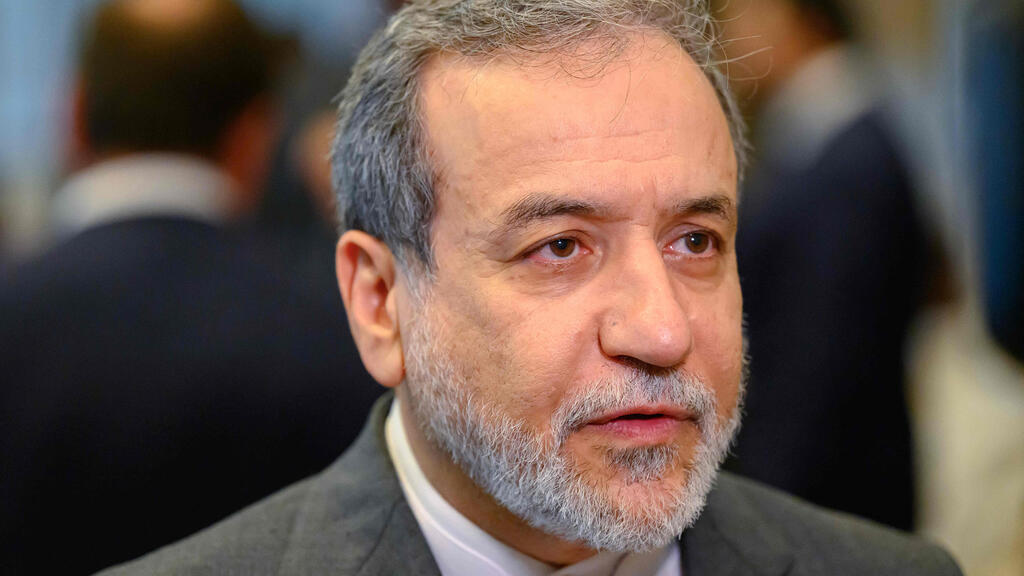
Iran’s foreign minister, Abbas Araghchi, claimed Sunday afternoon that the United States and Israel will not succeed in bringing about regime change in Tehran, and said a new leader for the Islamic Republic could be selected as early as Monday or Tuesday.
In an interview with Al-Jazeera, Araghchi sought to placate Gulf states that his country has been attacking since Saturday in retaliation, saying, “We know they are angry about our attacks, but they must understand that this is a war that was imposed on us.” In the interview, Araghchi warned that assassinating Iran’s supreme leader, Ayatollah Ali Khamenei, would make the confrontation more complex and dangerous. “This is a dangerous and unprecedented act and a blatant violation of international law. I see no limits when it comes to our self-defense,” he said.
Masoud Pezeshkian


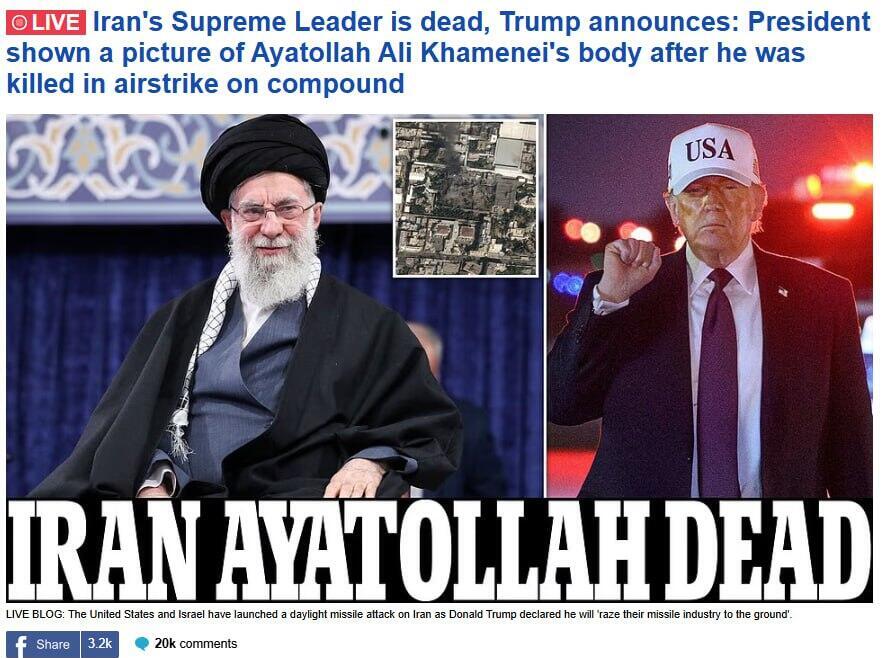
The British newspaper the Daily Mail
Seeking to emphasize that the regime remains stable and functioning without major disruption, Araghchi said a transitional council was established Sunday to manage state affairs and that matters are being conducted “in an orderly manner and in accordance with the constitution.”
“If their goal is regime change, that is an impossible mission,” Araghchi said of the United States and Israel. “State institutions exist and we have constitutional procedures. Perhaps in a day or two you will see the selection of a supreme leader.”
Israeli officials say Iran’s leadership currently appears to have two likely options. One is to leave Ali Larijani, secretary of Iran’s Supreme National Security Council — who, according to reports, was granted broad powers to run the country on the eve of the war — as de facto ruler until a new supreme leader is appointed. The other is to appoint a council of experts to establish a temporary governing council for a limited period.
Khamenei’s son, who in recent years has been mentioned as a leading candidate to succeed him, has not taken on a prominent role for now, and according to Israeli officials appears to be in hiding.
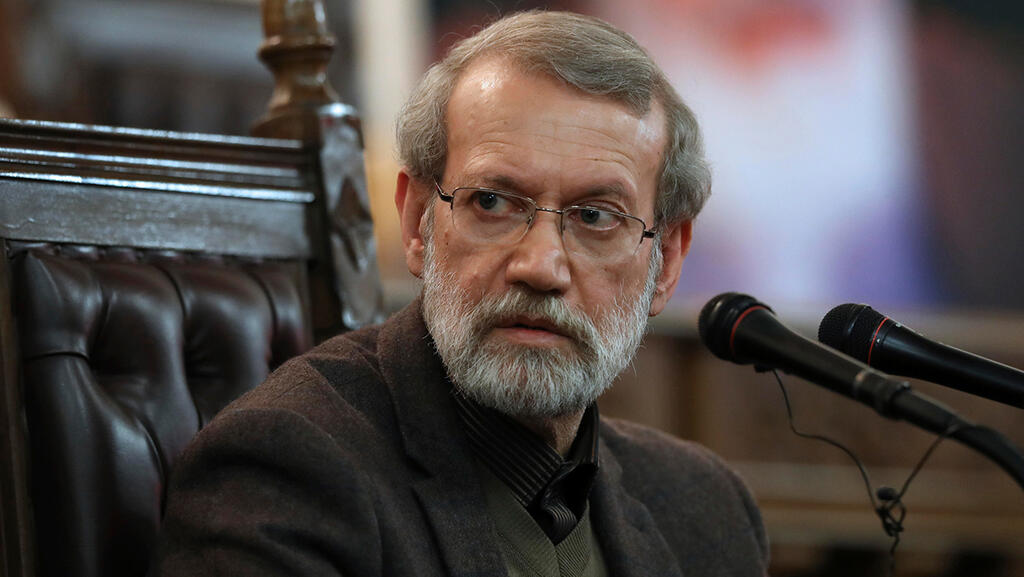
Ali Larijani may be appointed as temporary de facto ruler
(Photo: AP)
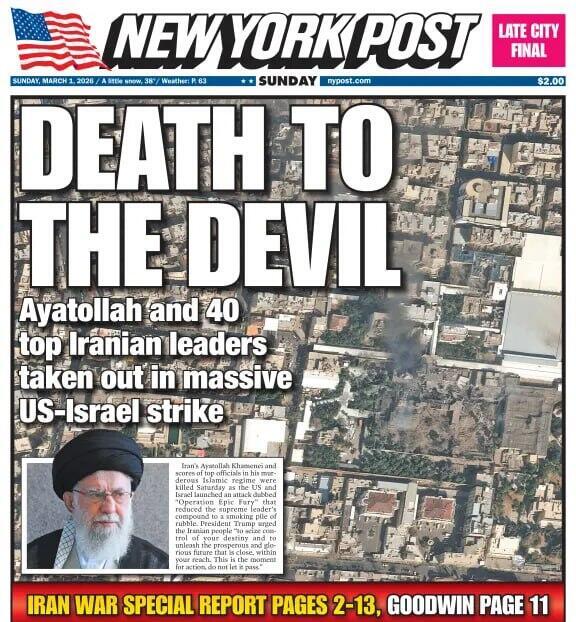
Headline of the pro-Israel New York Post
Against the backdrop of Iranian missile and drone attacks on several Gulf states hosting U.S. bases, in retaliation for the U.S. military operation, Araghchi told Al-Jazeera: “Our relations with these countries are good, and they have no issues with us. We are not attacking our neighbors in the Gulf, but the American presence in those countries. We have begun attacking American military bases in the region, which has caused them to begin evacuating them.”
The Iranian foreign minister made the remarks despite numerous reports from the Gulf documenting Iranian strikes on civilian assets with no direct connection to the U.S. military, including hotels and luxury towers.
“I am in continuous contact with my counterparts in the region and have provided explanations,” Araghchi told Al-Jazeera. “I know some of them are not satisfied and some are angry. We know the Gulf states are angry about our attacks, but they must understand that this is a war that was imposed on us. America and Israel chose this war and pressure must be applied to them. I hope our neighbors will convey the complaints to them. We have asked our forces to be cautious in the targets they strike in the countries of the region. Our neighbors cannot expect us to watch attacks against us launched from their territory and remain silent.”
At the same time, Araghchi claimed Iran currently has no intention of closing the Strait of Hormuz or disrupting shipping there in any way, despite reports Saturday that Iranian officials had already announced the strait’s closure.
The United Arab Emirates’ Defense Ministry said Sunday afternoon, following an Iranian drone attack on the Al-Salam naval base in Abu Dhabi, that “the UAE reserves the full right to respond to this escalation and to take all necessary measures to protect its territory, its citizens and its residents.”
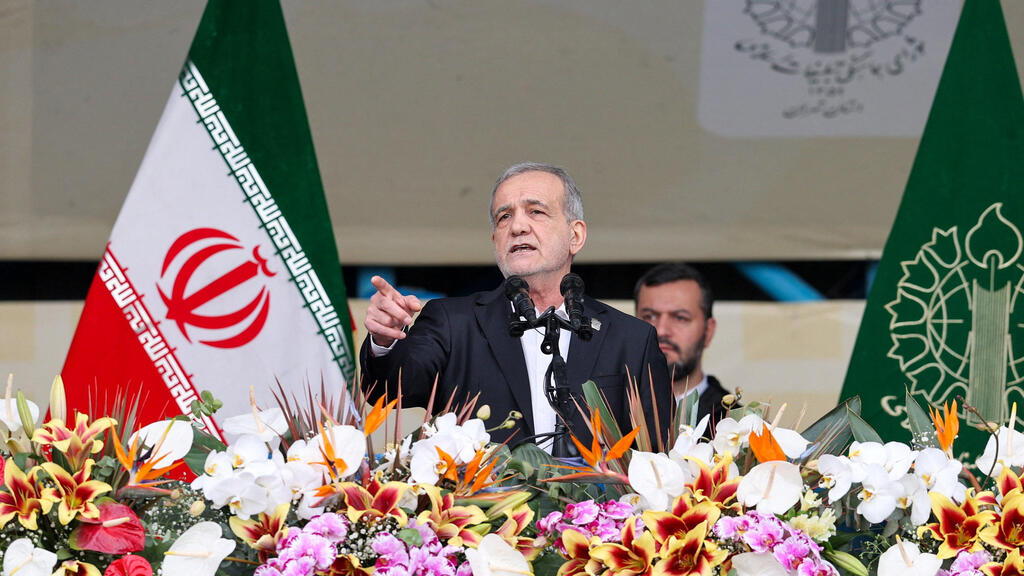
Masoud Pezeshkian
(Photo: Majid Asgaripour/WANA (West Asia News Agency) via REUTERS)
Also Sunday afternoon, Iranian President Masoud Pezeshkian appeared in a video for the first time since the war began Saturday, contrary to initial speculation that he had been killed. Pezeshkian, who upon his election — among the few candidates permitted to run by the ayatollahs’ regime — was considered relatively moderate by Iranian standards, sounded firmly aligned with the regime in his remarks.
“Iran’s forces are attacking enemy bases with full force,” he said. “We will bring the enemies to despair by destroying their bases and capabilities. We must be united in the face of the enemies’ plans.” Meanwhile, a senior U.S. official told Al-Jazeera on Sunday afternoon that Washington expects the military operation against Iran to last weeks, not just a few days.
“We knew the operation would not be quick. We are prepared for a long-term confrontation,” the official said. “We do not know with certainty how the killing of Khamenei will affect Iran’s military capabilities and responses. We are seeking to destroy its missile capabilities. It is too early to conduct a comprehensive assessment of our military actions against Iran.”