


The tense hours endured Wednesday morning by passengers aboard a Flydubai flight were also nerve-racking for Israelis and especially for the country’s security forces, as the circumstances were initially unclear and the IDF prepared for the possibility of a hijacking.
Shortly after the alert was received, two Israeli Air Force fighter jets were scrambled to escort the aircraft while officials assessed how to respond.
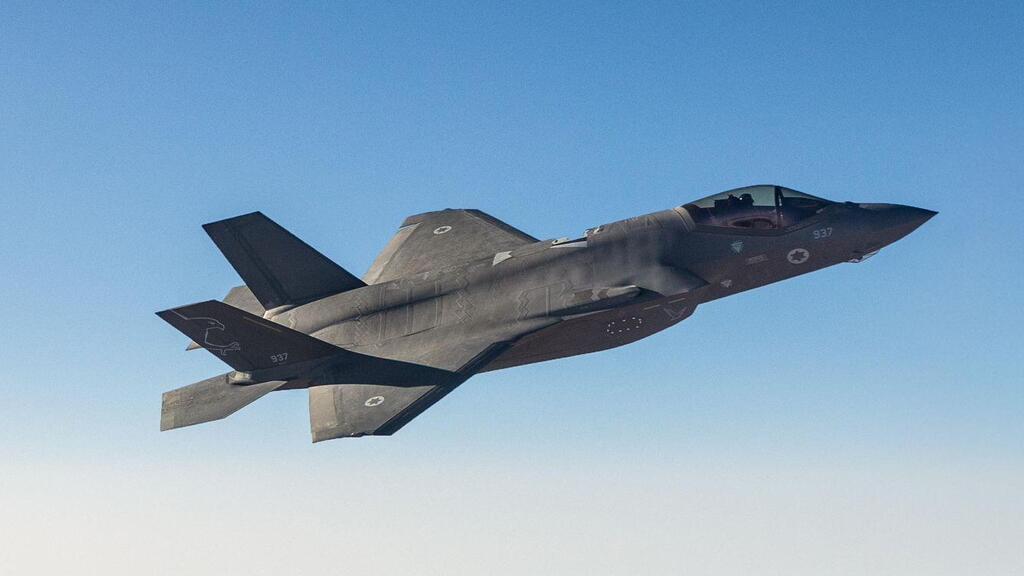
The deployment was carried out under procedures the IDF regularly drills for scenarios in which a civilian aircraft heading to Israel deviates from its route, fails to respond to radio calls, transmits a distress or emergency signal or is suspected of being hijacked.
If necessary, fighter jets are scrambled to identify and escort the aircraft, while authorities also consider closing the airspace.
The fighter jets are intended to provide a response to hijackers or terrorists and prevent the incident from escalating or causing additional casualties, including damage to strategic sites as well as harm to passengers and crew.
Scrambling fighter jets also provides the option, if necessary, of shooting down the aircraft or alternatively escorting it securely to a safe airport for landing.
At the same time, a decision to shoot down a civilian aircraft is an exceptionally rare one and would be made only after consultations with senior security officials acting under the direction of the political leadership.
Such a scenario is intended to prevent far greater and more severe harm, such as mass casualties on the ground in addition to those aboard the aircraft, or an attack on strategic assets that could cause major damage to national security.
Amid the spread of unverified information on social media, the Air Force stressed that activation of the relevant order — whose name is barred from publication — does not necessarily indicate a security incident.

Israeli passengers and crew members subdue the Flydubai pilot
The Air Force maintains continuous readiness to deal with a range of airborne threats and prevent unauthorized entry into Israeli airspace. Its systems operate around the clock to monitor the skies, identify irregularities and detect threats, while maintaining the ability to scramble and deploy aircraft within a short period of time.
The readiness is based on a continuous aerial picture, forces kept on alert and regular drills for a range of scenarios. The goal is to allow early identification of an unusual event, rapid decision-making and a response tailored to the way the incident develops.
One of the scenarios routinely practiced by the Air Force involves civilian aircraft heading to Israel.
Under a dedicated order, the military can respond to situations in which there is concern that an unusual event is developing, including the possibility of airborne terrorism, a hijacking or an attempt to deliberately crash an aircraft with its passengers on board.
The order may be activated in a range of circumstances, including when an aircraft deviates from its planned route, fails to answer radio calls, transmits a distress signal, suffers a technical malfunction or experiences a medical emergency requiring an emergency landing.
Once the order is activated, measures are taken to protect the airspace, at times including closure of the entire airspace, with the aim of preventing more serious harm.
At the same time, as occurred Wednesday morning, fighter jets can be scrambled to identify and escort the civilian aircraft.
A continuous assessment is then carried out until the circumstances are understood and the concern is resolved.
The Air Force regularly drills its response, with an emphasis on shortening response times and moving quickly from identifying an irregularity to understanding the situation and activating the appropriate response.
The IDF stresses that activation of the order does not necessarily mean there is suspicion of a security incident.
In some cases, it may be triggered by a technical malfunction, a communications problem, a deviation from the flight path or human error by the flight crew.
Every unusual incident is examined and handled until the concern is removed and the situation is fully clarified.
The Air Force continues to keep forces on alert to defend Israel’s skies and borders in both routine and emergency situations, with the ability to shift rapidly from normal operations to an operational response as events develop.