



An Israeli citizen who spent more than a year imprisoned in Lebanon was released Thursday in what Prime Minister Benjamin Netanyahu called “a positive step and a sign of things to come.”
But Israeli officials stressed the case was not connected to negotiations over hostages held in Gaza, and Netanyahu appeared to be referring instead to recent Lebanese government measures targeting Hezbollah.
Gallery
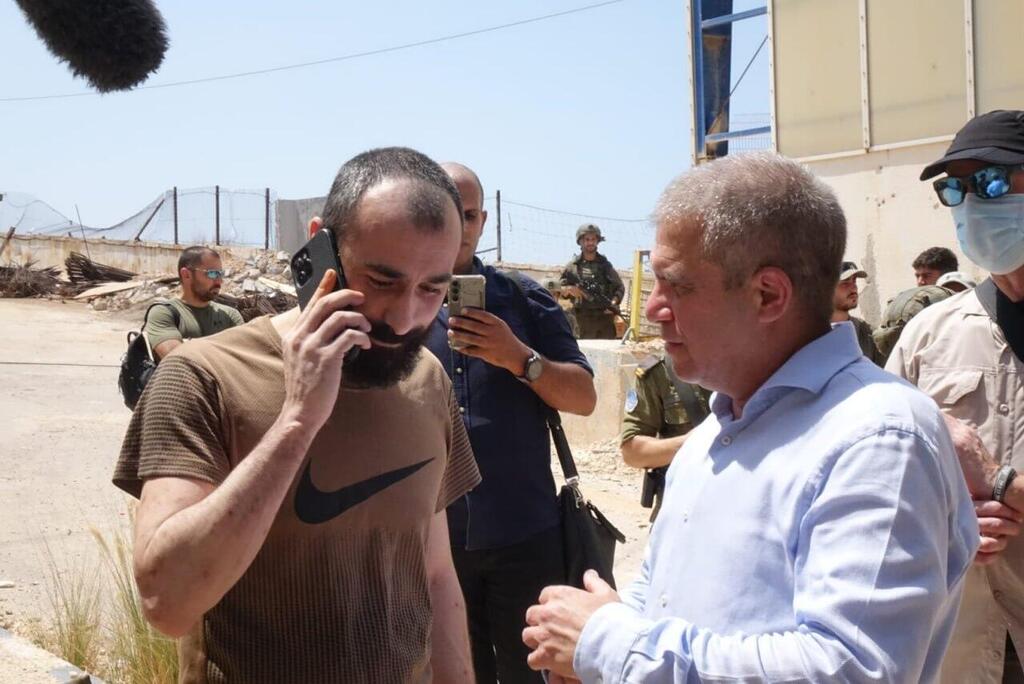
Salah Abu-Hussein (left) and coordinator for captives and missing persons, retired Brig. Gen. Gal Hirsch
(Photo: GPO)
The freed man, identified as Salah Abu-Hussein, is from the northern village of Rumana and suffers from mental illness, according to his family. He disappeared in July 2024 while working in Tel Aviv. Relatives said they filed a missing person report with police but only learned Thursday that he had crossed into Lebanon and been detained there.
“For all this time, we didn’t know he was in Lebanon,” one family member told Ynet. “We are very happy he came back alive. The government worked to bring him back without telling us, and today we finally learned the details.”
The Prime Minister’s Office said Abu-Hussein’s return was achieved without any prisoner exchange and that “the circumstances of the case are under security review.” Israel’s coordinator for captives and missing persons, retired Brig. Gen. Gal Hirsch, handled negotiations through the International Committee of the Red Cross, which facilitated his release after months of quiet contacts.
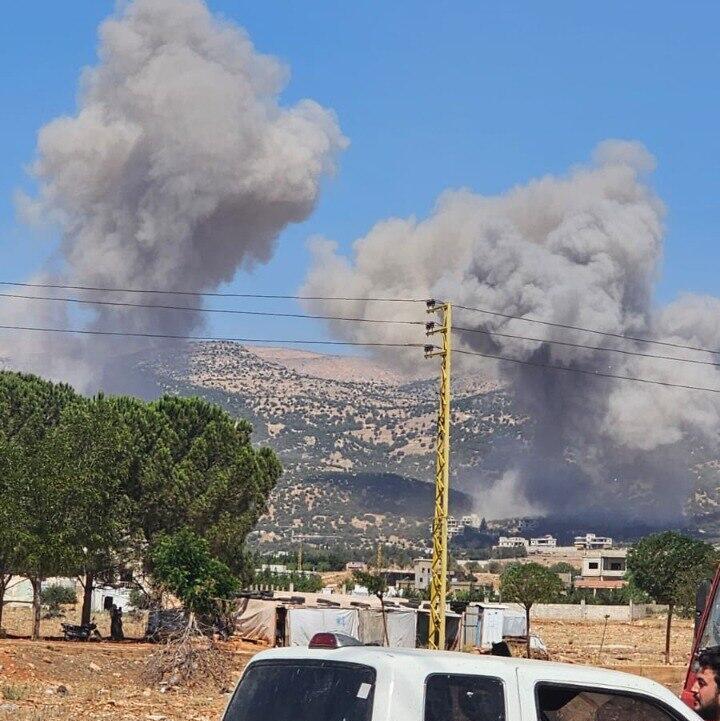
Israeli airstrikes in Lebanon's Bekaa Valley
Netanyahu’s comments hinted at wider regional diplomacy. He praised recent steps by Lebanon’s government, which — encouraged by U.S. envoy Tom Barrack — has pledged to move forward with efforts to disarm Hezbollah and consolidate all weapons under state authority.
Barrack, sent by U.S. President Donald Trump to mediate with Syria and Lebanon, has reportedly pressed Beirut to rein in the Iran-backed terrorist group in exchange for international pressure on Israel to withdraw from Lebanese territory, halt airstrikes and release Lebanese prisoners. Abu-Hussein’s release was described as a goodwill gesture, possibly linked to these talks.
Still, Israeli officials emphasized that the United States was not involved in securing Abu-Hussein’s freedom and that the matter was handled strictly through the Red Cross. Some analysts suggested the precedent could eventually open the door to similar involvement in Gaza, where the organization has so far played no role in negotiations over Israeli hostages.

Israeli troops in Lebanon
(Photo: IDF)
Lebanese politics remain sharply divided over the disarmament push. On Aug. 7, the country’s cabinet debated a motion to centralize all weapons under the state, effectively dismantling Hezbollah’s armed wing. Shiite ministers walked out in protest, demanding that any such discussion take place only after Israel withdraws, returns Lebanese prisoners, halts airstrikes and contributes to postwar reconstruction.
Despite their absence, the cabinet voted to endorse the framework presented by Barrack. Earlier, on Aug. 5, Lebanon’s military had been tasked with drafting an implementation plan for exclusive state control of weapons by the end of the month. Analysts say the debate is far from over, but the moves have signaled an unusual show of determination by Beirut to confront Hezbollah’s dominance.
For Israel, Abu-Hussein’s return closed a yearlong mystery for his family, but it also highlighted broader diplomatic currents. Whether Lebanon’s steps against Hezbollah develop into real change — and whether the Red Cross role could extend to other fronts — remains an open question.