

Israeli forces struck targets across the Gaza Strip on Sunday after terrorists fired on Israeli troops operating near Rafah, a move that challenged a fragile ceasefire and triggered a broad retaliatory campaign.
The IDF said terrorists in the Rafah area fired on an engineering vehicle and launched anti‑tank missile fire, claiming a “blatant violation” of the truce.
IDF airstrikes across the Gaza Strip, Sunday
(Video: Eli Meiri)


In response, the military said a wave of strikes was underway, targeting “terror infrastructure of Hamas” in the south of the Gaza Strip.
Meanwhile, Palestinian sources reported strikes farther north and in the central camps, including Al‑Zawaidiya, Al‑Marazi, Nuseirat and Al‑Bureij — areas previously considered largely off‑limits to Israeli operations because they held living hostages.
The Hamas-controlled Gaza Health Ministry said at least 11 people were killed in the attacks, including six slain when a “makeshift café” was struck in Al‑Zawaidiya. All were reportedly identified as members of Hamas East Jabaliya Battalion.
In Khan Younis, southern Gaza, the military said dozens of munitions were used to strike tunnel shafts and other subterranean passages that allegedly served hostages’ captors, stirring what Palestinians described as a “belt of fire.”

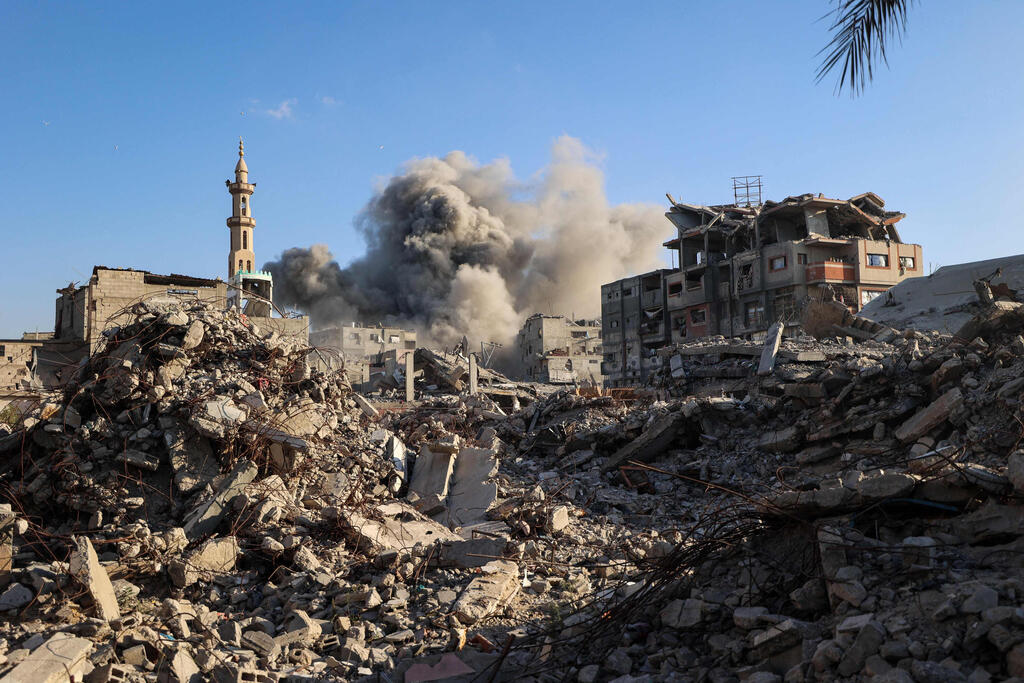
Israeli airstrikes in Al‑Bureij
(Photo: Eyad BABA / AFP)
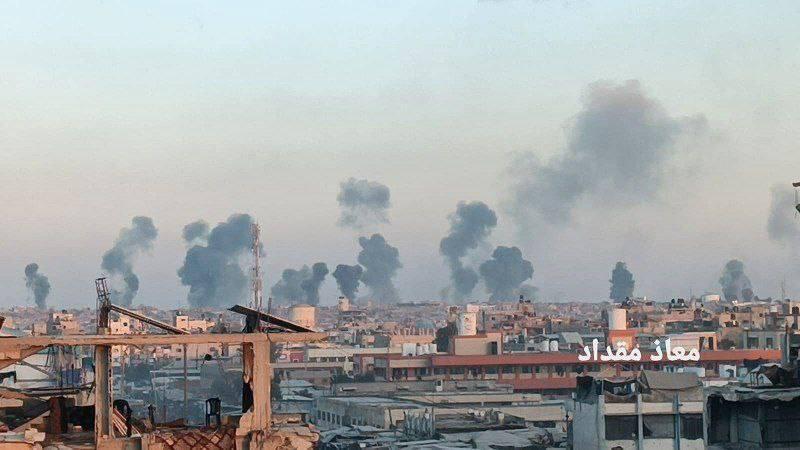
Israeli airstrikes in Khan Younis

Israeli airstrikes in Khan Younis
(Photo: Barel Efraim)
On the political side, Prime Minister Benjamin Netanyahu convened a security briefing and instructed ministers and military chiefs to act “with strength” in response to what his office described as a Hamas breach of the ceasefire. Defense Minister Israel Katz echoed the tone, promising a forceful “message” without signaling a return to full‑scale war.
A senior security official clarified that the current operations are framed as “punishment” for the violation and do not represent an intent to collapse the truce. “There is a cause and an effect. The ceasefire does not need rescuing,” he said.
Separately, Israel announced it is halting humanitarian aid access to Gaza until further notice — a move directly linked to the escalation and seeking to pressure Hamas over hostage issues.
The events mark the most serious test yet of the October truce, which halted two years of war and had largely prevented ground maneuvers in the central camps until now.