


Mossad armed Kurdish militias with weapons seized from Hamas and Hezbollah as part of a broader plan aimed at toppling the Iranian regime, according to a report on Thursday.
The weapons had been captured during the war from Hamas in the Gaza Strip and Hezbollah in Lebanon. The U.S. Central Intelligence Agency was also involved in the plan to arm Kurdish militias, but it was ultimately canceled by U.S. President Donald Trump following pressure from Turkish President Recep Tayyip Erdogan.
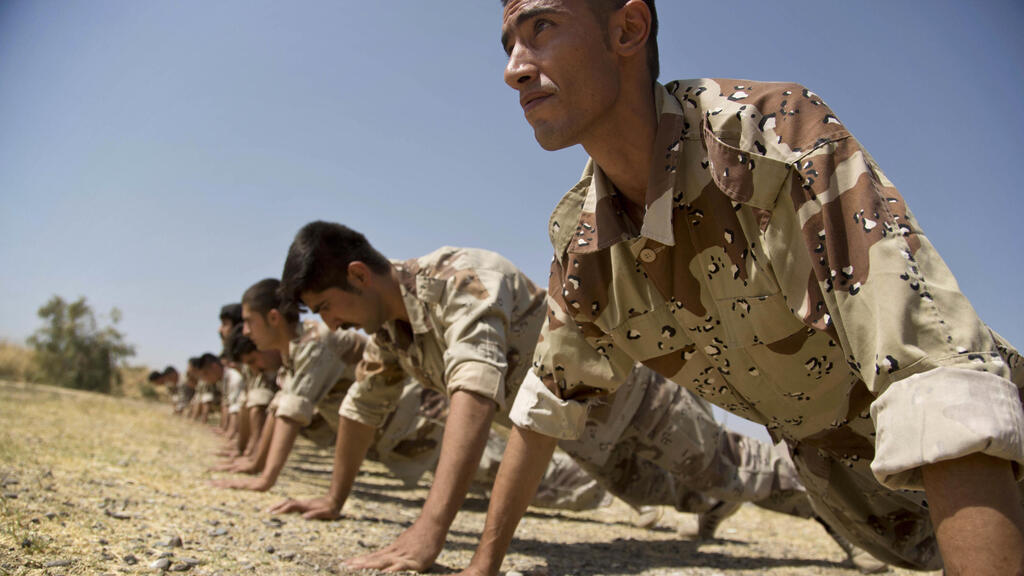
Kurdish fighters in northern Iraq
(Photo: AP Photo/Maya Alleruzzo)
At the end of March, the Turkish newspaper Daily Sabah, which is affiliated with Turkey’s government, reported that Ankara had succeeded in thwarting an alleged Israeli plan to recruit Kurdish forces as a ground force in the war against Iran.
According to the Turkish report, as well as other reports, Israel, in cooperation with the United States, sought to use Kurdish organizations in Iraq and inside Iran as a proxy force in a ground operation following the opening strike of Operation Roaring Lion in late February. Israel also struck military targets near the Iran-Iraq border to enable the movement of Kurdish fighters, according to the report.
Daily Sabah reported that about 500 operatives left Iraq for Iran in order to join the fighting, but the plan was blocked following Turkish intervention, which included high-level contacts with the leadership of the Kurdish region in Iraq.
According to the report, Ankara warned Kurdish leaders, particularly the Barzani and Talabani families, not to cooperate with the move, and made clear that it would not support the Kurds if they took part in fighting against Iran. The leaders of the two main Kurdish parties in Iraq are Masoud Barzani and Bafel Talabani.
Turkey also reportedly sent deterrent messages to the PKK, the Kurdistan Workers’ Party, warning that it would take action if the group joined the effort. The report also mentioned imprisoned PKK leader Abdullah Ocalan, who was said to have called on Kurdish forces not to respond to Israeli initiatives.
According to the Turkish report, Erdogan raised the issue in a conversation with Trump and voiced his opposition to the use of Kurdish forces in the war. Turkish government officials warned that such a move could ignite a broader conflict among peoples in the region.
Turkey’s intelligence chief, Ibrahim Kalin, also warned at a conference in Istanbul of a potential “regional fireball,” saying the consequences of the war could lead to a prolonged confrontation between Turks, Kurds, Arabs and Persians.