



Israel's right-wing government approved the resumption of humanitarian aid to Gaza on Sunday night, nearly two months after halting it at the end of the hostage deal. As reported by Ynet over six weeks ago, Israel had been preparing to reinstate aid delivery “within weeks” under a new mechanism involving an American foundation meant to prevent Hamas from seizing the supplies.
However, Prime Minister Benjamin Netanyahu’s decision does not yet implement the new system, which is still being finalized. In the meantime, Ynet has obtained and published the first images of armed and vest-clad personnel from the American company that’s expected to distribute the aid in Gaza through the Gaza Humanitarian Foundation (GHF), an initiative backed by U.S. special Middle East envoy Steve Witkoff.
This decision comes as fighting intensifies and while 58 hostages are still believed to be held by terrorist groups in Gaza.
Old method for now, limited in scope
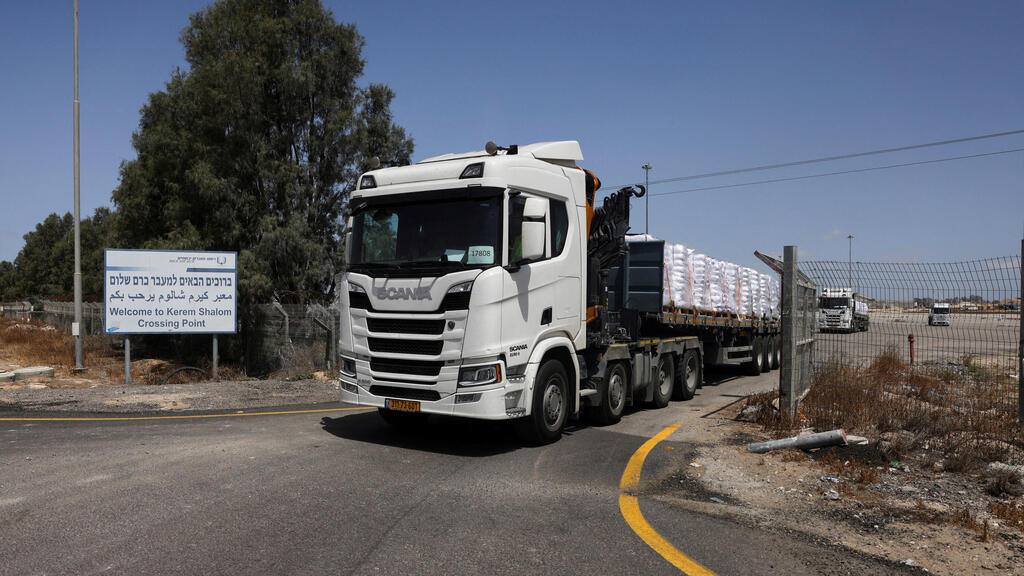
Despite Finance Minister Bezalel Smotrich’s assertion that “not a single grain” will reach Hamas, all aid entering Gaza in the coming days will follow the existing method: through border crossing at Kerem Shalom, distributed by the UN and aid organizations. This route has previously allowed Hamas to seize, sell and redistribute supplies to its members, though the UN claims there’s no conclusive proof.
According to the government, this old distribution model will be tightly restricted and used only until May 24. Starting then, the new American-led system is expected to take over. Smotrich described the interim aid as “the bare minimum—food, medicine.” For example, today’s shipment reportedly includes nine trucks carrying medicine, flour and baby formula.
Officials say this limited delivery will enable Israel to continue “Operation Gideon’s Chariots,” its campaign to establish full control over Gaza. During the previous ceasefire, roughly 600 trucks entered Gaza daily — far more than the current allowance.

American company in charge of aid distribution in Gaza
Emergency phase: temporary partnerships
During the transitional “bridging period” before the GHF becomes operational, the Coordinator of Government Activities in the Territories (COGAT) will work with non-Hamas-affiliated companies, primarily from the UAE and Jordan. However, there’s no guarantee Hamas won’t intercept supplies.
Foreign Minister Gideon Sa’ar, who met with a delegation from the pro-Israel group StandWithUs, said that current aid includes baby food, medical equipment, flour for bakeries and other basic items meant for community kitchens operated by international groups in Gaza. He emphasized that this is a temporary measure until the new aid model begins, which is aimed at helping civilians — not Hamas.
How the new system will work
The new humanitarian mechanism, led by the Gaza Humanitarian Foundation (GHF), will see IDF-secured distribution points established across Gaza, allowing civilians to receive aid directly — without Hamas involvement. Israel hopes this will cut off Hamas from a major source of power and revenue that has sustained it since October 7.
Aid will be distributed by trained personnel hired by the American foundation—former U.S. special forces veterans with global combat experience—without direct IDF participation. These operatives are already in Israel.
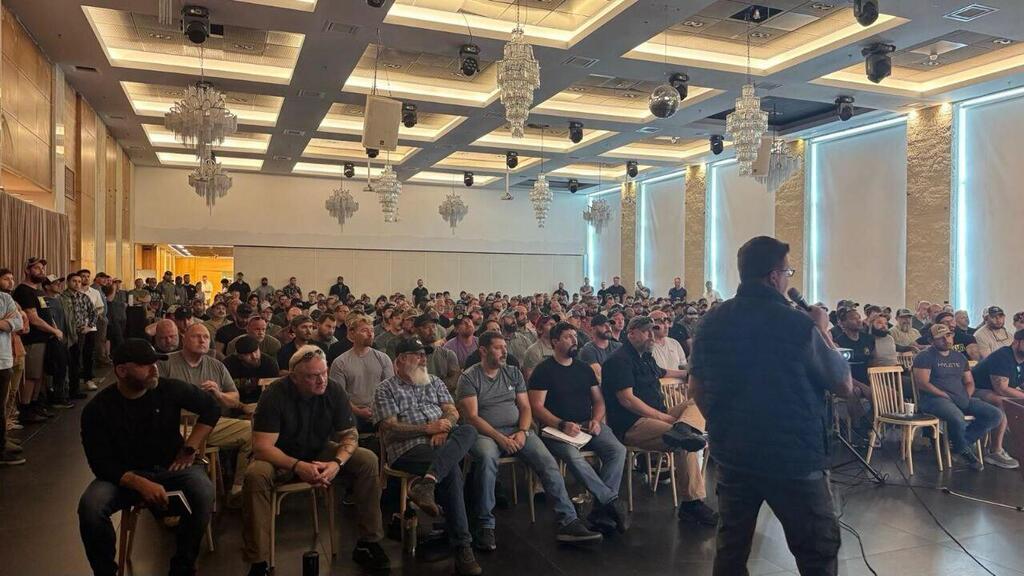
American company in charge of aid distribution in Gaza
Each aid package will provide food for one week and the exact locations of the distribution centers will be disclosed later to avoid interference. As Israel’s military operation progresses, more centers are expected to open.
Get the Ynetnews app on your smartphone: Google Play: https://bit.ly/4eJ37pE | Apple App Store: https://bit.ly/3ZL7iNv
Strategic objectives
Israel’s broader goal is to sever Gaza’s civilian population from Hamas, both physically—by moving them out of combat zones—and practically, by ensuring Hamas cannot control food supplies. By reducing the population’s dependency on the terror group, Israel aims to weaken its grip and push civilians toward designated humanitarian zones in the south.
Officials say the resumed aid will also give Israel international diplomatic room to continue the war effort, particularly “Operation Gideon’s Chariots.” With food warehouses in Gaza nearly empty, pressure on Israel to avert famine is growing—especially from the U.S. and European allies.
Mounting international pressure
U.S. President Donald Trump has repeatedly voiced concern over the humanitarian crisis in Gaza. “A lot of people are starving in Gaza. Bad things are happening,” he said Friday during a visit to the UAE.
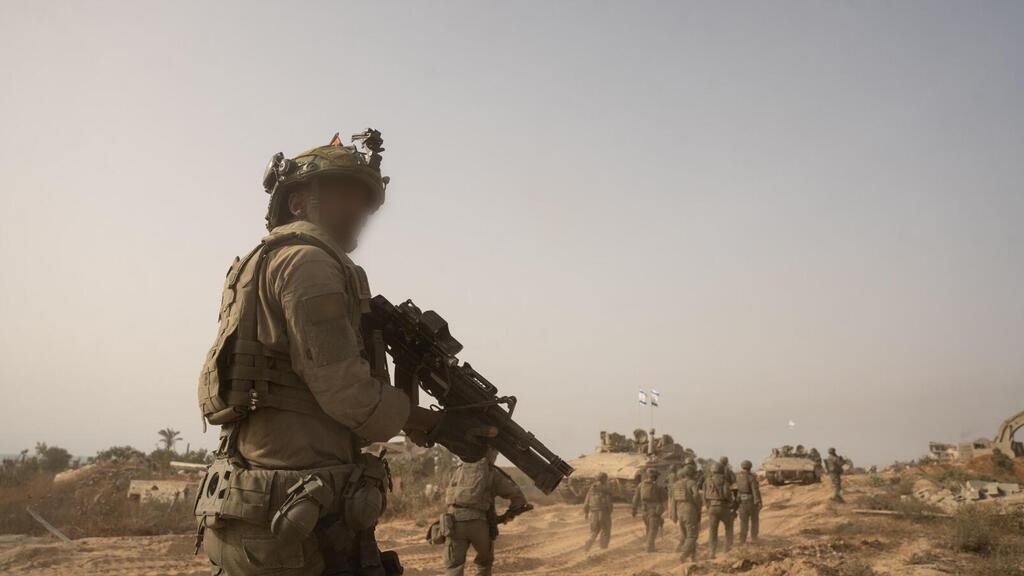
IDF forces in Gaza
(Photo: IDF Spokesperson's Unit)
“We’re watching the situation and we’re going to deal with it,” he added. Trump previously revealed that he urged Netanyahu to increase the flow of food and medicine, telling him, “We need to be good to Gaza. People there are suffering.”
Last week, U.S. Secretary of State Marco Rubio also spoke with Netanyahu and expressed America’s “deep concern” over the humanitarian conditions. “The United States is not indifferent to the suffering in Gaza,” he said. For months, Western allies have been calling on Israel to allow more aid into the enclave.
In March, just days after Israel halted aid shipments, the foreign ministers of the UK, France and Germany urged Israel to “honor its international obligations” and ensure that humanitarian assistance reached Gazans “quickly, fully, safely and without hindrance.”
During Sunday’s Cabinet meeting, Netanyahu confirmed that he’s under “intense pressure” to allow aid into Gaza, including from senior members of the Republican Party, pro-Israel figures in the U.S. and President Trump himself.
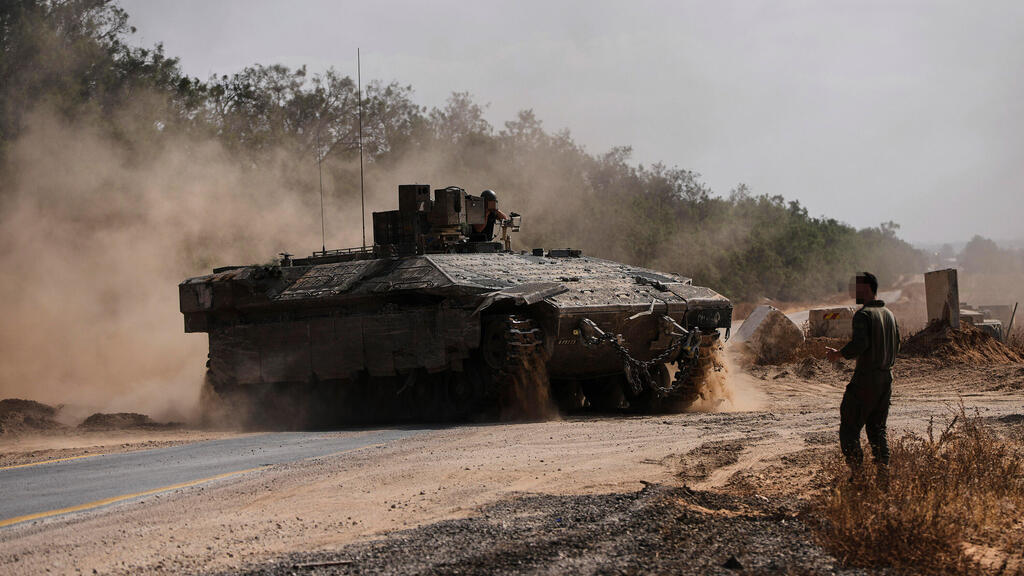
(Photo: AP Photo/Ohad Zwigenberg)
He noted that even friendly nations such as Hungary, the Czech Republic and Germany have asked Israel to make a goodwill gesture they could use to defend its actions.
Sa’ar detailed the scope of this pressure, which also comes from the European Union and highlighted the diplomatic stakes of the aid decision. Though he didn’t explicitly mention sanctions, he echoed Netanyahu’s message: “We need to offer something in return for all this pressure.” He added that allowing aid into Gaza is “important in countering anti-Israel initiatives.”
Is Gaza truly starving?
In the Strip, where war and blockade continue to intensify, the humanitarian crisis has turned into a catastrophe threatening the lives of millions of Gazans. Since the closure of the border crossings in early March and the halt in humanitarian aid shipments, food has become scarce and prices have skyrocketed, forcing residents to seek "primitive" alternatives to meet their basic needs.
Wild plants such as mallow, oxalis, chickpeas and even mulberry leaves have returned to the tables of many Gazan families, as they’ve become substitutes for vegetables and other staple foods.

U.S. President Donald Trump
(Photo: Win McNamee/Getty Images)
On May 12, the UN and its partners warned in an official report that the entire population of Gaza—around two million people—is “facing the risk of famine due to the continued closure of crossings and the escalation in military operations.”
According to the Integrated Food Security Phase Classification (IPC) report, some 469,500 people are experiencing “catastrophic” hunger, while more than 71,000 children and 17,000 women are in urgent need of treatment for severe malnutrition.
According to estimates, food supplies stored in Gaza during the brief lull in fighting are running out, and Prime Minister Netanyahu said in a video released today that “we’re approaching the red line.” The IDF, which is operating a monitoring system to track hunger levels in the strip, also said that “we’re nearing the red line.”
Why didn’t Netanyahu hold a Cabinet vote?
Because he didn’t have a majority. National security minister Itamar Ben-Gvir demanded a vote last night to approve the entry of aid but the prime minister refused.
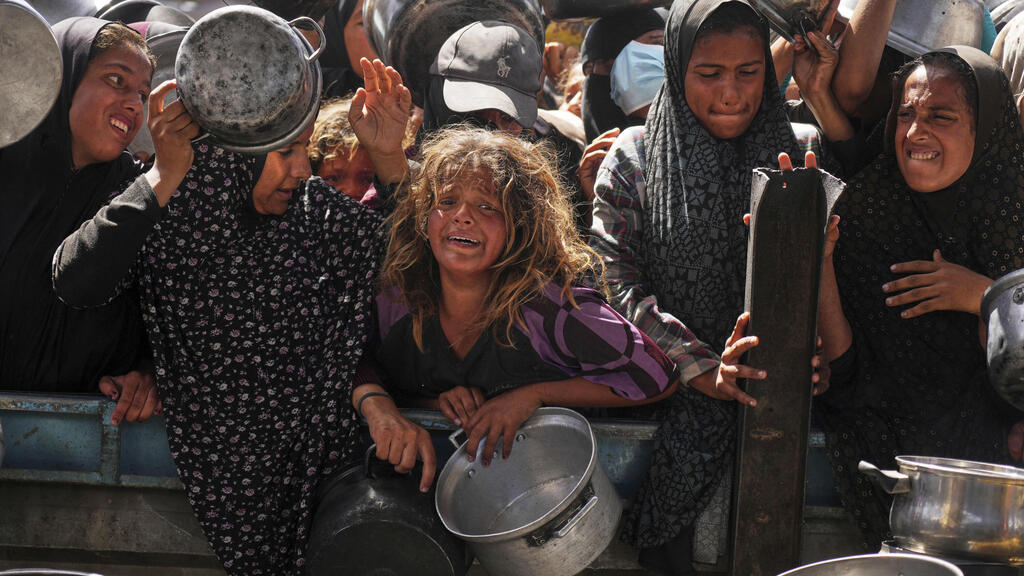
Khan Younis, Gaza
(Photo: AP Photo/Abdel Kareem Hana)
Most ministers were opposed to the proposal but Netanyahu was backed by National Security Adviser Tzachi Hanegbi and by Attorney General Gali Baharav-Miara, who said a vote wasn’t necessary.
Is this good for the hostages?
Former hostage Liri Albag, who was kidnapped on October 7 from the Nahal Oz base where she served as a lookout, previously said: “You could feel it when no humanitarian aid came in. Suddenly we were down to one pita, some days just a quarter pita. There were days we drank salty water because there was no fresh water.”
A humanitarian worker who was in the strip claimed last December that “if Hamas members don’t have flour, the hostages don’t have food.” According to him, if the terrorists holding the hostages face a shortage of food, they’ll prioritize feeding their own families.
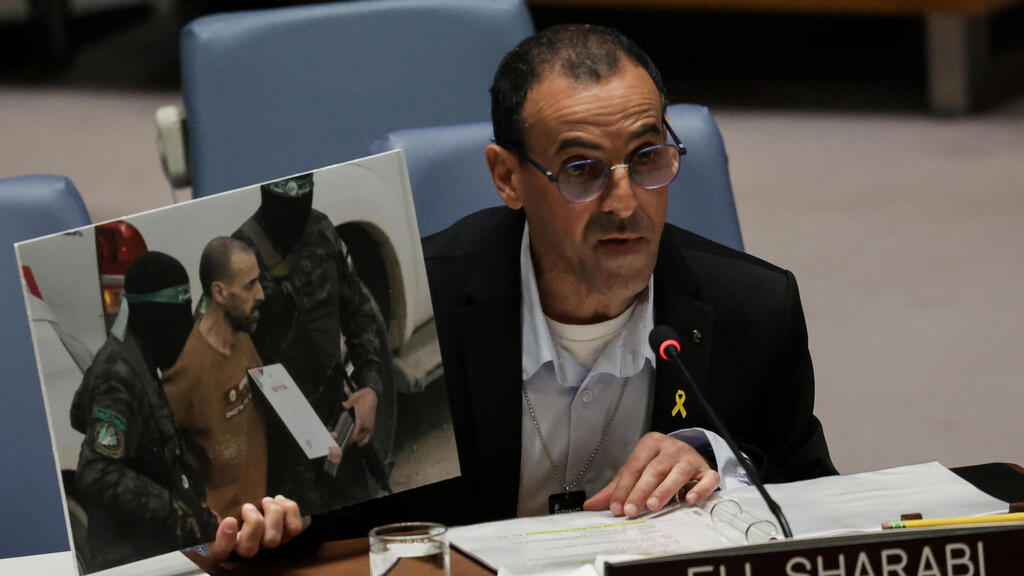
Eli Sharabi at the UN General Council
(Photo: REUTERS/Mike Segar)
On the other hand, former hostage Eli Sharabi from Kibbutz Be'eri — whose wife and two daughters were murdered on the morning of the Hamas attack — told the UN Security Council: “I know you often discuss the humanitarian situation in Gaza, but let me tell you, as an eyewitness — I saw what happened to that aid. Hamas steals it.”
He added, “The terrorists would eat multiple meals a day from the UN aid that was placed right in front of us and we never received any of it. Hamas eats like kings while the hostages are starving to death.”