

Prime Minister Benjamin Netanyahu convened a security briefing Thursday as Israel prepares for high‑level diplomatic engagements in the United States and the broader Middle East, with attention focused on the future of the ceasefire in Gaza.
The session came as U.S. envoy Steve Witkoff is set to meet Friday in Miami with representatives from Turkey, Qatar and Egypt to discuss next steps in the Gaza ceasefire. Israeli officials will not be present at that meeting, according to U.S. and Turkish statements. Turkey’s foreign ministry confirmed Foreign Minister Hakan Fidan will attend, and Qatar’s prime minister, Mohammed al‑Thani, said he will join the talks.

Officials have described Israel as being in a 'period of waiting' as ceasefire arrangements across several fronts remain fragile.
Netanyahu and U.S. President Donald Trump have both touted the current ceasefire between Israel and Hamas, with Trump saying it represents a signature achievement and warning it should not be jeopardized. Trump also said Thursday that a meeting with Netanyahu “has not been set,” despite Israeli officials saying a meeting in Washington is scheduled for Dec. 29, followed by discussions with Trump’s deputy JT Vance, Secretary of State Marco Rubio and Defense Secretary Pete Hegseth. An Israeli official said the date is fixed but the precise time still needs to be confirmed.
The looming talks are expected to focus heavily on Gaza. Washington is pressing Israel to advance to a second phase of its ceasefire plan, a step supported by mediators including Egypt and Qatar. Palestinian and U.S. officials have suggested the second phase could begin as early as January, possibly within the first two weeks.
But Israel has resisted moving forward without concrete guarantees from Hamas, including the release of captive Israeli Ran Gvili, who remains in the group’s custody. Hamas says it is searching for Gozali, but Israeli officials say they doubt the group’s commitment to securing his return. The second phase would also require Israeli forces to withdraw from areas near the “Yellow Line,” which Israel says it will not do unless Hamas disarms.
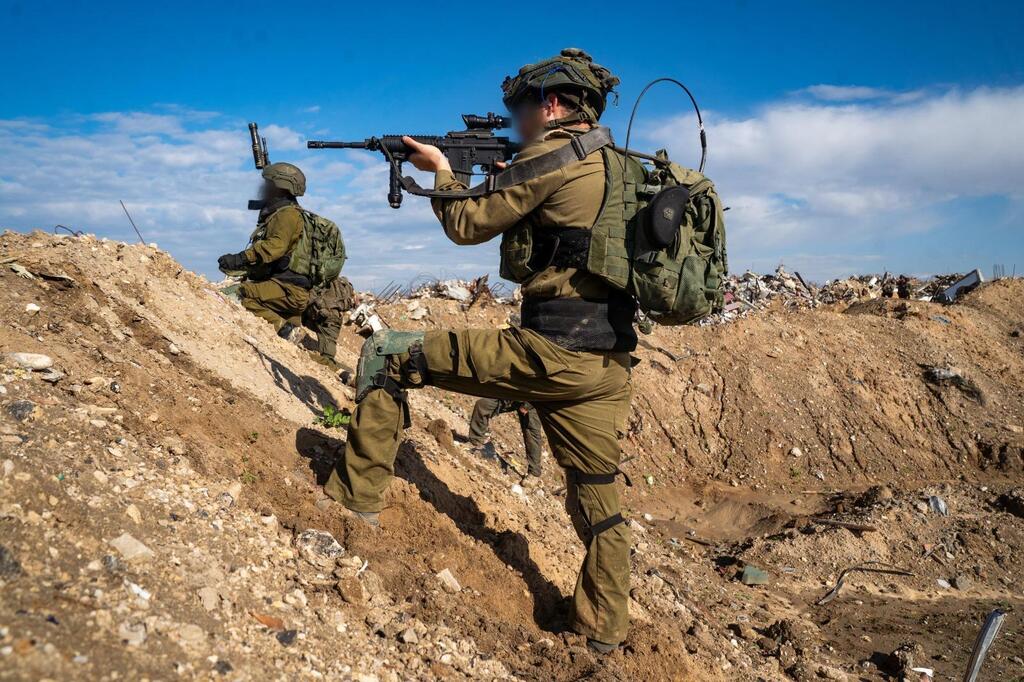
(Photo: IDF)
Meanwhile, U.S. planners are preparing a model town in the Rafah area for Gazans cleared of militant ties, part of broader stabilization efforts. Washington is also spearheading the establishment of an international security force for Gaza, known as the International Stabilization Force (ISF). A meeting of about 45 countries convened by U.S. Central Command in Doha this week reviewed contributions to the planned force, though questions remain over its rules of engagement, financing and deployment schedule.
Turkey was not invited to the Doha gathering due to Israeli objections, though that does not preclude Ankara from contributing troops to the stabilization effort, U.S. officials said.
Beyond Gaza, assessments in Israel warn of growing instability along the northern border. After more than a year of quiet with Hezbollah in Lebanon, Israeli officials say a renewed conflict there may be unavoidable unless the Lebanese government and army take effective steps to dismantle the group’s arsenal. U.S. officials expressed cautious optimism that the Lebanese army is improving, though Israeli sources maintain the likelihood of renewed fighting remains high.
In Syria, U.S.‑mediated talks between Israel and Damascus continue, but a security pact remains elusive. Syrian demands for an Israeli withdrawal remain a sticking point, and Israel has little trust in President Bashar al‑Assad’s regime. U.S. proposals have reportedly included offering natural gas to Syria as part of a broader normalization effort, though Jerusalem has not rejected the idea.