


Since the war began 1,000 days ago, the lives of many families have been turned upside down, with one parent repeatedly called up for reserve duty and absent from home while the other is left alone with the children and expected to keep daily life running.
Capt. R (31) from Jerusalem is a communications officer in Brigade 810 and works as a senior advisor to the deputy mayor. His wife, Orpaz (29), is a marketing manager in the hospitality sector. They have two children, Gefen, 3, and Basan, 2, and another baby is due in a month.
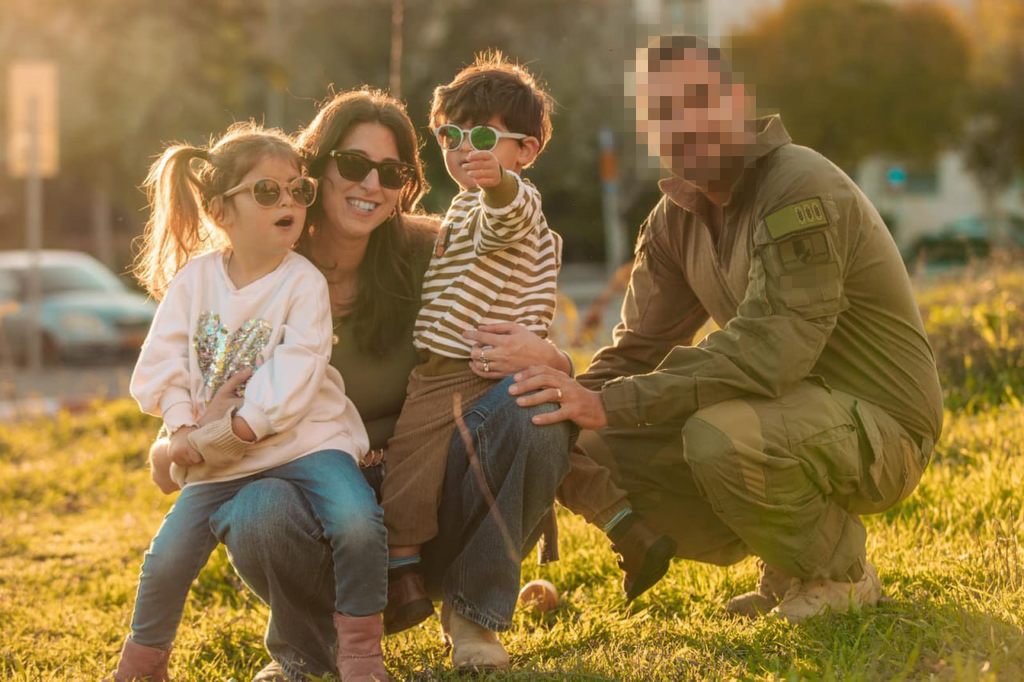
Since October 7, R has reported for more than 600 days of reserve duty, including five rotations in Syria and Lebanon and an officers’ course. He only finished his most recent rotation last week and is set to begin a company commander course on Sunday that will last a month.
Each deployment means a painful separation from his children. “With my eldest it’s hard, she already understands and asks ‘why aren’t you staying with us?’ I tell her I’m needed there and she says she needs me at home too. It’s always a struggle,” he says. “The younger one, on the other hand, is used to it. He was born two weeks before the war and my whole life since then has been in uniform, coming and going. He doesn’t know anything else.”
Ahead of the birth of their third child, R hopes to be home more but says, “It’s a hope I’ve had before too and I don’t build expectations. I could be called up again for war and I might not. Even after Operation Northern Arrows things seemed calm and less than a year later there was another escalation. The only certainty is uncertainty.”
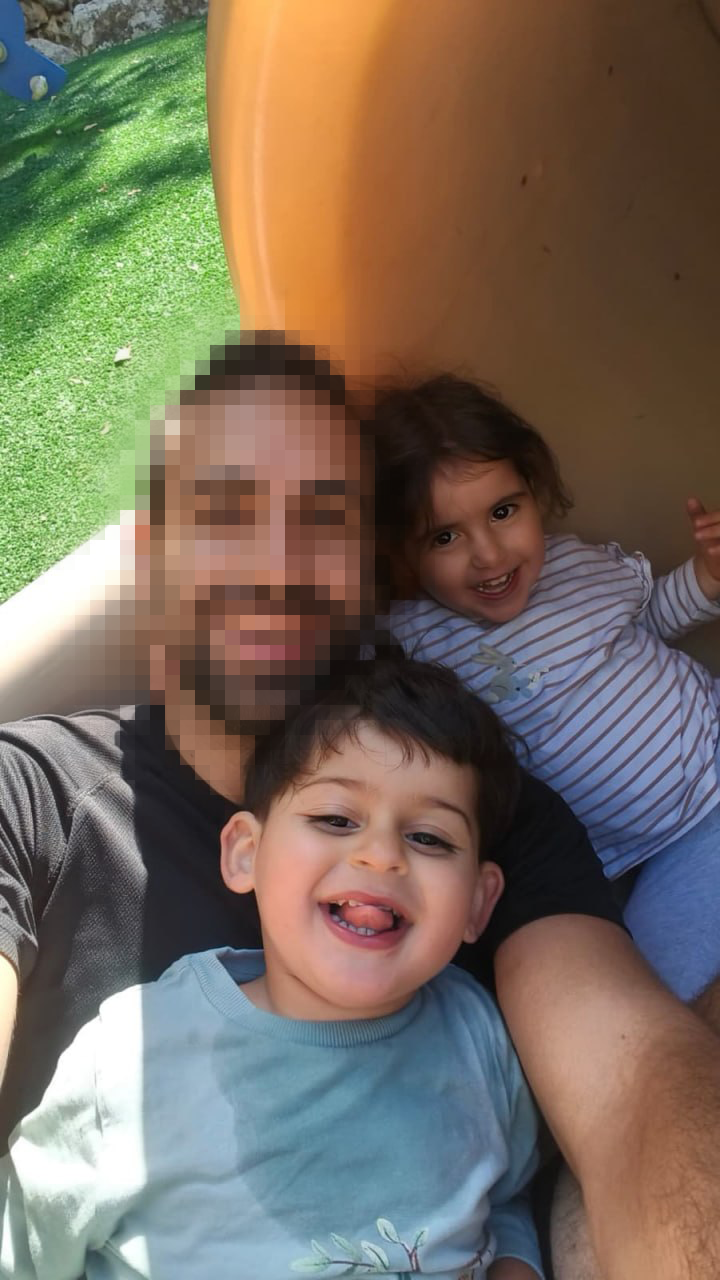
Capt. R with his children
(Photo: May Gal)
Alongside the strain of being away from home, Capt. R also expresses frustration over what he sees as unequal burden sharing. “The large Haredi communities and their political brokers haven’t made the switch,” he says. “It’s disappointing because I know them personally. When I’m not in reserve duty I work with and alongside Haredi parties, with people who lead protests and road blockades. It’s frustrating they don’t understand the magnitude of the moment. I thought it would change but they still don’t grasp the situation and are not willing to take part in the war effort. I hope change will come later.”
At home, Orpaz is left holding everything together. “I sent him the positive pregnancy test on WhatsApp because he was up north,” she says. “I try to schedule ultrasounds for times he might be home and if not we call each other on FaceTime. The children have gone through stages in how they cope. When they were younger it went over their heads, then they got angry, they cried, and when he was home and put on his shoes just to take out the trash they would shout ‘don’t go to the reserves.’ Now we’re at a stage where they negotiate how many days he is allowed to leave.”
She also speaks about the inequality she feels. “We are being torn apart and the world carries on as usual. It breaks my heart,” she says. “I live in a constant marathon: rushing the kids out in the morning to get to work on time so I can leave in time for pickups, then a second shift at home as if there was no workday, reaching night and trying to manage a video call with dad because it matters to them. Some weeks he only speaks to them for a few minutes. It’s exhausting to know there is no end to the fighting and to feel like we are among the few in the country still carrying the stretcher.”