

Regardles of the outcome of the talks between the United States and Iran in Geneva, Israel is preparing for the possibility that negotiations will collapse and that the United States will strike Iran. The preparations come amid U.S. demands that a senior Iranian official told Al-Jazeera were “completely rejected in part” by Tehran. Despite that response, the talks resumed this evening.
Israeli officials assess that the Houthis and Hezbollah will not remain on the sidelines in the event of a confrontation. The IDF struck eight Hezbollah Radwan Force camps in Lebanon on Thursday.
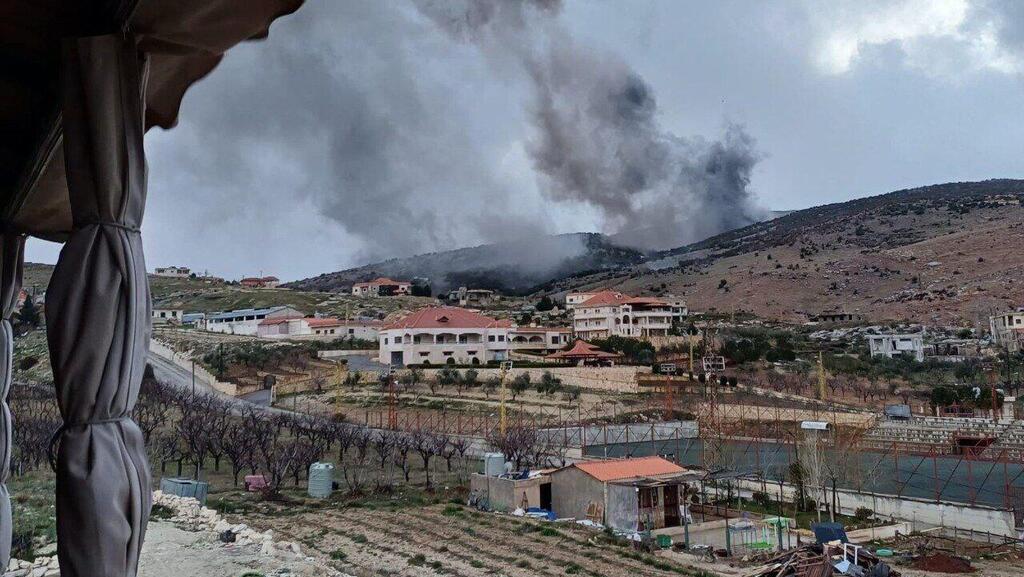
The strikes in the Baalbek area


Israel’s working assumption is that any U.S. strike would prompt an Iranian attack on Israel, something Iranian officials have already publicly signaled. According to Israeli assessments, from Tehran’s perspective a U.S. strike would not be seen as serving American interests alone but also Israel’s. Therefore, if the United States attacks, Israel is likely to face Iranian strikes.
Israeli officials believe launching missiles at Israel would be easier for Iran than attacking U.S. targets. Beyond that, an attack on Israel is seen by Tehran as ideological. Iranian leaders view Israel as the source of evil and believe it must be targeted. In any case, Israel says it is fully prepared for a scenario in which a U.S. strike on Iran would be met by Iranian retaliation against Israel.
A possible sign of looming escalation also emerged from Iran, where it was reported that some universities will move to remote learning through the end of the academic year. The official explanation was that the start of the semester coincides with the Muslim holy month of Ramadan.
Against the backdrop of a potential military confrontation, questions have arisen in Israel over how much Iran has recovered since last summer’s Operation Rising Lion, a 12-day war. Israeli officials say Iran’s motivation to rebuild is high and that rehabilitation efforts are underway through various methods. President Donald Trump recently said Iran has begun restoring its nuclear program, apparently referring to reports that the Islamic Republic is constructing a new facility.
Israel is also closely monitoring Iran’s efforts to restore its missile-launch capabilities. Officials say they did not expect otherwise, believing that while last summer’s achievements were significant, they would not hold for long given Iran’s ideological zeal.
As for Iran’s air defense systems, Israeli officials say progress has been made in restoring both offensive and defensive arrays. Iran is cooperating with China, though Israeli officials say media reports on the extent of that cooperation are exaggerated. Air defense systems are being rebuilt and weapons shipments to Iran are continuing, developments Israel is tracking with concern. Still, officials stress that the rehabilitation is incomplete and that Iranian messaging does not match the reality on the ground.
Israel assesses that the Geneva talks are unlikely to produce an agreement. U.S. conditions are described as highly specific and at the upper threshold of demands. Because they are not vague, Israeli officials believe Iran’s ability to meet them, both organizationally and ideologically, is low and nearly impossible.
“Their ability to comply with an agreement that weakens them and prevents enrichment is inconceivable,” one official familiar with the details said. “They wake up in the morning thinking about how to enrich uranium. It is so deeply ingrained that it is very hard to believe they can meet the very high bar being set. But surprises are possible. Just last week everything was ready for a strike, and at the last moment the Americans agreed to negotiations. We may be surprised again.”
How will the proxies respond?
Israel is preparing for the possibility that Iran’s regional proxies will join a war. Although Hezbollah refrained from intervening during last summer’s 12-day conflict, Israeli officials say the Shiite militant group has since been rebuilding and is unlikely to stay out again.
This time, Israeli officials say, Hezbollah has every reason to enter the fight as part of its stated vision, particularly after staying out of both the Oct. 7 massacre and the 12-day war. Officials in Jerusalem believe the likelihood that Hezbollah would join a future conflict is very high.
On Thursday, the Israeli military said it struck eight Radwan Force military camps near Baalbek in eastern Lebanon. The military said the sites stored large quantities of weapons, including firearms and rockets, and were used for training and planning attacks against Israeli forces and civilians. Fighters conducted, among other things, live-fire drills there, the military said.
Officials familiar with Hezbollah’s current condition described it as still “collecting the pieces,” not the idealized force Israel once feared. “But it is a terrorist organization whose vision remains intact,” one official said. “It measures itself, among other things, by when it assists the axis. It has an opportunity to help and will not give it up easily. We could all be surprised and Hezbollah may choose to wait and build strength rather than expend weapons and capabilities. But even the concerning possibility, even if uncertain, that Hezbollah decides to join would turn this into a multi-front axis war. That deeply concerns Israel, and it is preparing accordingly.”
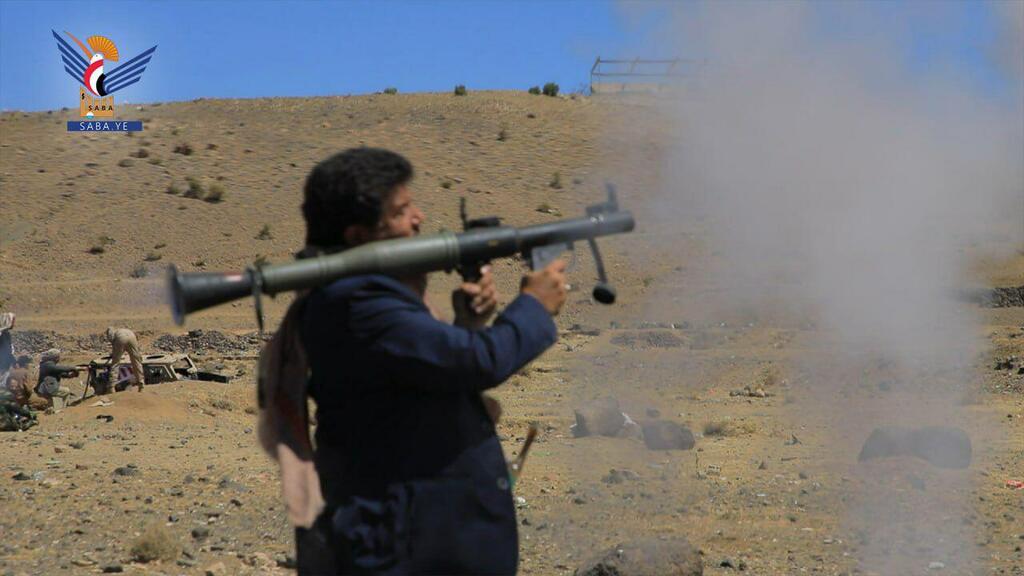
The Houthis are training and are not expected to disappear from the arena
Another arena of concern is the Houthi movement in Yemen. During last summer’s war, the Houthis fired three to four rockets. While not a high number, Israeli officials say the launches demonstrated a willingness to fight. Although the Houthis are no longer at full operational capacity, their perception of reality differs, and Israel believes they will remain a long-term challenge.
As for all the proxies, Israeli officials say they must assume they will join the conflict. The outcome remains unclear, but preparations are underway, from calculating strike plans and munitions to identifying targets.
Netanyahu draws red lines
Another question is whether Israel would use a U.S. strike, if it occurs, to “clear the table” across all fronts. Israeli officials say that possibility exists and must be taken into account. If attacked, Israel could seize the opportunity to act decisively against Iran, Hezbollah and the Houthis.
Israel has not formally addressed a Politico report that Trump’s advisers, for domestic political reasons, urged him to ask Israel to initiate a strike on Iran. The report cannot be ruled out, and it is clear that some in the president’s orbit would prefer to avoid direct U.S. entanglement and might be more comfortable with Israel taking the lead.
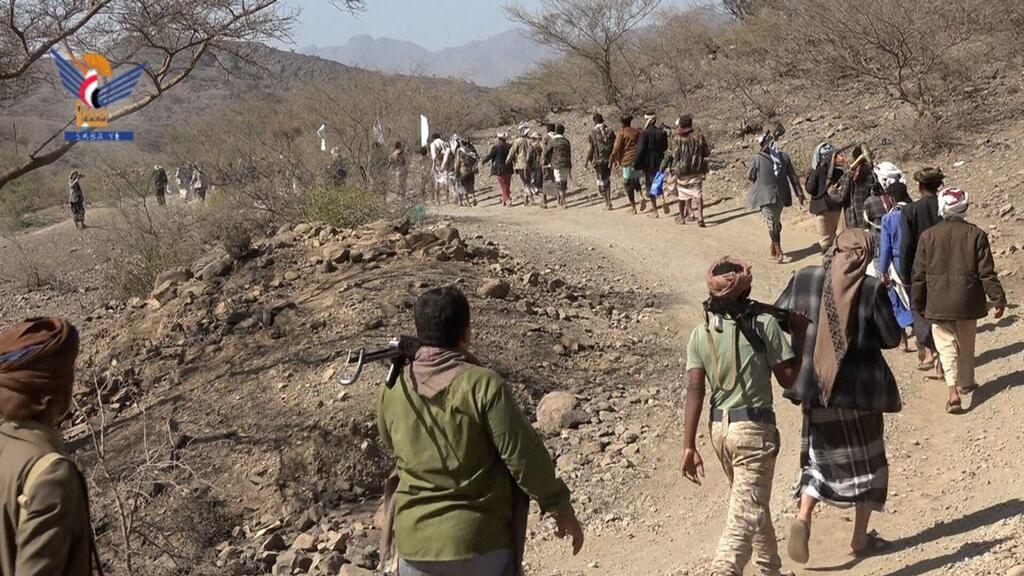
A Houthi drill in Yemen
But such a scenario would place Israel in a difficult position. Prime Minister Benjamin Netanyahu has warned Iran that if it attacks, Israel’s response will be far harsher than Tehran can imagine. In effect, he has drawn the boundaries: Israel will not initiate a war but will respond forcefully.
If the Politico report is accurate and Israel were to initiate hostilities, Iran would claim legitimacy to retaliate. Some in Israel may see an interest in launching a preemptive war to decisively strike Iran’s ballistic missile program, especially as Washington appears focused primarily on the nuclear issue rather than the missile threat that most concerns Israel.
Still, based on the current U.S. military deployment, Israeli officials say it does not appear that Washington expects Israel to go first. It is more plausible, they say, that if there is a U.S. strike there would be a division of labor and joint action as force multipliers. The recent arrival of 12 U.S. F-22 stealth fighter jets at an air base in southern Israel, they add, is not the behavior of a superpower expecting Israel to initiate the conflict.
First published: 19:01, 02.26.26