


Israeli officials said Sunday they were surprised by the Trump administration’s decision to hold another round of indirect talks with Iran this week, describing the planned meeting in Geneva as a possible “last real opportunity” for diplomacy after two previous rounds yielded no results.
The third round of talks is scheduled for Thursday. In Jerusalem, officials said they understood that President Donald Trump agreed to the additional meeting at the urging of his envoy, Steve Witkoff, who proposed giving diplomacy another chance. Witkoff himself acknowledged overnight that Iran is not prepared to “capitulate,” despite what he described as the significant U.S. military buildup in the Middle East.
Witkoff: Trump 'curious' why Iran has not 'capitulated'
(Video: Fox News)


According to Israeli officials, Witkoff’s approach has raised concerns in Jerusalem, where some view it as projecting weakness and compromise that they believe will not prompt Iran to back down. One Israeli diplomat, speaking on condition of anonymity to discuss sensitive deliberations, said there is disappointment in political circles over what they see as Witkoff allowing Iran to buy time.
Israeli officials believe the renewed talks could further delay a U.S. decision on whether to pursue a military strike against Iran, at least until next week. That assessment, however, is tempered by close coordination between Israel and the United States and by the possibility of strategic deception, as Israeli officials say occurred prior to the 12-day war against Iran last year. At that time, talks had been scheduled between Iranian Foreign Minister Abbas Araghchi and Witkoff, but Israel carried out a strike before the planned meeting.
Beyond the talks themselves, Israeli officials expressed concern that the United States appears not to be addressing Iran’s ballistic missile program or its regional proxy groups, nor raising the issue of thousands of Iranian civilians killed during anti-government protests.
Secretary of State Marco Rubio had previously mentioned those topics ahead of the Tehran-Washington talks, as did Trump. But reports Sunday suggested that U.S. negotiators have accepted Iran’s demand not to discuss those issues, which Israeli officials say pose a threat to Israel and U.S. allies in the Middle East no less than Iran’s nuclear program.
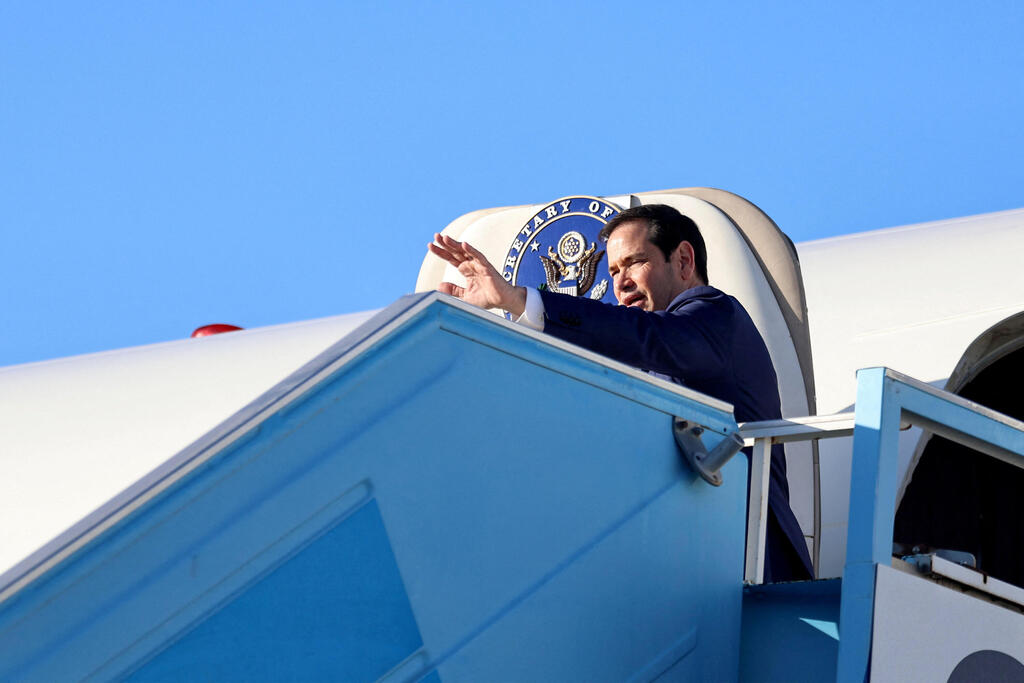
Two days after the planned talks, Rubio is expected to arrive in Israel late Saturday. He is scheduled to meet with Prime Minister Benjamin Netanyahu. No additional public events have been announced.
Netanyahu convened his Security Cabinet on Sunday for what officials described as preparations on multiple fronts for a possible U.S. strike on Iran and its potential repercussions for Israel. Israeli officials say they assume Iran would seek to draw Israel into any confrontation and pressure its proxy groups to attack the country. In that scenario, Israeli officials see what they describe as a rare opportunity to act against multiple threats simultaneously, including Iran, Hezbollah and the Houthis.
Netanyahu also held smaller consultations Sunday focused not only on Iran but on Hezbollah and the Houthis, officials said.
If no breakthrough is achieved in Thursday’s talks, President Trump could move to carry out his threats to strike Iran’s ruling clerical establishment.
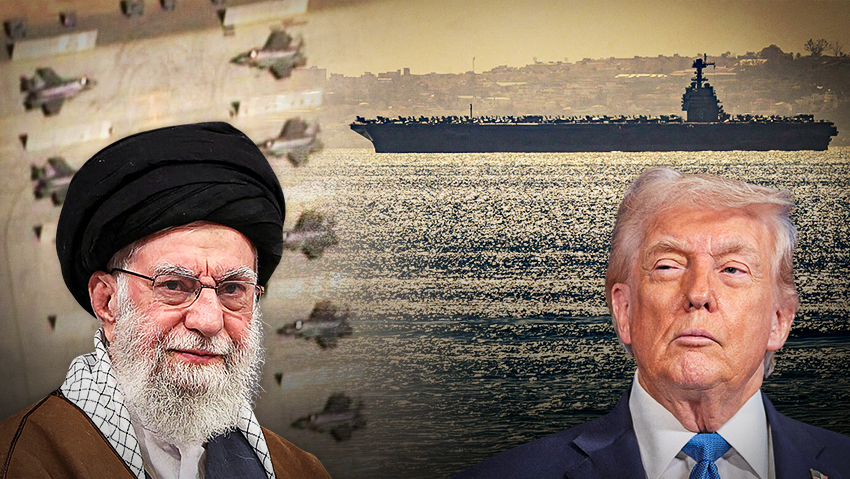
(Photo: dparody/Instagram/via REUTERS, REUTERS/Jonathan Ernst, KHAMENEI.IR/AFP, Airbus)
On Thursday, Trump set what he described as a “10 to 15 day” deadline for reaching a deal. That timeline would ostensibly expire on March 3. However, Trump has not yet decided on a course of action and could order a strike before that date — or choose to wait beyond it.
Trump will also have to decide on the scope of any potential military action. In recent weeks, a range of options has been discussed, from a limited strike lasting several days to a broader campaign of sustained bombardment. U.S. forces appear to be preparing for a more extensive operation at Trump’s direction, according to ynet military analyst Ron Ben-Yishai.
Witkoff’s comments overnight expressing surprise that Iran had not capitulated despite the U.S. military threat — amid what Israeli officials describe as the largest American force concentration in the Middle East since the 2003 invasion of Iraq, including hundreds of aircraft, two aircraft carriers and 12 missile destroyers — drew a sharp response from his Iranian counterpart, Foreign Minister Abbas Araghchi.
“Curious to know why we do not capitulate? Because we are IRANIAN,” Araghchi wrote on X, alongside an image of a map of Iran colored in the national flag.
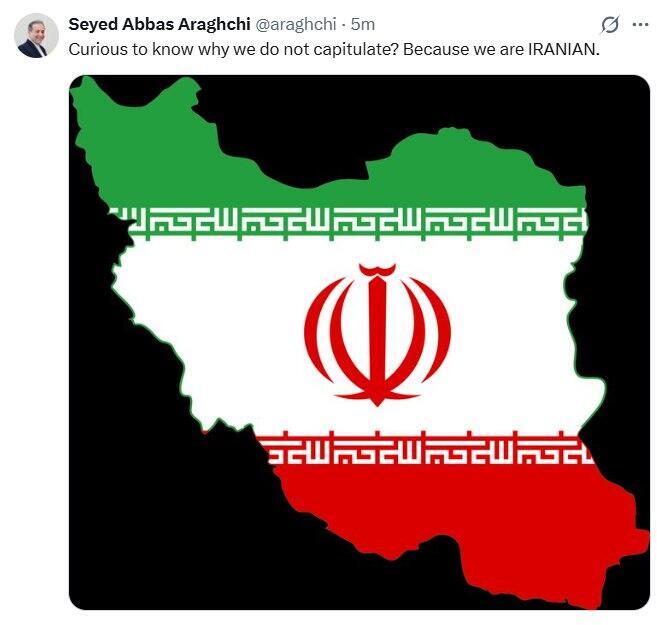
Iranian Foreign Minister Abbas Araghchi teases Trump on X
(Photo: Screenshot/X)
Earlier, Araghchi said he still hoped a deal with the United States could be reached. “A diplomatic solution is still achievable,” he said in an interview with CBS.
Araghchi said prospects remained positive and that Tehran was continuing to work on elements to incorporate into an agreement with Washington. His comments came amid a report by the news site Axios that the United States expects an Iranian counterproposal within 48 hours.
If the United States seeks a resolution to Iran’s nuclear program, Araghchi said, diplomacy is the only path. “We have proven that in the past, and I believe there is still a good chance. There is no need for military buildup, and it cannot help in this regard. It cannot pressure us,” he added.
A senior Iranian official told Reuters on Sunday that as part of a potential nuclear agreement, Tehran would be prepared to “seriously consider” removing highly enriched uranium from its territory, diluting it or establishing a regional consortium for uranium enrichment. The consortium concept had been raised in talks in early June last year, days before the outbreak of the 12-day war.
Trump has given Iran what he called a “10 to 15 day” ultimatum, and Tehran has pledged to present a draft agreement in negotiations in the coming days. A senior Iranian official said another round of talks is planned for early March — next week — though he acknowledged continued disagreements over the scope and mechanism of sanctions relief in exchange for limits on Iran’s nuclear program.