


A closed-door briefing held by a senior military official in the Northern Command with reserve soldiers operating in the eastern sector of the Lebanon border has shed some light on the army’s assessment of the expected duration of the operation in southern Lebanon. The goal is to take advantage of the collapse of the Iranian regime — if and when it occurs — to eliminate Hezbollah and the terrorist infrastructure it managed to rebuild during the “ceasefire,” and to complete the destruction of its remaining weapons depots and military equipment.
In the discussion, the senior officer told the soldiers that the clock is ticking differently this time. “The expectation is that the war in the north and the efforts to eliminate and strike Hezbollah could last for weeks,” he said, quickly clarifying: “until the holiday of Shavuot," which begins on May 26.
Documentation of the elimination of terrorist cells in southern Lebanon
(Video: IDF Spokesperson's office)


The IDF's plan is to exploit the campaign against the “head of the octopus,” and once it is completed — or once a significant portion of its objectives is achieved — to turn to severing the “arms of the octopus”: the Hezbollah terrorist organization financed and controlled from Tehran.
“Our mission is one — to defend the northern communities and the country’s border,” the military official explained in the closed briefing, ynet and Yedioth Ahronoth learned.
Against the backdrop of statements by senior Israel Defense Forces officials, including Chief of Staff Lt. Gen. Eyal Zamir, about readiness for a prolonged campaign that could last at least beyond the Passover holiday, and ahead of the mobilization of additional forces that have been moving north in recent days, the officer told the reservists: “We will remain here for as long as required. Our mission is ongoing and not limited to any particular timeframe.”
The ambiguity surrounding the expected duration of the fighting is creating chaos and uncertainty on the eve of the Passover Seder, as reservists called up for their fifth and sixth rotations do not know what to expect regarding the continuation of their service and are experiencing mounting fatigue.
Many of the soldiers voiced concern about a “defensive battle” similar to the one during the Swords of Iron war, when for more than a year — until the launch of the operation in Lebanon as part of “Northern Arrows” — troops stood like “sitting ducks at a shooting range” while Hezbollah fired rockets and drones relentlessly and enjoyed a certain advantage over the largely static forces.
The IDF now says the defensive concept is no longer passive but aimed at forward defense, under which Israeli forces are pushing the fighting into “red zones” on enemy territory. The goal is to allow normal life to return as quickly as possible to the border communities that will not be evacuated and to conduct the fighting from southern Lebanon.
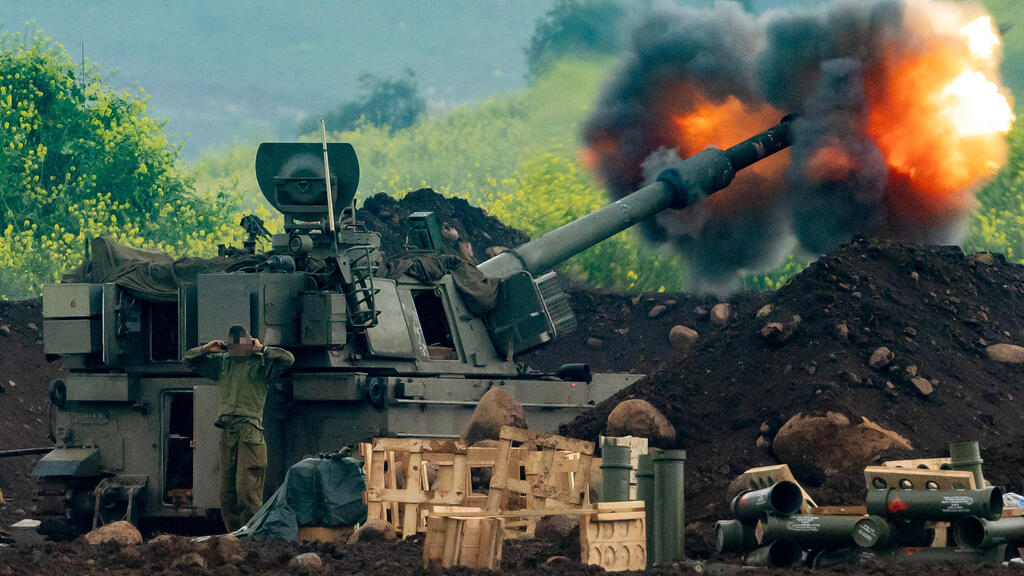
In northern Israel, there is hope that the IDF will quickly move heavy artillery into southern Lebanon — guns whose constant shelling has made life miserable for residents of border communities because of the nonstop noise — as part of both the offensive and the defense of Israeli territory.
On the way to deepening control
As the military seeks to deepen its control, Golani Brigade forces that have completed their deployment in the northern sector are expected to be joined by Nahal and Paratroopers units, with the aim of expanding control in southern Lebanon. Israeli forces are currently operating at a depth of between seven and nine kilometers inside Lebanese territory, and the area of control may expand ahead of a larger ground maneuver.
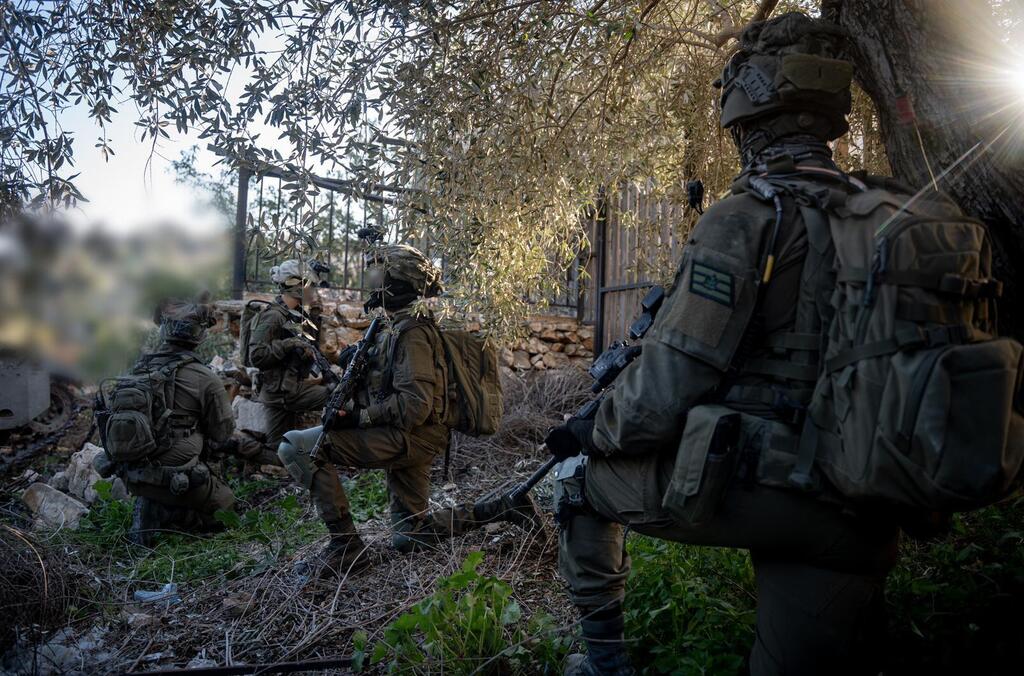
Seventh Brigade forces operate in Lebanon
(Photo: IDF Spokesperson's Unit)
Meanwhile, Hezbollah is also preparing for an expanded operation in southern Lebanon, and the IDF has identified dozens to hundreds of operatives moving south toward the border. The assessment in the military is that the more Iran is harmed, the greater the impact will be on the northern arena.
Following the collapse of the ceasefire agreement and the renewal of fighting by Hezbollah, the presence of the United Nations Interim Force in Lebanon (UNIFIL) — tasked with monitoring the ceasefire under U.N. Security Council Resolution 1701 from the 2006 Second Lebanon War — has become increasingly complicated for Israeli forces.
Earlier this month, three soldiers from the Ghanaian battalion of UNIFIL were wounded after being caught in heavy exchanges of fire between the IDF and Hezbollah. They were apparently hit by Hezbollah fire, due to clear instructions from the IDF General Staff to avoid harming foreign forces.
U.N. Undersecretary-General for Peace Operations Jean-Pierre Lacroix visited one of the wounded soldiers and praised their “courage and dedication.” U.N. Secretary-General António Guterres shared Lacroix’s post on X and noted that “peacekeepers will remain in their positions, and any attack against them violates international law and may constitute a war crime.”
In conversations with an officer in the Lebanon border sector, it emerged that Hezbollah is using U.N. personnel as a “human shield,” launching rockets at IDF forces near UNIFIL positions. In one encounter last week, for example, a Hezbollah cell attacked an IDF unit about a kilometer from the border while hiding near UNIFIL troops who, in effect, were providing cover — “intentionally or unintentionally — for Hezbollah.”
The cell was struck in return and hit, but the IDF says it is identifying a pattern. Separately, UNIFIL’s mandate is set to expire at the end of 2026.
Pushing back instead of enforcement
Hezbollah’s violation of the ceasefire agreement with Israel, which brought the campaign to an end in November 2024, has naturally also led to the collapse of the “international mechanism” managed by the United States and composed of the Lebanese army, the IDF, the U.N. force in Lebanon (UNIFIL) and France.
Ynet and Yedioth Ahronoth have learned that, with the outbreak of the Iranian attack, the mechanism effectively became irrelevant. U.S. military officers stationed at the Northern Command in Safed as part of enforcing the ceasefire and disarming Hezbollah are no longer focused on conveying demands to the Lebanese army to restrain Hezbollah. Instead, they are now engaged in “deconfliction coordination” between IDF operations and the Lebanese military.
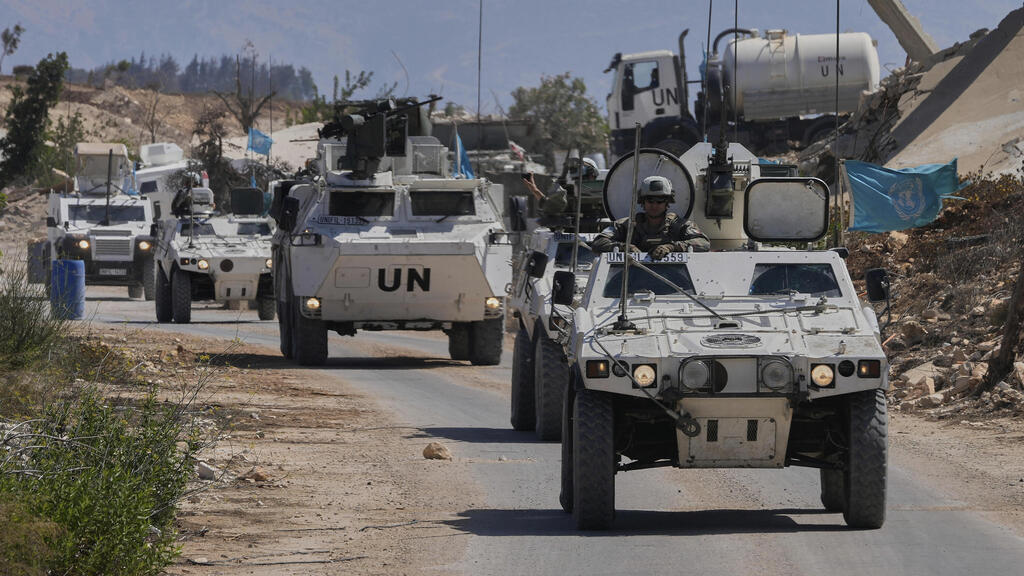
N peacekeeping vehicles in southern Lebanon. The mandate of the UN force in the country is set to expire at the end of the year.
(Photo: Hussein Malla/AP)
Hezbollah’s violation of the agreement is effectively another admission of the diplomatic failure to disarm the Shiite terrorist organization — just as happened in 2006. Under the cover of the ceasefire, and despite extensive efforts by the IDF, the group managed to replenish weapons stockpiles and appoint new commanders in its offensive and defensive formations.
At the end of November 2024, on the eve of the ceasefire, IDF officials acknowledged that they were “not relying” on the international mechanism. “We must prepare for the possibility that this will lead to days of battle and then a return to full-scale fighting,” they said.
Over the past year, the IDF’s effort focused on creating a “buffer” along the border fence and attempting to uproot any renewed Hezbollah entrenchment. But today the military says the reality is very different and that the objectives have changed accordingly: no longer speaking about “enforcing an agreement,” but about aggressively pushing Hezbollah forces farther north, deep into Lebanese territory — and even about its final defeat. All of this, it is widely understood, depends on the outcome of the campaign in Iran.
Reuters reported late Sunday that Israel and Lebanon are expected to hold talks in the coming days about a ceasefire under which Hezbollah would be disarmed. A Lebanese source told Reuters that they have not yet received an official notice that the talks will take place.