


A senior former security official involved in several successes during the war says the renewed fighting with Hezbollah highlights deeper strategic misunderstandings within the defense establishment and government.
“They’re selling illusions to the public,” the former official said. “The current defense establishment and the government did not fully understand the basis for the successes in the war in the south and in the north. That misunderstanding is now the basis for mistakes being made regarding Hezbollah.”
IDF strikes in Lebanon
(Video: IDF)


The central illusion, he argued, is the belief that another decisive blow could quickly cripple the group.
“The idea that there can be a ‘one big hit and it’s over,’ another strike they won’t recover from — that’s not how strategy works,” he said. “You have to prepare an entire system of actions tied to a clear objective and activate it at the time you choose, not the enemy.”
The renewed confrontation with Hezbollah has stirred public bitterness. For months, the public was told Hezbollah had been heavily beaten and nearly finished, and that its leader, Naim Qassem, remained in place only because he was ineffective and weak. Hezbollah, according to that narrative, was only a shadow of the organization that once threatened massive rocket fire against Israel.
Political leaders have also shown frustration, sending signals through media briefings that the IDF was surprised by Hezbollah’s response and had expected only limited involvement.
Within the military, such claims are viewed as an attempt to shift blame onto the General Staff. Senior defense officials say assessments about Hezbollah’s recovery — and the stronger-than-expected performance of its command structure, including Qassem — had been conveyed to political leaders and the public over the past year.
Rumors circulated earlier in the week about an impending large-scale attack, yet the civilian home front did not receive early warning that Hezbollah was preparing to strike. Notification to local authorities about the expected intensity of the attack also came late, something the military acknowledges as a mistake.
Military correspondent Yossi Yehoshua reported that the political leadership had twice rejected plans proposed by the IDF for a broad surprise strike against Hezbollah.
All of this, the former official said, reflects early stages of a blame game.
Hezbollah was indeed struck hard during the “Northern Arrows” campaign, which came after the impressive pager operation, and faced an unprecedented domestic crisis in Lebanon. The group today is not the same force that once threatened immediate barrages of thousands of rockets into Israel, nor is it the same Radwan force.
But Hezbollah has received substantial funding from Iran and has begun an extensive rebuilding process. Once the United States and Israel launched war against Iran, the organization — created and financed by Tehran — was compelled to intervene.
For Iran and its regional allies, the conflict has taken on existential dimensions. If the killing of Iran’s supreme leader were to pass without response, Iran would risk losing deterrence entirely.
Israel expected some form of Hezbollah retaliation following the killing of Ali Khamenei. There was also strong rhetoric from Israeli officials suggesting the moment had arrived to “finish” the group — though what exactly that meant was never clearly defined.
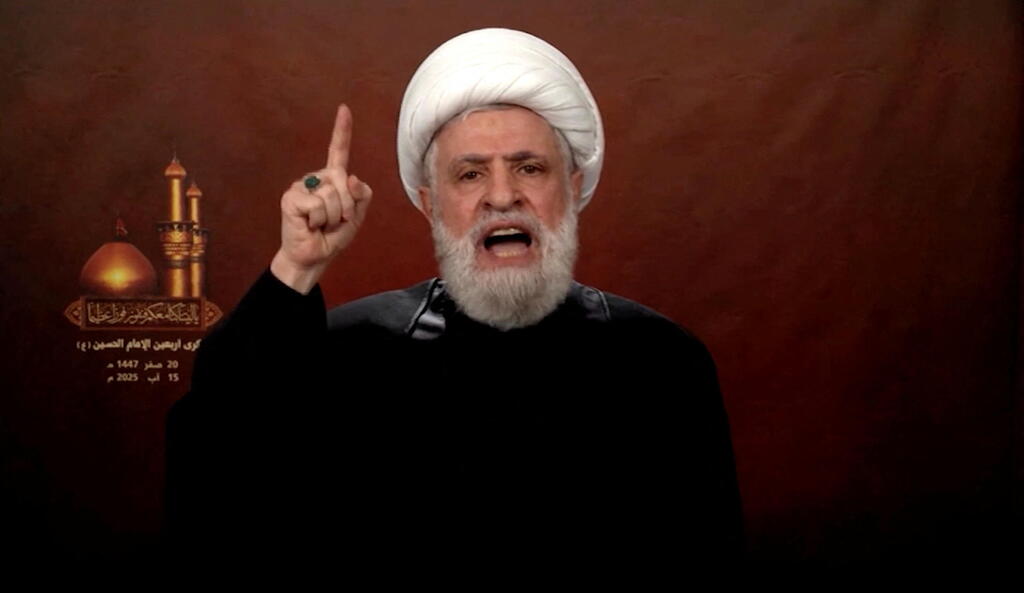
Hezbollah, meanwhile, has demonstrated stronger capabilities than expected, even compared with assessments within the military.
The main arena of the war remains Iran. Resources and operational focus of the IDF are concentrated there, while Lebanon has become a secondary theater as long as the conflict with Iran continues.
Military leaders had wanted to address Hezbollah before turning to Iran. There was a desire to allow the Lebanese arena to tackle the Hezbollah challenge, and an understanding that Israeli military involvement might play into the Shia’a terror group’s hands. But there was broad recognition within the defense establishment that internal political developments in Lebanon were crucial to any lasting change.
That leaves Israel facing the risk of being drawn into reactive actions driven by political pressure to show that something is being done while the military is focused elsewhere.
According to the former official, Hezbollah could be dealt a decisive blow in two ways.
The first — not currently on the table — would involve a major war in Lebanon, including a deep ground operation aimed at clearing the country of Hezbollah infrastructure.
“That would mean one or two years of war in Lebanon, possibly all the way to Beirut,” the former official said. “It would not be easy and it would not be short. Anyone talking about entering Lebanon and finishing Hezbollah should understand exactly what that entails.”
The second possibility lies in Lebanese politics. Hezbollah’s decision to join the war has triggered an unprecedented crisis with Lebanese society and political leadership.
Lebanon’s president and prime minister have shown determination to move against Hezbollah as an armed organization. Until recently, political momentum against Hezbollah had appeared frozen, but dragging Lebanon into war has dramatically shifted the internal debate.
Hezbollah understands this pressure but operates under strong expectations from Tehran.
The war in 2024 created deterrence for Israel, but even deterrence has limits when Israel deals with Iran itself.
Ultimately, neither path guarantees success: a prolonged war in Lebanon or a dramatic political shift within Lebanon itself.
Those hoping for another dramatic operation like the earlier pager attack misunderstand how previous successes were achieved, the former official said. Operations such as the pager attack or the Israeli Air Force strike that destroyed most launch capabilities were only components of a broader strategy built on intelligence gathering, long preparation, surprise and a clear focus on the northern front as the main theater.
Today, he argues, public confusion has led to a return of inflated threats.
Strikes against Lebanon’s national infrastructure or civilian-serving institutions are unlikely to produce meaningful results. Such measures were once intended to increase internal pressure on Hezbollah, but that pressure is already higher than ever.
Another idea being discussed is holding territory up to the Litani River as a new security zone after evacuating civilians from the area.
“That would be difficult and could actually help Hezbollah recover rather than weaken it,” said another official involved in the discussions. “It would mean returning to Lebanon with all that entails — and the question becomes for what purpose, at what cost and for how long.”
The stated answer is to push Hezbollah away from communities in northern Israel, which are again facing unprecedented attacks. Residents have yet to receive clear answers about the future and have even been forced to request exemptions from nationwide budget cuts while the war continues.
Strategy, the former official said, is not just a plan but a system of priorities designed to achieve a larger objective.
That objective, he said, is clear: dismantling Hezbollah as an armed organization.
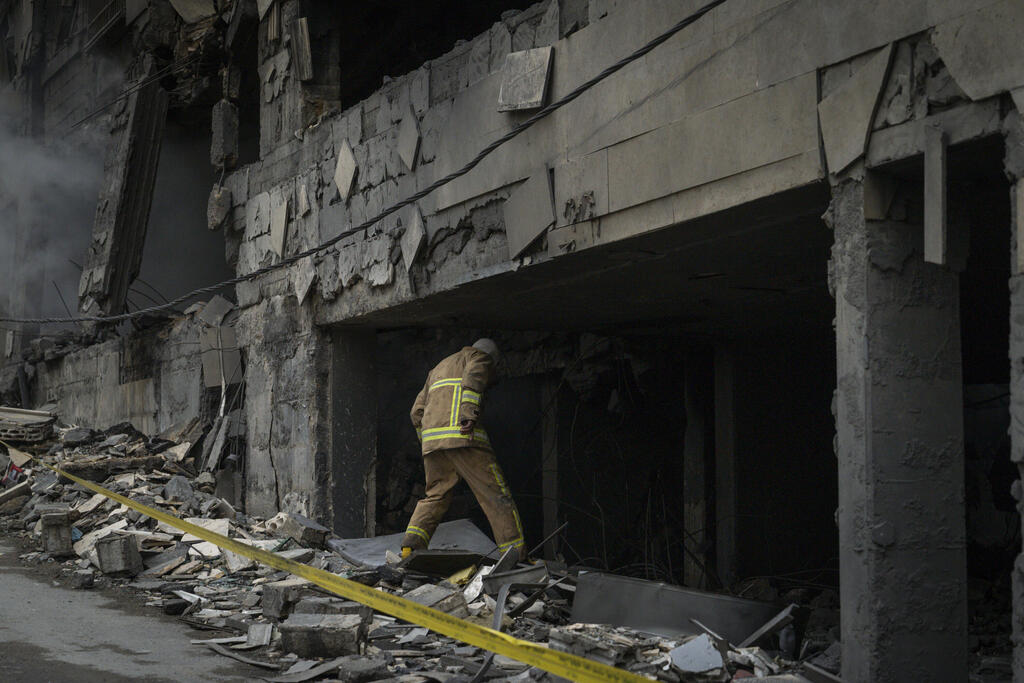
(Photo: Adri Salido/Getty Images)
Whether Lebanon itself can accomplish that remains uncertain. Ultimately, only Lebanese society can push such a change effectively — unless Israel chooses the alternative of occupying all of Lebanon, an option some close to the prime minister support but which appears highly unlikely.
Developments in Lebanon are historically significant, from efforts to outlaw Hezbollah as an armed organization to the possibility of negotiations with Israel. Yet Lebanon’s government and president are widely viewed as weak.
“Let them show us they are capable,” one Israeli official said. “We are waiting for that.”
The key question, the official said, is how to help them, because the opportunity may not return.
As long as the IDF remains focused on fighting Iran, Lebanon and the northern border will not receive the attention they require.
That reality, he said, has not been fully communicated to the public.
More Israeli ground incursions into Lebanon may still occur, possibly to reduce the anti-tank missile threat near border communities and defensive positions Israel has built inside Lebanese territory. Additional airstrikes deep inside Lebanon are also likely, along with continued efforts to target Hezbollah’s leadership.
But alongside military pressure, any lasting change will require careful political maneuvering behind the scenes.
Prime Minister Benjamin Netanyahu and his government, the former official argued, have become enamored with the intoxicating power of successful military operations, forgetting that such operations are only one tool meant to support a broader political strategy.