


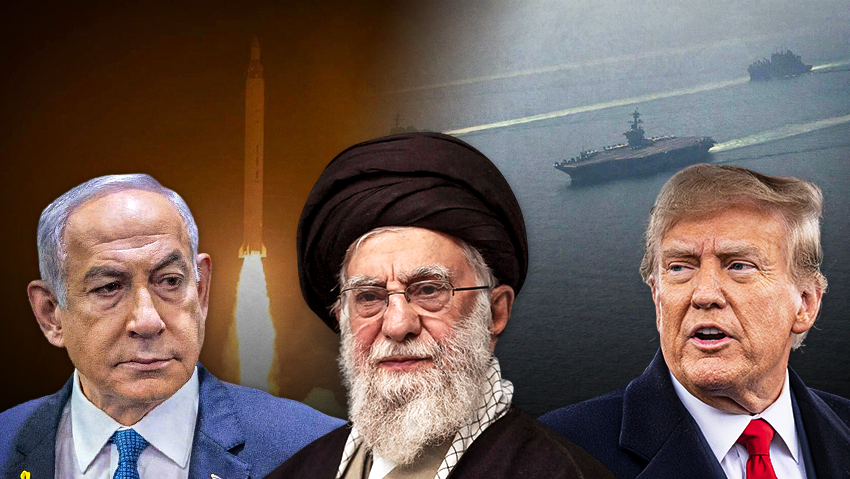
While the United States focuses its negotiations with Iran largely on the nuclear issue, Israeli defense officials say the more immediate concern for Israel is Tehran’s accelerating ballistic missile program.
In closed-door discussions between senior IDF officials and U.S. counterparts, Israeli officials have warned that Iran continues to expand missile production and could possess at least 5,000 ballistic missiles by the end of 2027. Without a series of interception and disruption efforts carried out during Operation Rising Lion in June 2025, the number could have approached 8,000 by the end of the decade, according to Israeli defense sources.
Iranian missile strike in Ramat Gan


Officials described the projection not as a theoretical estimate but as a working assessment guiding daily operations within Military Intelligence, the Air Force and air defense units.
According to Israeli data, Iran is currently producing about 100 ballistic missiles per month, with output expected to increase. Israeli officials say Tehran is relying on volume, calculating that even advanced multilayered air defense systems — including Arrow, David’s Sling and Iron Dome — have limited capacity against sustained, large-scale barrages.
During Operation Rising Lion, Iran launched more than 500 ballistic missiles and about 1,000 drones toward Israel over several days. The IDF said about 86% of the ballistic missiles were intercepted and roughly 99% of the drones were shot down. Still, missiles that penetrated defenses caused significant damage in Tel Aviv, Ramat Gan, Bat Yam, Haifa and at Soroka Medical Center in Be'er Sheva.
The scale of the attacks led Israel to shift from a largely defensive posture to an expanded offensive campaign aimed at destroying launchers and missile infrastructure inside Iran. The campaign, described by defense officials as “missile hunting,” involved sustained Air Force strikes at distances of roughly 1,500 kilometers after air superiority was achieved within 48 hours, according to the IDF.
Israeli officials said approximately 120 mobile launchers were destroyed within days, along with 35 production sites and ammunition depots. The operation marked what defense officials described as a strategic shift — combining interception with systematic efforts to strike launch capabilities before missiles could be fired.
Iran entered the June conflict with more than 2,000 missiles and ended it with roughly half that number, according to Israeli assessments. Even so, officials acknowledge there is currently no airtight solution to a scenario involving thousands of ballistic missiles. While layered defenses and early warning systems can reduce damage, they cannot eliminate the threat entirely.
Israeli officials also note that many of the missiles currently being produced by Iran use liquid fuel rather than solid fuel. According to defense assessments, this reflects difficulties in obtaining advanced components, including specialized processors, due to sanctions. The result, officials say, is lower technological sophistication per missile but a higher production rate.
Israeli officials say they are careful not to appear to be pushing the United States toward military confrontation, but emphasize that the missile threat is immediate and significant. Defense officials in Tel Aviv are in ongoing coordination with the Pentagon and U.S. military leadership, and say there is growing recognition in Washington that Iran’s missile arsenal poses a broader regional risk.
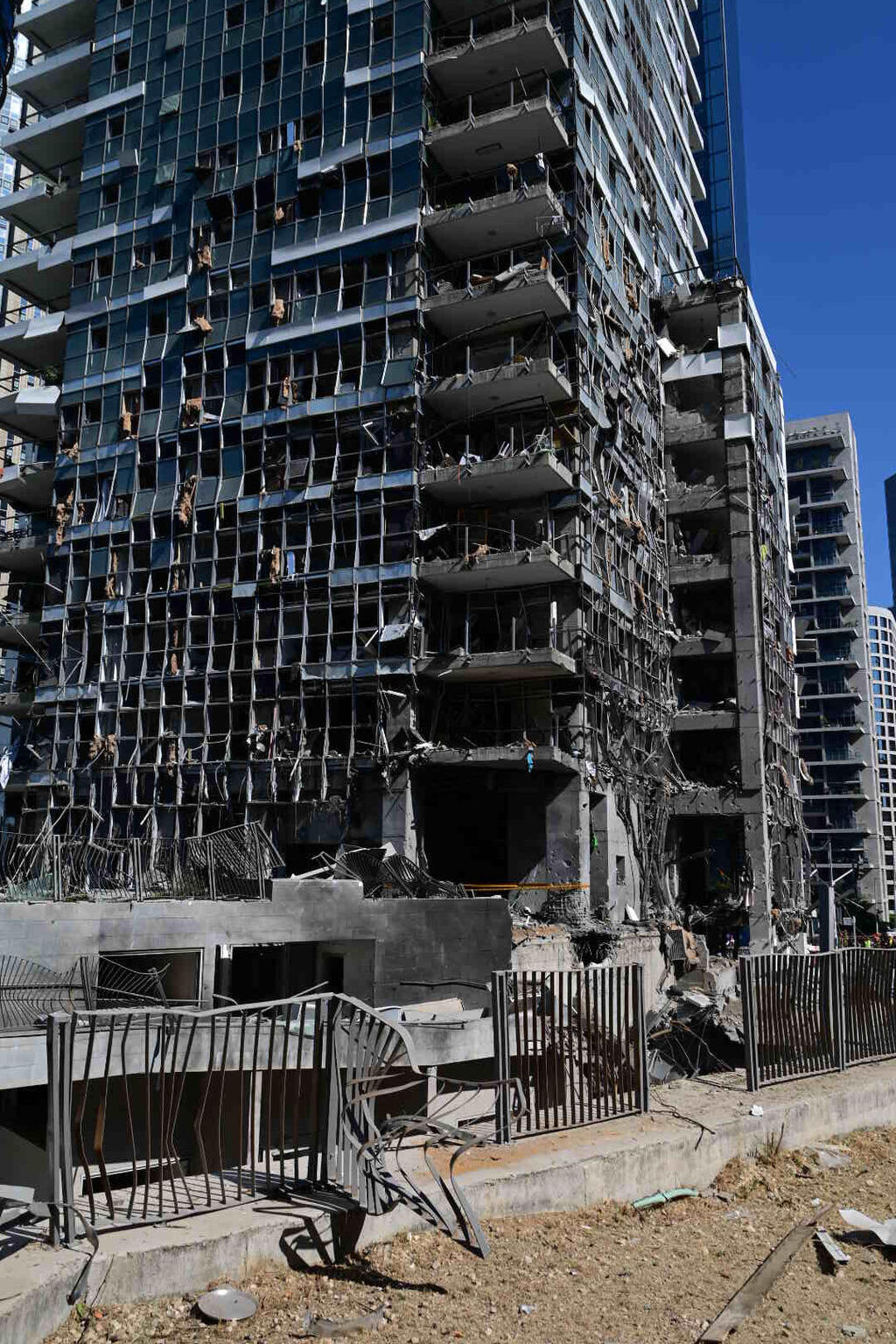
Aftermath of Iranian missile strike in Ramat Gan
(Photo: Yuval Chen)
An Israeli official said the threat is not limited to Israel, noting that ballistic missiles could also target U.S. bases and regional allies and constrain U.S. operational freedom in the Middle East.
Senior defense officials describe military cooperation between Israel and the United States as an increasingly reciprocal partnership, citing operational experience gained during Operation Rising Lion, including joint intelligence coordination and long-range strike capabilities.
In Israel’s defense establishment, officials express limited optimism about a near-term diplomatic breakthrough between Washington and Tehran. Assessments suggest the gaps remain too wide for a comprehensive agreement that would satisfy U.S. demands — and especially Israel’s — if Iran’s missile program remains outside effective oversight.
Despite economic strain and internal pressures inside Iran, Israeli defense officials assess that the Islamic Republic may become more dangerous under stress, channeling resources into military deterrence. The acceleration of the missile program, they say, is part of that strategy.
Even if military action does not topple the regime in Tehran, Israeli officials describe the broader effort as cumulative — combining diplomatic pressure, sanctions, disruption of production chains and technological delays to gradually erode Iran’s capabilities rather than relying on a single decisive move.