

For more than two years, the Zikim base near the Gaza border did not operate as a basic training camp in line with its prewar designation. Basic training courses and drills there were halted, and after the base became one of the symbols of heroism of October 7, combat recruits from Home Front Command rescue and extraction battalions were removed from the site. The base was turned into a forward headquarters and a staging ground for brigades maneuvering in northern Gaza.
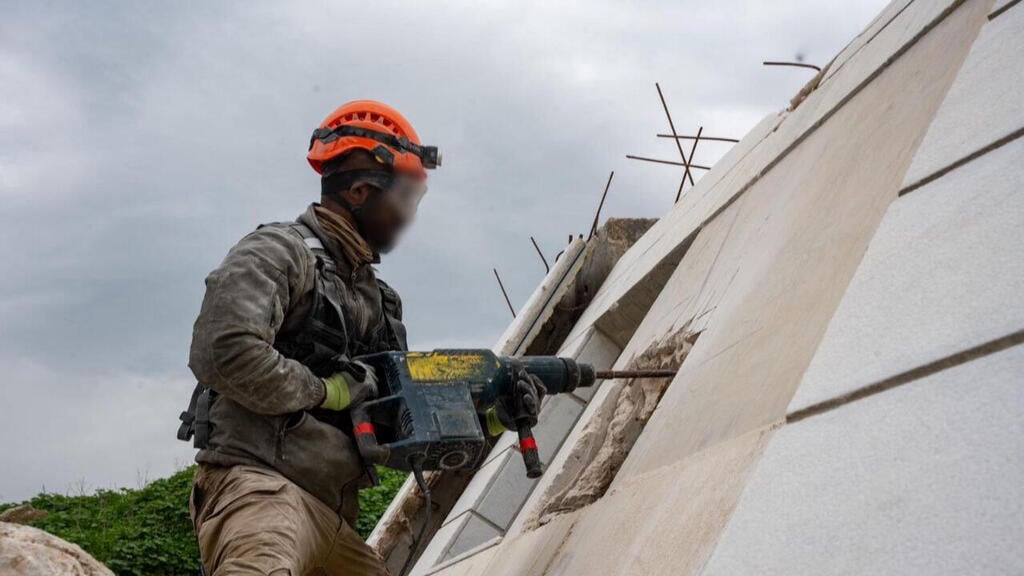
In recent weeks, however, the Home Front Command has restored the base to operational use and inaugurated a large destruction site there for drills and training, a move the IDF views as a sign of a return to routine along the border. Recently, the base hosted a first-of-its-kind exercise, and not the last, for a reserve rescue and extraction battalion from the Western Galilee district of the Home Front Command. The forces practiced rescuing trapped victims from a large-scale destruction site built adjacent to the base.
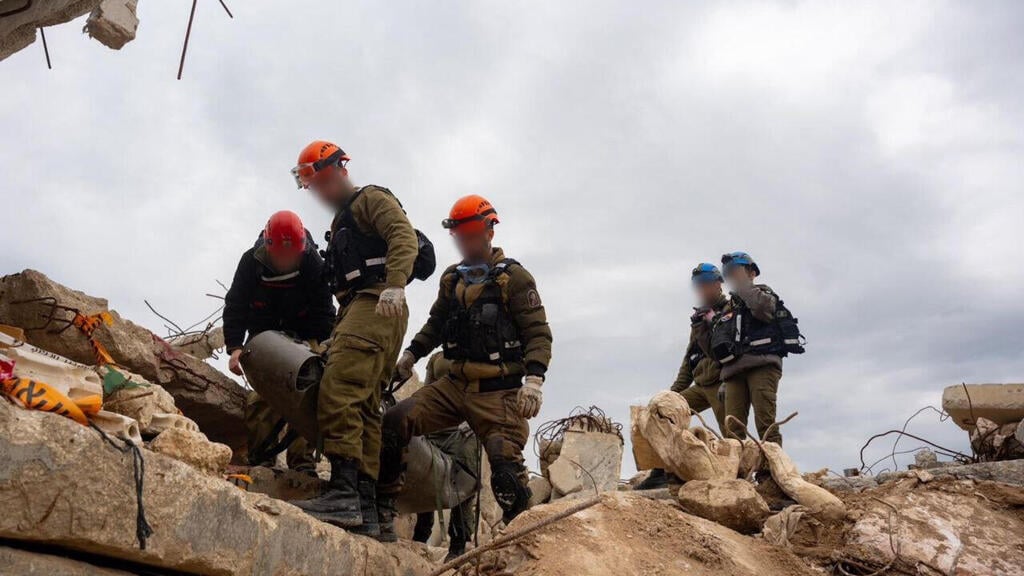
Some of the soldiers who took part in the exercise were convinced the piles of rubble had been brought from nearby Beit Hanoun, but an inquiry found otherwise. The concrete slabs and building debris came from a “sharing economy” project that brings together construction contractors who collect defective concrete or material they no longer need. The troops were from Battalion 974, which is responsible, among other areas, for the region between Karmiel and Acre. Accordingly, under the army’s logistical framework, Arab Israeli volunteers trained to provide initial emergency response were also integrated into the drill, from village emergency units in Bi’ina, Deir al-Asad and Majd al-Krum.
The scenario was relatively generic, focusing on coping with an earthquake that causes extensive damage to a residential neighborhood, which the defense establishment views as a central threat to Israel in the next two years.
Alongside this, the forces also practiced elements Israel already experienced last June and for which the Home Front Command is required to strengthen preparedness: the extensive damage caused by large Iranian cluster missiles. These are missiles that open dozens of meters above the target and disperse rockets over a radius of several kilometers, in addition to the missile’s main warhead. This occurred, for example, at destruction sites in Rehovot and Ramat Gan during Operation Rising Lion. The IDF assesses that Iran will use these missiles again in the next round, which could come soon against the backdrop of a potential U.S. strike on Iran, and is preparing accordingly.
In the latest exercise, the troops were required to operate while locating such rockets nearby that had failed to explode and were defined as dangerous unexploded ordnance. “We practiced a mass-casualty incident within the rubble and implemented many lessons from the investigations we conducted after Operation Rising Lion, such as dealing with the large destruction zones the Iranian missiles created across multiple streets,” said Western Galilee district commander Col. Shay Shemesh.
(Photo: IDF)
In some of the Rising Lion scenes, it took many minutes before a lead authority took control of managing the destruction area. At the time, Israel was under a special home front emergency designation, which granted the IDF, through the Home Front Command, authority to control destruction sites within towns and cities. “The new facility at Zikim has improved by several levels compared with what existed there before the war, and in this exercise we also emphasized the population aspect,” said Lt. Col. Y., commander of Battalion 974. “Commanders are required to use every capability to obtain information about the population and to use every possible sensor, including in scenarios in which foreign nationals are trapped in the rubble.”
Another scenario practiced involved a concentrated enemy effort, such as by Iran, to strike rescue forces arriving at a destruction site, with repeated launches at the same location. “These are difficult dilemmas our people already faced in June and will face again, for both male and female fighters,” Lt. Col. Y. added. “For example, what to do on the fifth floor of a collapsed building after long minutes of crawling through debris to reach a trapped person, when suddenly a siren sounds and another missile is on the way. That is why at every such destruction site we immediately mark nearby protected areas. Sometimes the terrain conditions and the mission to reach the trapped create complex and dangerous dilemmas.”
The exercise for the reserve battalion, which the rest of the reserve battalions will also undergo this year, went to the limit. The Home Front Command drilled extreme scenarios that, given Israel’s security reality over the past two and a half years, would not be far-fetched. The troops were required to contend with an armed terrorist attack on a destruction site from missiles striking the heart of a city, a cyberattack that disabled all the technological systems used by the forces and more.
According to Col. Shemesh, “In this training we emphasized faster operations rather than working according to the traditional peeling method. We transferred focused capabilities from elite rescue units down to the battalions to operate, mainly at points where there is suspicion of trapped victims, and placed emphasis on extraction in what is effectively a subterranean environment, something we encountered frequently in the fighting with Iran.”