

Human rights activists say more than 5,000 people have been killed in nationwide protests in Iran, as the Islamic Republic continues a sweeping crackdown and maintains a near-total internet shutdown that has made independent verification of the toll difficult.
The figures were released Friday by rights groups as most Iranians remain cut off from the internet, a blackout now in its third week. Monitoring group NetBlocks reported that overall internet access in Iran stood at about 2%, despite limited signs of restoration following what activists described as mass killings of protesters and the subsequent waning of demonstrations.
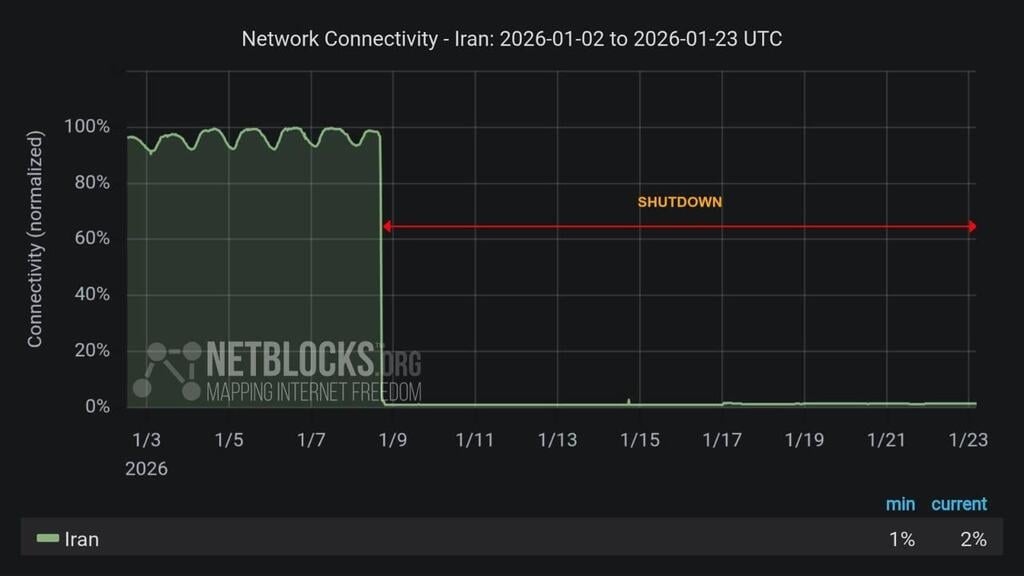
NetBlocks said Iran remains in the midst of a nationwide shutdown, with only a slight increase in availability and a small number of users managing to bypass restrictions.
The Associated Press has reported that Iran’s internet blackout and its blocking of international calls have severely hampered journalists’ ability to independently assess the scale of the violence. Iranian authorities have also restricted local media coverage, while state television repeatedly portrays protesters as “rioters” directed by the United States and Israel, without presenting evidence.
AP cited figures from the Human Rights Activists News Agency, a U.S.-based group that relies on a network of sources inside Iran, saying at least 5,002 people have been killed since the protests began. That figure includes 4,716 protesters, 203 members of security forces, 43 children and 40 civilians who were not taking part in demonstrations. The group said more than 26,800 people have been arrested.
The reported death toll would make the current unrest the deadliest wave of protests Iran has faced in recent decades. AP noted that past casualty figures provided by the group have generally proven reliable.
On Wednesday, Iranian authorities released their first official death toll, saying 3,117 people had been killed. The government denied responsibility for protesters’ deaths, claiming that 2,427 of those killed were civilians and members of the security forces described as “innocent victims.” Authorities said many had been bystanders or were killed in what they described as indiscriminate gunfire and “terrorist violence,” while labeling the remaining dead as “terrorists.”
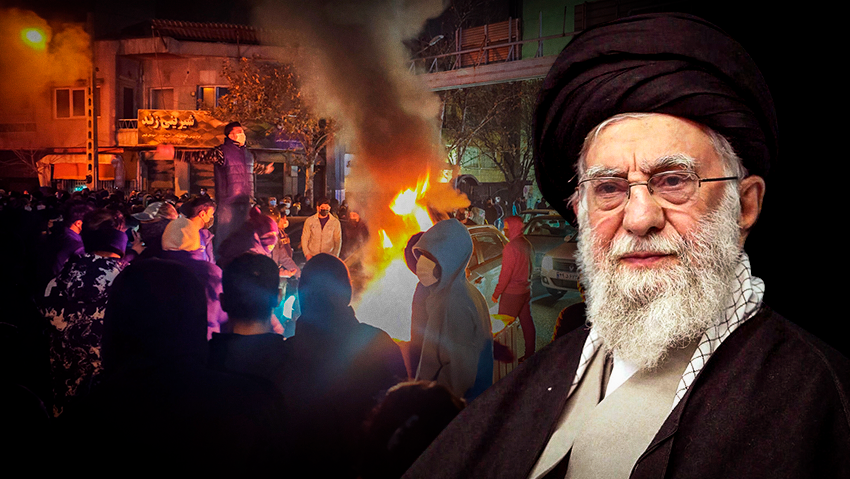
(Photo: Anonymous/Getty Images, AP)
In previous protest waves, official Iranian figures have consistently been lower than those reported by rights groups. Iran Human Rights, a Norway-based organization whose data are cited by the United Nations, said at least 3,428 protesters have been killed so far and warned this week that the final toll could exceed 20,000.
Mai Sato, the U.N. special rapporteur on human rights in Iran, told Bloomberg that the number of deaths could reach 20,000 or more.
Other opposition-linked groups have made far higher claims. The International Center for Human Rights Violations in Iran said Thursday that 43,000 people were killed, 350,000 wounded and about 10,000 blinded during the unrest. Those figures could not be independently verified.
The crackdown has also drawn international criticism following reports that Iran sentenced a soldier to death for refusing to fire on protesters. The U.S. State Department on Thursday condemned the reported death sentence against Javid Khalas, saying he was punished for refusing to shoot unarmed civilians.
“His refusal was not only justified, but the only moral choice,” the department said in a statement posted in Persian on X. “No government should demand that its security forces commit violence against civilians or impose the harshest punishment on those who choose conscience over repression.”