

U.S. President Donald Trump feels "very badly" about Israel's strike on Hamas targets in Qatar and directed a top aide, Steve Witkoff, to warn Qatar that the attack was coming, the White House said on Tuesday.
Hamas said five of its members had been killed in the Israeli attack in Doha, including the son of Hamas' exiled Gaza chief Khalil al-Hayya.
White House press secretary Karoline Leavitt talks about Israel's strike on Hams leaders in Qatar
(Video: Reuters)


The United States counts Qatar as a strong ally in the Gulf and has relied on the Qataris to play an intermediary role in negotiations aimed at getting to a ceasefire in the Gaza war.
White House press secretary Karoline Leavitt said the U.S. military informed the administration on Tuesday morning that Israel's strike was going to take place. She would not answer when asked who informed the U.S. military.
When Trump learned about it, he directed U.S. special envoy Witkoff to warn Qatar it was coming, she said.
After the strike, Trump spoke to both Israeli Prime Minister Benjamin Netanyahu and also the emir of Qatar, Sheikh Tamim bin Hamad Al-Thani, she said.
Gallery
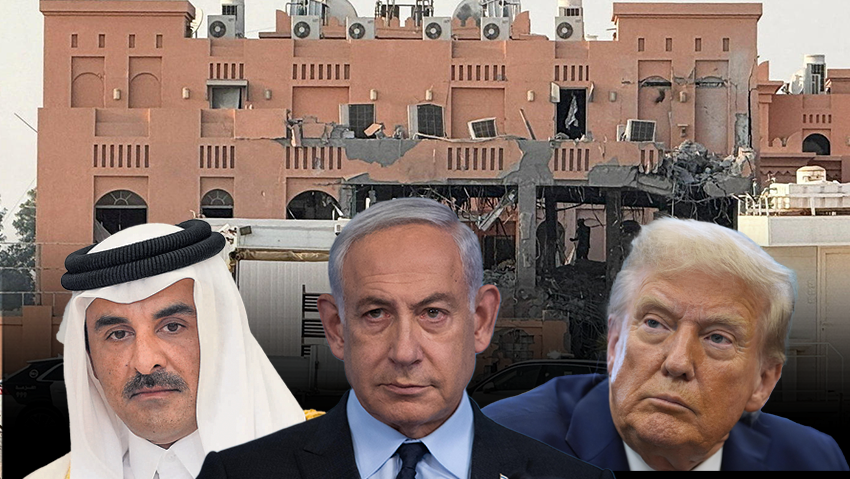
Emir of Qatar Sheikh Tamim bin Hamad Al-Thani, Prime Minister Benjamin Netanyahu and US President Donald Trump
(Photos: Alex Brandon/AP, Ibraheem Abu Mustafa/Reuters, Alex Kolomoiskyי)
He assured the Qatari leader that "such a thing will not happen again on their soil." She referred to the strike as an "unfortunate incident" and said Trump "feels very badly" about the location of the attack.
"Unilaterally bombing inside Qatar - a sovereign nation and close ally of the United States that is working very hard in bravely taking risks with us to broker peace - does not advance Israel or America's goals," Leavitt said.
"However, eliminating Hamas, who have profited off the misery of those living in Gaza, is a worthy goal. President Trump immediately directed Special Envoy Witkoff to inform the Qataris of the impending attack, which he did," she said.
Qatari Foreign Ministry spokesman Majed al-Ansari wrote on X following Levitt’s remarks that “claims that Qatar was notified in advance of the strike are false. The call from a U.S. official came as explosions were already being heard from the strike.”

US Special Envoy Steve Witkoff
(Photo: Andrew Caballero -Reynolds / AFP)
Israel’s entire political and security leadership supported the operation to target Hamas leaders abroad, but among its top officials, a dispute emerged over the necessity of carrying out the strike now — just as Trump’s new hostage deal proposal was put on the table earlier this week.
The Shin Bet pushed for approval of Tuesday’s strike in Doha, Qatar — dubbed Operation Summit of Fire — arguing it was a rare operational opportunity to hit senior Hamas leaders gathered at a villa belonging to Khalil al-Hayya, who also serves as the group’s chief negotiator. Some in Israel believed the move was necessary because the Hamas leadership abroad was holding hardline positions that prevented progress on a deal.
Prime Minister Benjamin Netanyahu and Defense Minister Israel Katz supported moving ahead immediately, as did Strategic Affairs Minister Ron Dermer, who is currently in Washington. Dermer believed the Trump administration would not oppose a strike in Qatar.
But several senior officials, including IDF Chief of Staff Lt. Gen. Eyal Zamir, Mossad chief David Barnea, National Security Council head Tzachi Hanegbi and Military Intelligence Directorate chief Aharon Haliva, supported the targeting of Hamas leaders but objected to the “current timing,” arguing Israel should exhaust negotiations under Trump’s new framework before escalating.